Korean Cuisine
Kkakdugi (Cubed Radish Kimchi)
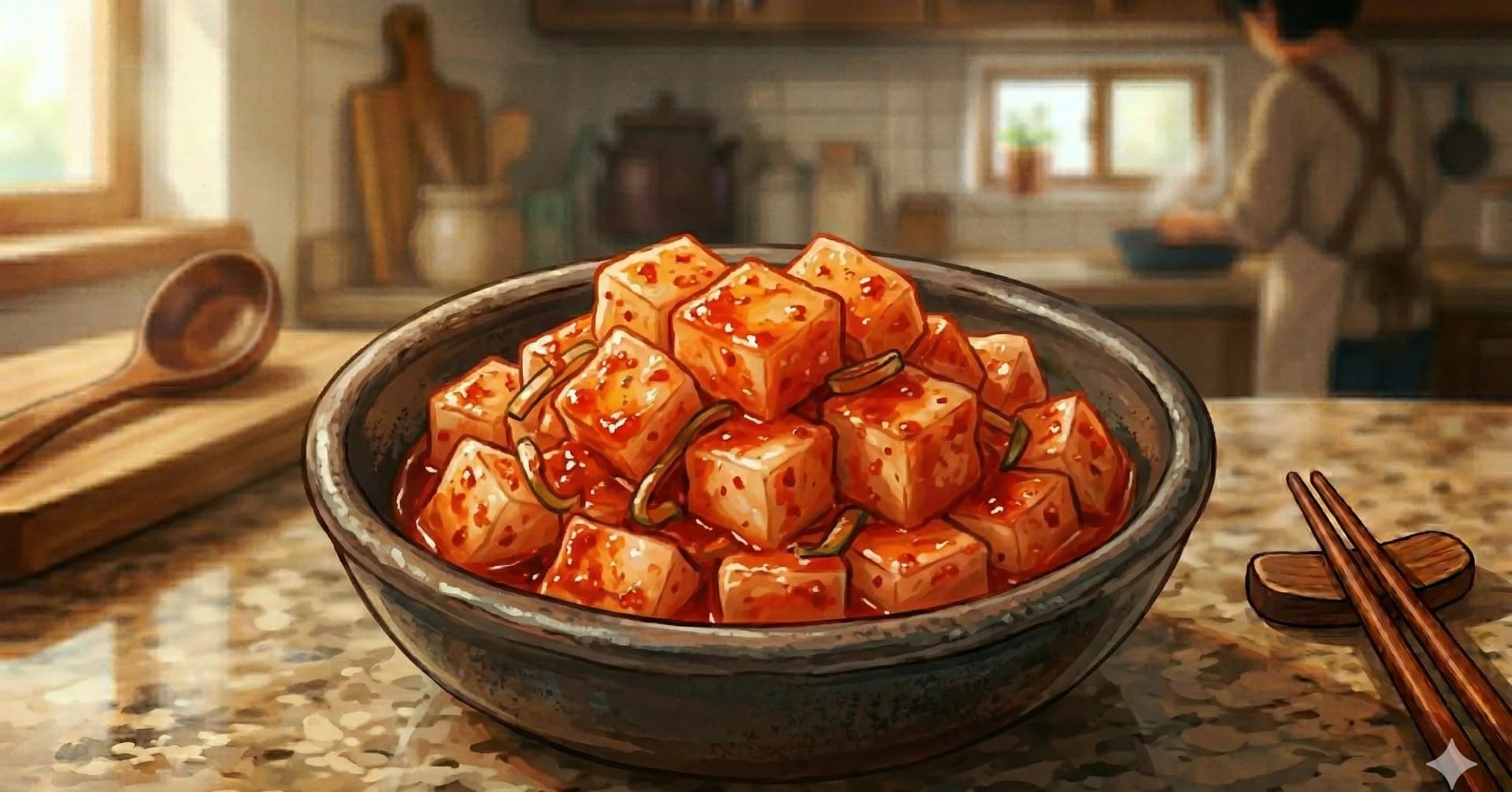
Crunchy cubes of Korean radish fermented in a fiery gochugaru and fish sauce seasoning
If you love kimchi but have never made it yourself, kkakdugi is the place to start. It is simpler than napa cabbage kimchi, faster to prepare, and arguably more satisfying to eat, with its loud, clean crunch and bold, briny heat. You can have a batch assembled and into the jar in about an hour, and after a few days of fermentation on the counter, the cubes will be fizzy, tangy, and deeply flavored.
The name comes from the way the radish is cut: kkakduk means "cube" in Korean. The cubes, about three-quarters of an inch across, are the perfect size, big enough to stay crunchy through fermentation, small enough to pick up with chopsticks and eat in one or two bites. Korean radish is the ideal variety because it is denser, juicier, and sweeter than daikon, though daikon will work if Korean radish is unavailable.
The process is straightforward. Cube the radish, salt it briefly to draw out some moisture and season the surface, drain, then toss with a paste of gochugaru, fish sauce, garlic, ginger, and green onion. The gochugaru coats each cube in a vivid red, and the fish sauce provides the deep, savory backbone that makes this kimchi so compelling. Pack it tightly into a glass jar, and either eat it fresh or let it ferment at room temperature for two to three days until bubbles appear and the flavor turns sharp and sour.
Kkakdugi is the traditional partner to many Korean soups: seolleongtang, galbitang, kongnamul-guk. A cube of kkakdugi between spoonfuls of mild, milky broth is one of the great small pleasures of Korean eating.
At a Glance
Yield
About 1 quart (48 pieces)
Prep
30 minutes (plus 30 minutes salting)
Cook
0 minutes
Total
1 hour (plus 2 to 3 days fermentation)
Difficulty
Easy
Ingredients
- 4 lbKorean radish (or daikon) (about 22½ radishes), peeled
- 2 tbspkosher salt
- 2 tbspsugar
- ¼ cupfish sauce
- ⅓ cupgochugaru (Korean chili flakes)
- 4green onions, chopped
- 3 tbspminced garlic (about 5–6 cloves)
- 2½ tspminced ginger
Method
- 1
Cube the radish. Peel the Korean radish, rinse under cold water, and pat dry. Cut into 3/4-inch to 1-inch cubes. Place in a large bowl.
- 2
Salt the radish. Add the kosher salt and sugar to the cubed radish. Mix well with your hands or a large spoon. Set aside for 30 minutes. The salt will draw moisture from the radish, creating a pool of liquid at the bottom of the bowl.
- 3
Drain and reserve the juice. Pour the liquid from the radish into a small bowl. Set aside about 1/3 cup of this juice.
- 4
Season the radish. To the drained radish cubes, add the minced garlic, minced ginger, chopped green onions, fish sauce, gochugaru, and 1/3 cup of the reserved radish juice. Mix thoroughly with your hands (wear kitchen gloves to avoid staining) until the seasonings coat every cube evenly and the radish looks juicy and vivid red-orange.
- 5
Pack into a jar. Transfer the kkakdugi to a glass jar. Press down firmly on the top to remove air pockets between the cubes. The radish should be tightly packed.
- 6
Ferment or eat fresh. You can eat kkakdugi right away alongside steamed rice and soup. For fermented kkakdugi, leave the jar at room temperature for 2 to 3 days. Look for small bubbles forming on top and a strong, sour aroma. Once fermentation has started, transfer to the refrigerator.
Key Ingredient Benefits
Korean radish (mu): Denser and sweeter than Japanese daikon, Korean radish is a cool-weather vegetable that reaches peak sweetness in fall and winter. It contains vitamin C, digestive enzymes (diastase and amylase), and dietary fiber. In Korean folk medicine, radish is considered a cooling food that aids digestion and clears heat from the body. Summer radishes can be bitter; adding an extra tablespoon of sugar or some Korean plum syrup (maesilcheong) helps balance this.
Gochugaru: The backbone of Korean kimchi-making. These coarsely ground red pepper flakes are made from sun-dried Korean chilies and provide both color and moderate heat (4,000 to 8,000 Scoville units). The capsaicin content has been studied for thermogenic and anti-inflammatory properties.
Fish sauce: Made from fermented anchovies and salt, fish sauce provides glutamate and other amino acids that create deep umami flavor. The fermentation process can last from several months to over a year.
Why This Works
Salting the radish for 30 minutes before adding the seasonings serves two purposes. It draws out excess water, concentrating the flavor of the radish and ensuring the cubes stay crunchy rather than waterlogged. It also begins to season the radish from the surface inward.
The reserved radish juice, added back with the seasonings, provides liquid for the gochugaru to bloom and create a cohesive paste. Without this moisture, the seasonings would sit on the surface rather than coating each cube.
Tight packing in the jar minimizes air exposure, which encourages anaerobic fermentation by Lactobacillus bacteria. These bacteria convert the natural sugars in the radish into lactic acid, which preserves the kimchi and creates the characteristic sour tang.
Substitutions & Variations
Radish: Daikon can substitute for Korean radish but tends to be softer and less sweet. Cut slightly larger cubes to compensate, as daikon will soften more during fermentation.
Vegetarian version: Replace the fish sauce with an equal amount of soy sauce. The flavor will be different, lighter and less briny, but still good.
Spice level: Use 1/4 cup gochugaru for a milder version. For more heat, increase to 3/4 cup or add minced fresh chili.
Saeujeot addition: Korean Bapsang's version includes 3 tablespoons of salted fermented shrimp (saeujeot) alongside the fish sauce, which adds even more fermented depth. If adding saeujeot, reduce the fish sauce to 2 tablespoons.
Sweetener: If your radish is bitter (common in summer), add 1 extra tablespoon of sugar or a tablespoon of Korean plum syrup.
Serving Suggestions
Kkakdugi is the classic companion to Korean soups, especially mild broths where the spicy, crunchy cubes provide contrast. It is practically required alongside seolleongtang, samgyetang, and galbitang. It is equally good with bibimbap, steamed rice and any stew, or eaten as a standalone snack with a cold beer.
Storage & Reheating
Refrigerator: Keep in a sealed glass jar in the refrigerator for up to several weeks. The kkakdugi will continue to ferment slowly, becoming more sour and softer over time. It is at its peak crunchiness during the first two weeks.
Freezer: Not recommended. Freezing damages the cell structure of the radish and kills the beneficial bacteria.
Serving: Always serve cold, directly from the refrigerator.
Cultural Notes
Kkakdugi (깍두기) is the cubed radish kimchi that anchors the wide Korean kimchi family along with tongbaechu kimchi (whole-leaf napa cabbage), baek kimchi (white kimchi), yeolmu kimchi (young radish), and chonggak kimchi (ponytail radish). Inside that family, kkakdugi has a beloved niche: it is the kimchi most associated with hot, brothy Korean soups, especially seolleongtang (ox-bone soup). A small side dish of perfectly aged kkakdugi at a seolleongtang restaurant is considered as essential to the meal as the soup itself.
Historical records trace cubed radish kimchi in Korean cooking back at least to the early Joseon dynasty (1392-1910), where it was prepared as a winter banchan for the royal court. The dish's name comes from the verb kkakdda (깎다), "to cut into cubes," and the cubed form distinguishes it visually and texturally from the leafy folded shapes of cabbage kimchi. The signature crunch of properly fermented kkakdugi is what people remember from a bowl of it. Sharp. Clean. Almost effervescent on the bite. It is one of the defining textures of Korean fermented foods.
The dish has unmistakable cultural pairings. At nearly every Korean seolleongtang and galbitang restaurant (galbitang), customers receive an unlimited side bowl of kkakdugi and break up bites of broth with the cold, crunchy cubes. Korean grandmothers traditionally judge a younger cook's kimchi-making ability primarily by the quality of their kkakdugi. It is a less forgiving ferment than cabbage kimchi. The radish texture turns soggy quickly if the salting, draining, or seasoning is off by even a little. A well-made batch of kkakdugi that stays crisp through six weeks of fermentation is something of a household achievement.
Nutrition Facts
Calories: 84kcal (4%)|Total Carbohydrates: 17.2g (6%)|Protein: 2.9g (6%)|Total Fat: 0.6g (1%)|Saturated Fat: 0.1g (1%)|Cholesterol: 0mg (0%)|Sodium: 2483mg (108%)|Dietary Fiber: 5.5g (20%)|Total Sugars: 9.6g
You Might Also Like
 Medium
Korean Cuisine
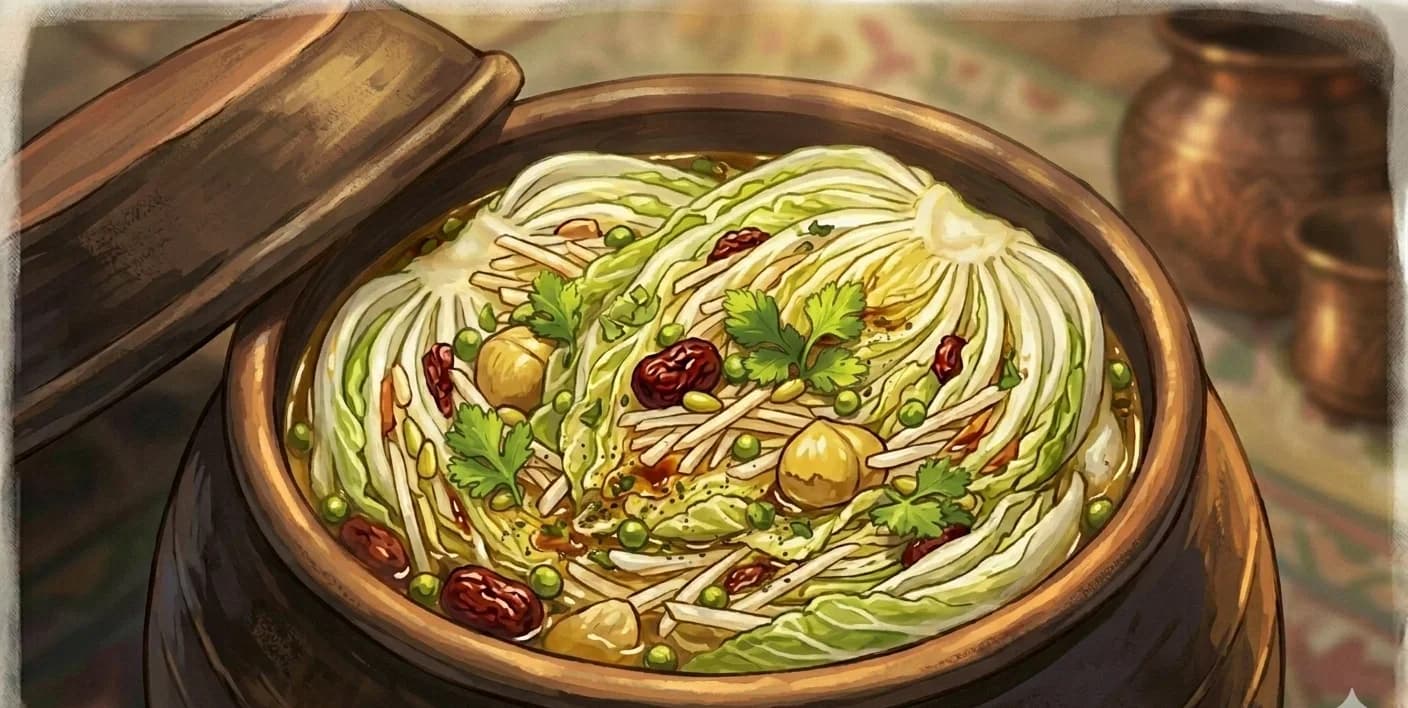
Baek Kimchi (White Kimchi)
3 hours (plus 1 to 3 days fermentation)
 Medium
Cross-Cultural · Korea
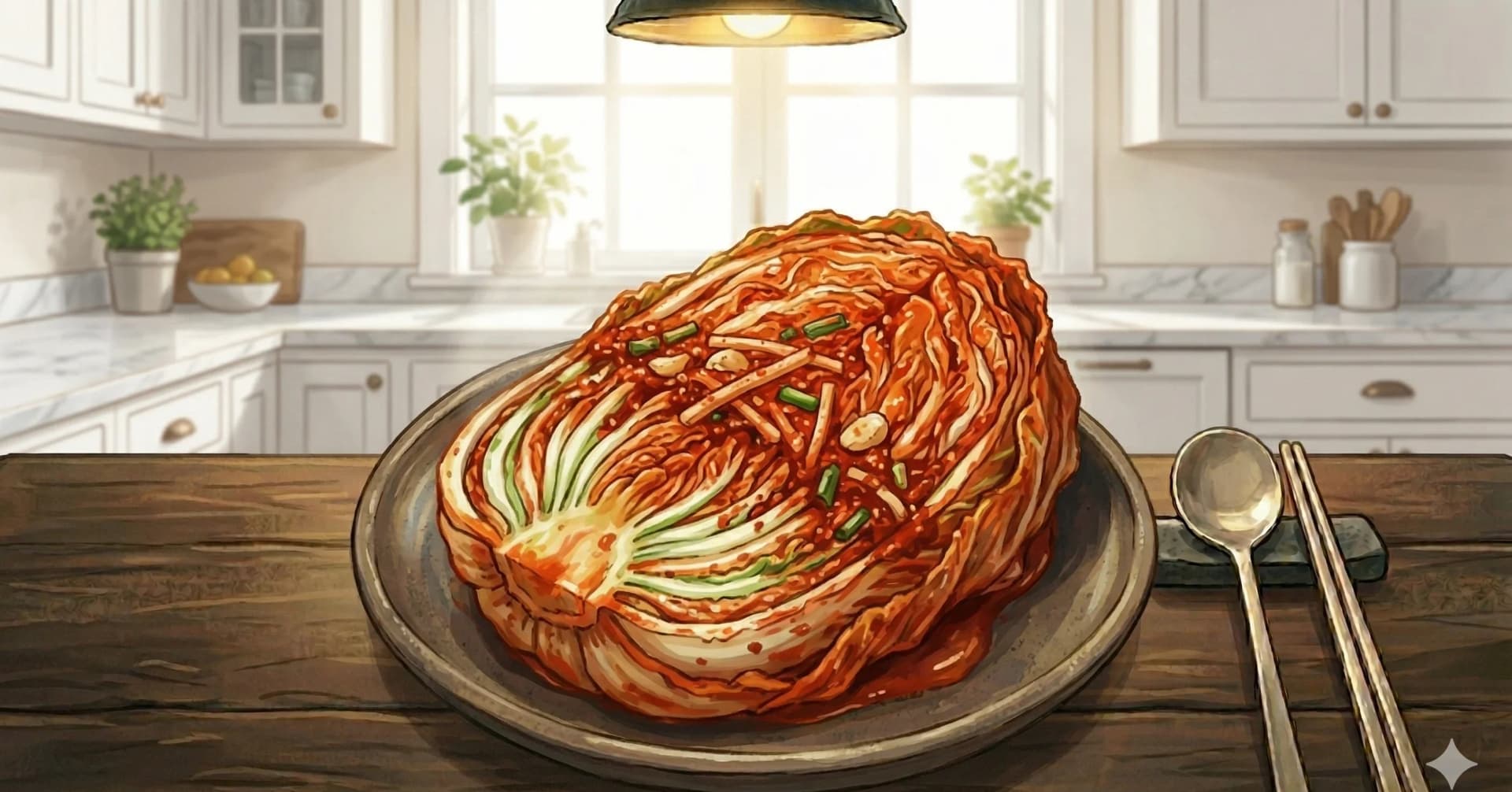
Napa Cabbage Kimchi (통배추김치)
8 hours plus 1-2 days fermentation
 Medium
Cross-Cultural · Korea
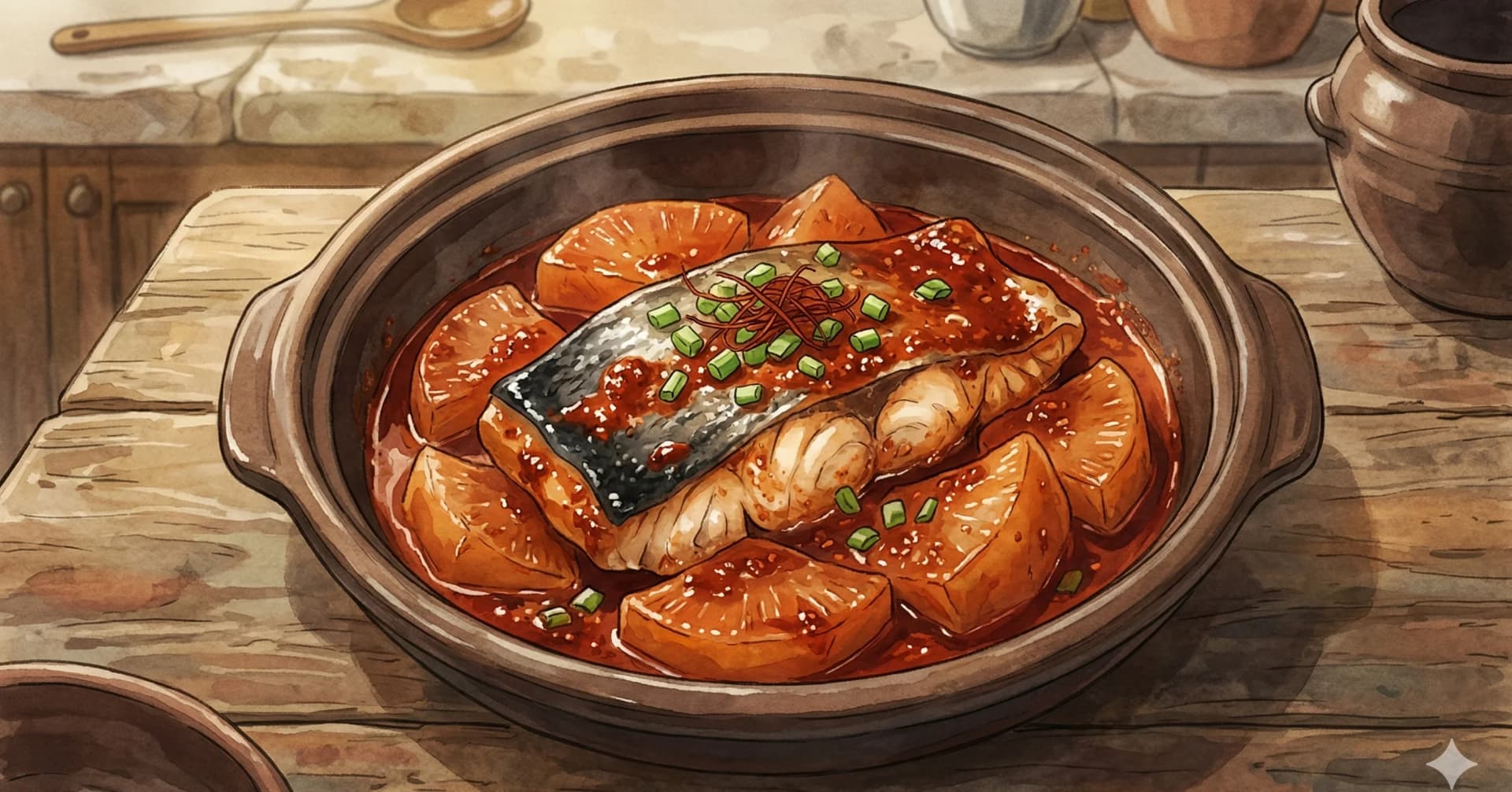
Braised Black Cod (Eundaegu-jorim / 은대구조림)
45 minutes
 Medium
Korean Cuisine
Bibimbap (Mixed Rice Bowl)
1 hour 10 minutes
Ratings & Comments
Ratings & Comments
Ratings
Share your thoughts on this recipe.
Sign in to rate and comment