Korean Cuisine
Miyeok Guk (Seaweed Soup)
A deeply savory beef and seaweed soup traditionally served on birthdays and to new mothers
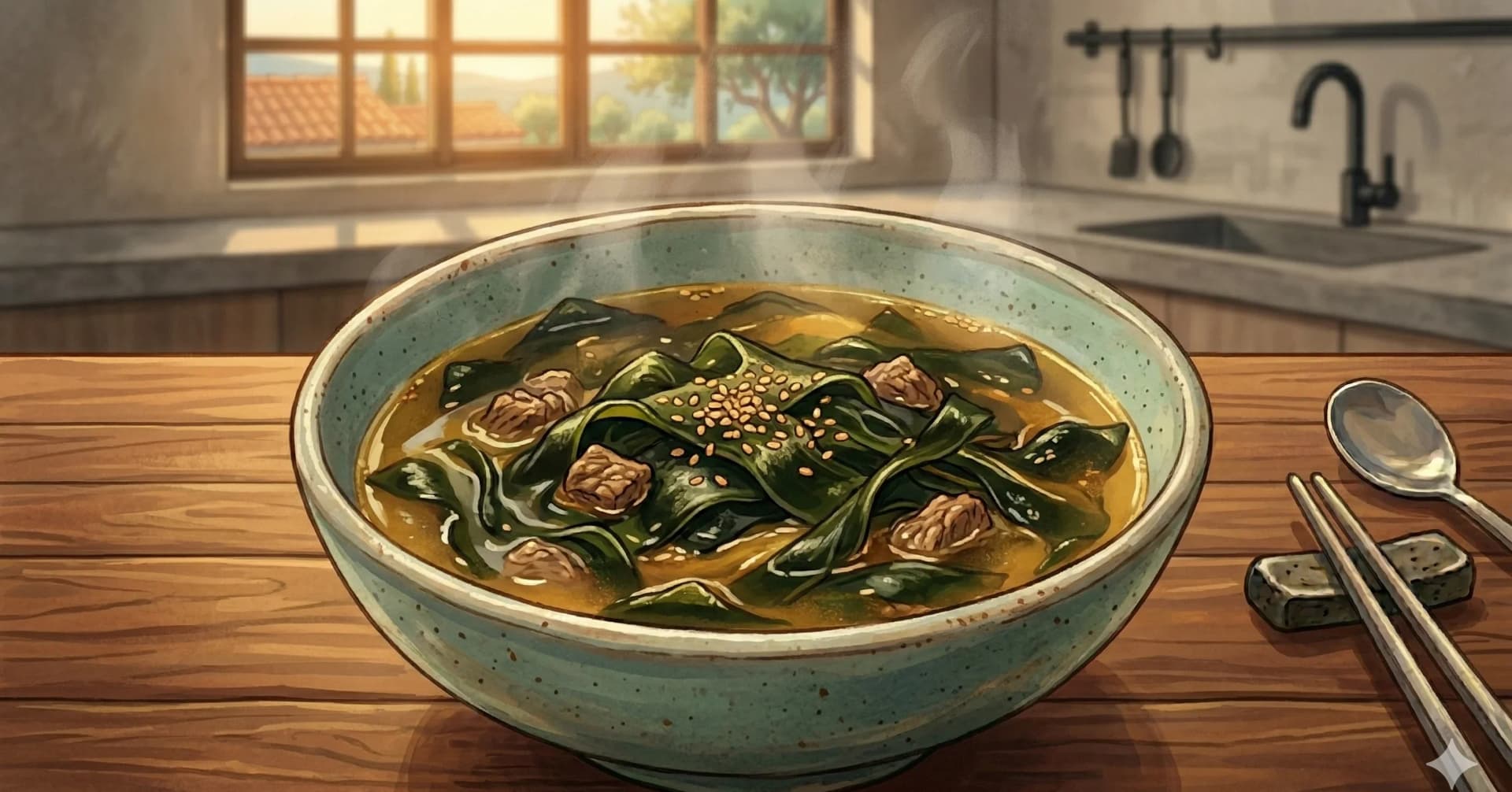
In Korea, eating miyeok guk on your birthday is as fundamental as blowing out candles in the West. The tradition traces back to the practice of feeding seaweed soup to new mothers after childbirth, a custom still observed today. The idea is that the mother ate this soup to recover her strength after bringing you into the world, so you eat it every year on your birthday to honor that memory. Refusing a bowl of miyeok guk on your birthday would be like refusing to celebrate at all.
The soup itself is beautifully simple. Dried seaweed (miyeok) soaks until it swells into soft, slippery ribbons. Beef is cut into small pieces and marinated briefly with soy sauce, garlic, and sesame oil. Everything goes into a pot and simmers until the broth turns a deep amber-brown and the seaweed is silky and tender. The sesame oil is important here, not just as a flavoring but as a cooking fat that coats the seaweed and beef during the initial sauteing, building a toasty depth before the water goes in.
Do not let the simplicity fool you. A well-made miyeok guk has a savory complexity that comes from the combination of dried seaweed (which is naturally rich in glutamic acid), beef, and the nutty sesame oil. It is one of those soups where three or four ingredients produce something that tastes like it has been developing for much longer than it actually has.
Every Korean family has their own version. Some use beef, some use shellfish like mussels or clams, some use dried anchovies for a lighter, more oceanic bowl. The beef version is the most common and the most associated with birthdays.
At a Glance
Yield
6 servings
Prep
20 minutes
Cook
30 minutes
Total
50 minutes
Difficulty
Easy
Ingredients
- 1½ ozdried miyeok (dried wakame seaweed)
- 6 ozbeef stew meat or brisket, cut into thin bite-sized pieces
- 2 tbspsoup soy sauce (guk ganjang), or 15 ml regular soy sauce plus salt to taste
- 1 tbspminced garlic
- 1 tbspsesame oil
- 2½ qtwater
- —Salt and pepper to taste
Method
- 1
Soak the seaweed. Place the dried miyeok in a large bowl and cover with cold water. Soak for 10 to 20 minutes until the seaweed is soft, plump, and has expanded significantly. It will grow to several times its dried volume. Rinse twice under cold water, drain well, and cut into bite-sized pieces with scissors or a knife. Set aside.
- 2
Marinate the beef. Cut the beef into thin, bite-sized pieces. In a small bowl, toss the beef with 1 tablespoon of the soup soy sauce, the garlic, and a pinch of pepper. Let it sit while you prepare the rest.
- 3
Saute. Heat the sesame oil in a large pot over medium-high heat. Add the marinated beef and cook, stirring, until the meat is no longer red on the outside, about 2 to 3 minutes.
- 4
Add the seaweed. Add the drained miyeok to the pot along with the remaining 1 tablespoon of soup soy sauce. Saute everything together for 4 to 5 minutes. The seaweed will darken slightly and become glossy from the sesame oil. The kitchen will smell deeply savory and toasty.
- 5
Simmer. Add 10 cups of water and bring to a boil over high heat. Skim off any scum that rises to the surface. Season with salt and pepper. Reduce heat to medium-low, cover, and simmer for 20 to 30 minutes until the beef is tender and the broth has turned a slightly milky amber. The seaweed should be silky and soft, not chewy.
- 6
Serve. Ladle into bowls and serve hot with steamed rice. The soup is meant to be eaten throughout the meal, sipped between bites of rice and banchan.
Key Ingredient Benefits
Miyeok (Dried Seaweed/Wakame). A brown sea vegetable used extensively in Korean and Japanese cooking. It is naturally rich in iodine, calcium, magnesium, and iron. In Korean tradition, new mothers eat miyeok guk daily for several weeks after childbirth, believing that the minerals support recovery and milk production. Modern nutritional research supports that seaweed is a good source of these minerals, though the specific postpartum benefits have not been clinically validated. People with thyroid conditions should be aware of the high iodine content and consult a healthcare provider.
Sesame Oil. A finishing and cooking oil made from toasted sesame seeds. It provides a distinctive nutty aroma and is used throughout Korean cooking in soups, stews, and dressings. The same oil appears in yukgaejang, japchae, and bibimbap.
Beef Brisket. The connective tissue in brisket breaks down during the simmer, contributing gelatin to the broth and keeping the meat tender rather than tough. Stew meat or chuck also works well. For a quicker cook, use thinly sliced sirloin and reduce the simmering time.
Why This Works
Sauting the seaweed and beef in sesame oil before adding the water is what separates a rich miyeok guk from a thin one. The oil coats the seaweed, which prevents it from becoming slimy, and it toasts the surface of the beef, which adds a layer of flavor that boiling alone cannot produce. The Maillard reaction on the beef, even brief, contributes savory depth to the finished broth.
Dried miyeok is concentrated with natural glutamic acid, the compound responsible for umami. When it rehydrates and simmers in the broth, it releases these compounds into the liquid, which is why the broth tastes more complex than the ingredient list would suggest. This is the same principle that makes dried shiitake mushrooms or kombu such powerful flavor agents.
The soup soy sauce (guk ganjang) is important for seasoning without darkening the broth excessively. It is lighter in color but saltier than regular soy sauce, which allows you to add salinity and a touch of fermented depth without turning the broth opaque.
Substitutions & Variations
Mussel miyeok guk. Replace the beef with 225 g (8 oz) fresh mussels. Saute the seaweed in sesame oil without meat, add water, and bring to a boil. Add the mussels and cook until they open, about 5 minutes. Discard any that do not open. The broth will be lighter and more oceanic.
Dried anchovy version. Omit the beef entirely. Make an anchovy-kelp broth with 8 large dried anchovies and a piece of kelp in 10 cups of water, simmered for 10 minutes and strained. Use this broth as the base and saute only the seaweed in sesame oil before adding the strained broth.
Clam version. Similar to the mussel version, using littleneck or Manila clams for a briny, light soup.
Richer broth. Simmer the soup for an additional 20 to 30 minutes for a deeper, more concentrated flavor. The seaweed will become very soft and the broth will darken.
Serving Suggestions
Miyeok guk is served alongside steamed rice and a few banchan at nearly every Korean meal. On birthdays, it takes center stage. For an everyday dinner, pair it with doenjang-jjigae or kimchi jjigae and a spread of side dishes.
The mildness of miyeok guk makes it an excellent companion to bolder dishes like dak-galbi or bulgogi, where the soup functions as a palate cleanser between rich, spicy bites.
For new mothers or anyone recovering from illness, a simple bowl of miyeok guk with rice and baek-kimchi is traditional and gentle.
Storage & Reheating
Miyeok guk keeps well in the refrigerator for up to 4 days. The seaweed softens further as it sits, which many people prefer. The broth may gel slightly when cold, which is a sign of good collagen extraction from the beef.
Reheat on the stovetop over medium heat. The soup reheats beautifully and some say it improves on the second day. Add a splash of water if the broth has thickened.
The soup freezes well for up to 3 months. Thaw in the refrigerator overnight and reheat on the stovetop.
Cultural Notes
Miyeok guk (미역국) is the most culturally weighted soup in Korean cooking. It is the dish a Korean mother eats every day for at least three weeks after giving birth. The practice goes back centuries and rests on the belief that the seaweed's iodine and iron support recovery, milk production, and uterine healing. The traditional postpartum recovery period, called sanhujori (산후조리), prescribes miyeok guk as the primary daily food, often eaten three times a day for an extended period. Korean obstetric hospitals still routinely serve it to new mothers.
The same soup that nourishes new mothers is also the dish a Korean person eats on their birthday, every year, for their entire life. The cultural logic links the two practices directly. Eating miyeok guk on your birthday is a way of honoring the mother who ate it after giving birth to you. A small daily acknowledgment of the suffering and care of childbirth. The phrase "did you eat miyeok guk today?" is a common Korean way of asking "is it your birthday?" or wishing someone happy birthday.
By cultural convention, Korean students often refuse to eat miyeok guk on the morning of a major exam. The slippery, slick texture of the seaweed is associated with "slipping" out of the test result. The superstition is widely known and observed even by people who do not believe in superstitions generally. Certain Korean food publications publish annual reminders during the November college-entrance-exam season about which foods to eat and avoid.
The dish exists in countless regional variations: beef, mussels, sea snails, pollack, fish, and pure vegetarian preparations. The symbolic weight of miyeok guk transcends any specific recipe.
Nutrition Facts
Calories: 85kcal (4%)|Total Carbohydrates: 1.3g (0%)|Protein: 6.5g (13%)|Total Fat: 6g (8%)|Saturated Fat: 1.7g (9%)|Cholesterol: 18mg (6%)|Sodium: 393mg (17%)|Dietary Fiber: 0.1g (0%)|Total Sugars: 0g
You Might Also Like


Ratings & Comments
Ratings & Comments
Ratings
Share your thoughts on this recipe.
Sign in to rate and comment