Thai Cuisine
Pad Kra Pao Gai (Holy Basil Chicken Stir-Fry)
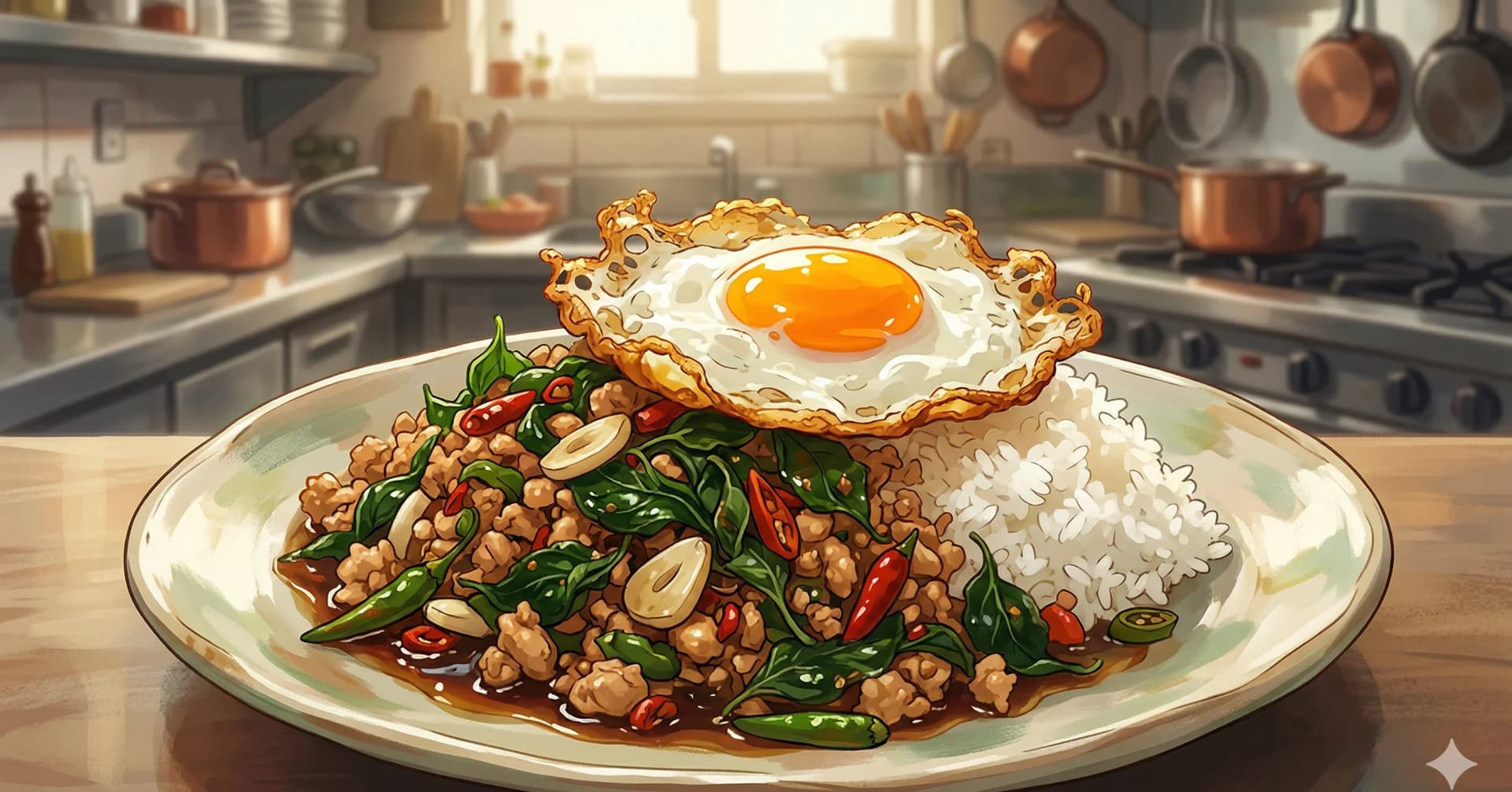
Thailand's beloved street-food stir-fry of coarsely ground chicken, pounded chili-garlic paste, and holy basil, served over rice with a crispy fried egg
If Thailand had a national lunch, this would be it. Pad kra pao (also spelled pad gaprao, pad ka prao, or pad ka pow) appears on nearly every street corner, food court counter, and cafeteria line across the country. Office workers point at it through glass dividers. Students order it by default. It is fast, cheap, and deeply satisfying in the way that only something both spicy and aromatic can be.
The dish belongs to a family of Thai stir-fries built on a pounded chili-garlic paste rather than a prepared curry paste. That foundation gives it a rough, immediate heat that feels different from the slow warmth of a green curry or red curry. The holy basil goes in at the end, off the heat, where it wilts just enough to release its peppery, clove-like fragrance without turning dark and bitter. If you have ever wondered why your version at home lacked that particular perfume, the basil variety is almost certainly the answer.
This recipe follows the classic street-food approach: coarsely ground chicken rather than sliced pieces, a mortar-pounded paste for the aromatic base, and a sauce that coats rather than pools. Long beans and a small amount of onion add texture without pushing the dish away from its simple identity. The fried egg on top, with its bubbly, lacy edges from deep oil, is not optional in the traditional sense. Its richness rounds out the spice and ties everything to the rice underneath. Think of it as the Thai equivalent of ordering a burger with everything on it.
At a Glance
Yield
2 to 3 servings
Prep
15 minutes
Cook
8 minutes
Total
23 minutes
Difficulty
Easy
Ingredients
Stir-Fry Ingredients
- 5to 10 fresh Thai bird chilies, to taste
- 5 clovesgarlic (about 20 g)
- 1spur chili or other mild red pepper (about 30 g), roughly chopped
- 1 tbspoyster sauce
- 1 tbsplight soy sauce
- 2 tspfish sauce
- 1⅓ tsp(1 1/2 teaspoons) dark soy sauce (or black soy sauce)
- 2 tbspwater
- 1⅔ tsp(1 1/2 teaspoons) white sugar
- ¾ lbchicken thigh or breast, coarsely ground or finely chopped
- 2 oz(about 1/2 cup) long beans, cut into 2 cm pieces
- 1½ oz(about 1/2 small) yellow onion, diced
- 1green onion, cut into 4 cm lengths (optional)
- 1 oz(about 1 1/2 cups, loosely packed) holy basil leaves
- 1 tbspvegetable oil
Fried Egg Ingredients
- 2to 3 eggs, one per person
- —Vegetable oil, enough to fill a small pan to about 1 cm depth
To Serve
- —Steamed jasmine rice
- —Prik nam pla : 15 ml fish sauce, a squeeze of lime juice, 2 sliced Thai chilies, 1 clove garlic, finely chopped (optional)
Method
- 1
Pound the Thai bird chilies in a mortar and pestle until they break down into a rough paste. The seeds can scatter, so work steadily. Add the garlic and spur chili and pound until you have a coarse, fragrant paste with visible garlic pieces. You want texture here, not a smooth puree.
- 2
Combine the oyster sauce, light soy sauce, fish sauce, dark soy sauce, water, and sugar in a small bowl. Stir until the sugar dissolves. Taste and note the balance of salt and sweetness, knowing the stir-fry will absorb some of the seasoning.
- 3
Heat the vegetable oil in a wok or large skillet over high heat until it shimmers and a wisp of smoke appears. Add the pounded chili-garlic paste and stir constantly for about 30 seconds, until the garlic turns golden at the edges and the kitchen fills with a sharp, peppery smell.
- 4
Add the ground chicken and break it apart with a spatula, pressing it against the wok surface to get some browning. Cook for about 1 to 2 minutes, tossing frequently, until the meat is no longer pink on the outside but not yet fully cooked through.
- 5
Pour in the sauce and toss to coat. Continue stirring for another minute as the liquid reduces slightly and the chicken absorbs the color of the dark soy sauce.
- 6
Add the long beans and onion. Toss everything together and cook for 1 to 2 minutes more, until the beans are tender-crisp and the chicken is cooked through. The sauce should coat the ingredients in a thin, glossy layer rather than pool at the bottom of the wok.
- 7
Remove the wok from the heat. Add the holy basil leaves and fold them through the stir-fry. The residual heat will wilt them within about 15 seconds, and the aroma will shift noticeably toward something warm and peppery. If using green onion, add it here as well. Taste and adjust with a splash more fish sauce or a pinch of sugar if needed.
- 8
For the fried egg, heat about 1 cm of oil in a small frying pan or wok over high heat. When the oil is very hot and nearly smoking, crack an egg directly into it. The whites will immediately puff and blister. Spoon hot oil over the top of the egg to cook the surface. The edges should be golden, lacy, and crisp while the yolk stays soft, about 45 to 60 seconds total.
- 9
Spoon the stir-fry over steamed jasmine rice. Place the fried egg on top. Serve the prik nam pla alongside for drizzling over the egg if desired.
Key Ingredient Benefits
Holy basil (bai kra pao): Not to be confused with Thai sweet basil (bai horapa), holy basil has smaller, rougher leaves with serrated edges and a distinctly peppery, clove-like flavor. It is the defining ingredient in this dish and cannot be perfectly replicated. In Ayurvedic medicine it is classified as an adaptogen, used traditionally for stress and respiratory support. The eugenol it contains is the same compound found in cloves and has mild anti-inflammatory and antimicrobial properties in vitro. See the Holy Basil ingredient guide.
Fish sauce: A fermented condiment made from anchovies and salt, fish sauce provides glutamates that deepen the savory quality of the stir-fry. It is high in sodium but used in small amounts. The fermentation process yields amino acids and trace minerals. See the Fish Sauce ingredient guide for sourcing and storage.
Thai bird chilies: Small and intensely hot, these chilies register between 50,000 and 100,000 Scoville heat units. The capsaicin they contain has been associated with increased energy expenditure and may support circulation, though the quantities consumed in a single dish are modest. Their heat is front-loaded and direct, which suits the quick cooking time of this stir-fry.
Dark soy sauce: Thicker and sweeter than regular soy sauce, it is aged longer and often contains molasses or caramel. It contributes color and a subtle sweetness without adding as much salt as an equivalent volume of light soy. See the Dark Soy Sauce ingredient guide.
Why This Works
The pounded paste is the backbone. Crushing the chilies and garlic in a mortar rather than mincing them with a knife releases more oils and creates an uneven texture that fries differently across the surface of the wok. Some bits caramelize, others stay soft, and the result is a more layered heat than a uniform mince can produce.
The sauce is intentionally restrained in volume. Thai street vendors use just enough liquid to coat the meat and carry flavor, not to create a gravy. The combination of oyster sauce, light soy, fish sauce, and dark soy builds umami from multiple angles. The dark soy contributes color and a faint molasses sweetness more than salt. Together they produce a deeply savory base that lets the holy basil stand out rather than compete.
Holy basil wilts rapidly and turns bitter if cooked too long, which is why it goes in off the heat at the very end. The brief contact with hot food is enough to soften the leaves and release their volatile oils. That timing is the difference between a dish that smells extraordinary and one that tastes only of soy sauce.
The fried egg works because of contrast. The crispy edges and runny yolk add richness and fat that temper the chili heat. When the yolk breaks and mixes with the rice and sauce underneath, it creates a secondary layer of flavor that extends every bite.
Substitutions & Variations
Basil: If holy basil is unavailable, Italian sweet basil is actually a closer flavor match than Thai sweet basil, which has a stronger anise character. Thai basil will still produce a good dish, just a different one. Use the same quantity of either substitute.
Protein: Ground pork is the most common alternative and produces a slightly fattier, richer stir-fry. Ground beef, shrimp, sliced squid, or crumbled firm tofu all work. For sliced meat rather than ground, cut chicken thigh into thin bite-size pieces and increase the stir-fry time by about 1 minute.
Heat level: Reduce the Thai bird chilies to 2 or 3 for moderate heat, or remove the seeds before pounding. For a milder dish aimed at children, use only the mild red spur chili and skip the bird chilies entirely.
Vegetables: Long beans are traditional but green beans cut into short lengths are a fine substitute. Some versions include baby corn, sliced bamboo shoots, or a handful of straw mushrooms.
Sauce adjustments: If you cannot find dark soy sauce, use an additional teaspoon of regular soy sauce and a quarter teaspoon of molasses or brown sugar for color and sweetness. Reduce the light soy sauce to 2 teaspoons to compensate for the extra salt.
Vegan version: Replace chicken with 300 g crumbled firm tofu or a mix of chopped mushrooms and tofu. Use a vegan oyster sauce (mushroom-based versions are widely available) and a vegan fish sauce or an additional tablespoon of light soy sauce.
Serving Suggestions
Pad kra pao is a one-plate meal in the Thai tradition, needing nothing beyond rice and the fried egg. For a fuller table, pair it with a bowl of tom yum goong to start, or serve alongside larb for a contrast of textures and temperatures. A simple plate of sliced cucumber and tomato with no dressing is the classic Thai side, providing a cool counterpoint to the chili heat. For a weekend spread that moves through several Thai flavors, add pad thai or pad see ew as a noodle option and gai yang as a grilled centerpiece.
Storage & Reheating
Refrigerator: Store the stir-fry without the egg in an airtight container for up to 3 days. The basil will darken but the flavor holds well.
Reheating: Reheat in a wok or skillet over high heat for 2 to 3 minutes, adding a tablespoon of water if the sauce has dried out. A quick, hot reheat preserves the texture better than a long, gentle one. Fry a fresh egg to serve alongside, as reheated fried eggs lose their appeal.
Freezing: The stir-fry freezes reasonably well for up to 1 month. The long beans will soften, and the basil flavor will diminish, but the overall dish remains satisfying. Thaw overnight in the refrigerator and reheat in a hot wok.
Meal prep: The chili-garlic paste and sauce can be made up to 2 days ahead and refrigerated separately. The actual stir-fry takes under 5 minutes once you start cooking, so advance prep of the paste and sauce is the most useful shortcut.
Cultural Notes
Pad krapow (ผัดกะเพรา), sometimes spelled pad kaprao or pad gaprao, is the most reliably ordered everyday Thai stir-fry in the country, and within Thailand it carries a status that is part comfort food, part cultural shorthand. The dish is so commonly eaten that "pad krapow" is what Thais order when they cannot think of anything else, which has earned it the unofficial nickname "a kin arai mai ruu, sang pad krapow" ("when you don't know what to eat, order pad krapow"). Many Bangkok office workers eat the dish four or five lunches a week without anyone considering it repetitive.
The defining ingredient is bai krapow (holy basil, Ocimum tenuiflorum), which is botanically distinct from the sweet basil (bai horapha, Ocimum basilicum) used in green curry. Holy basil has a pepper-and-clove note that is unmistakable when added to a hot wok; Italian basil tossed into the same dish tastes wrong. Outside Thailand, holy basil is often hard to source, and Thai-American restaurants frequently substitute Thai sweet basil, producing a dish that locals would not recognize as proper pad krapow. The substitution is the most common point of complaint from Thai diners abroad.
The dish itself is built quickly: garlic and bird's eye chili pounded in a mortar and fried in oil, the minced or sliced meat added and stir-fried hard, fish sauce, oyster sauce, dark soy sauce, and palm sugar splashed in, and the holy basil tossed at the very end so the leaves wilt but stay vivid green. The dish is served over rice with a fried egg on top (the egg called khai dao, "star egg," for its sunburst yolk), and the standard accompaniment is a small dish of fish sauce with sliced bird's eye chilies for diners to spike the heat to taste. Pork (pad krapow moo) and chicken (pad krapow gai) are the most common proteins; beef, seafood, and tofu versions also exist.
Nutrition Facts
Calories: 305kcal (15%)|Total Carbohydrates: 12.8g (5%)|Protein: 28.7g (57%)|Total Fat: 15.6g (20%)|Saturated Fat: 4.2g (21%)|Cholesterol: 229mg (76%)|Sodium: 926mg (40%)|Dietary Fiber: 1.9g (7%)|Total Sugars: 4.2g
You Might Also Like
Ratings & Comments
Ratings & Comments
Ratings
Share your thoughts on this recipe.
Sign in to rate and comment