Dark Soy Sauce
Also known as: Lao Chou, Black Soy Sauce, Thick Soy Sauce
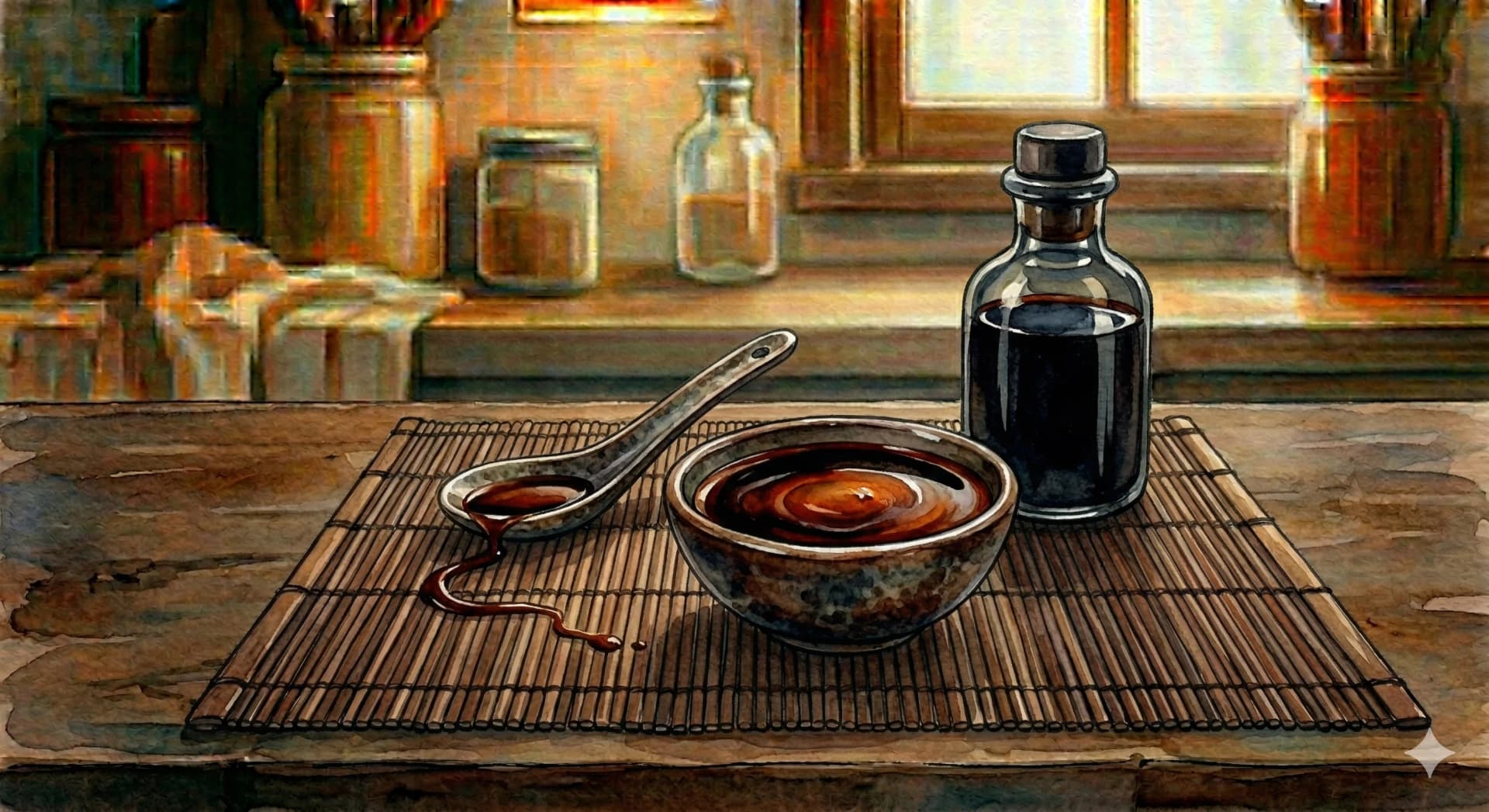
Dark soy sauce is the richly colored, molasses-thickened counterpart to light soy sauce. It is aged longer and often has caramel or molasses added, giving it a deep mahogany color, a thicker consistency, and a subtly sweet, less salty flavor than its lighter counterpart. In Chinese cooking, dark soy sauce is used primarily for color and as a background note of sweetness — rarely as a seasoning agent on its own.
Key facts at a glance:
- It is aged longer and often — Caramel or molasses added, giving it a deep mahogany color, a thicker consistency, and a subtly sweet, less salty flavor than its lighter counterpart.
- Dark soy sauce — The richly colored, molasses-thickened counterpart to light soy sauce.
- In Chinese cooking, dark soy sauce — Used primarily for color and as a background note of sweetness — rarely as a seasoning agent on its own.
Flavor Profile
Origin
China, Guangdong, Shanghai
Traditional Medicine Perspectives
Traditional Chinese Medicine
Dark soy sauce is considered warming in TCM due to its longer fermentation and added sweetness. The molasses or caramel additions contribute to its nourishing quality. It is associated with strengthening the Spleen and Stomach and supporting Qi transformation.
Modern Scientific Research
Dark soy sauce's extended aging and caramelization process produces additional Maillard reaction products and melanoidins, which show significant antioxidant activity in research. The molasses content adds small amounts of iron and potassium. Like all soy sauces, it contains glutamates and bioactive peptides from soy protein fermentation.
Cultural History
The distinction between light and dark soy sauce reflects centuries of refined Chinese culinary thinking about how ingredients contribute to a dish. Dark soy sauce (lao chou, meaning 'aged soy sauce') was developed for the specific purpose of adding color to braises and red-cooked dishes — a technique central to Chinese cuisine where long-cooked meats take on a deep red-brown color and glossy sheen that visually signals richness and care.
Culinary Uses
Use dark soy sauce to add color and a note of sweetness to braised dishes, red-cooked meats, and fried rice. It is rarely used alone as a dipping sauce — always in combination with light soy sauce. A small amount added to noodle dishes or congee provides depth without strong saltiness.
Preparation Methods
Add to braising liquids early for color development. Use sparingly — a tablespoon or two goes a long way in terms of color. When substituting, note that it is less salty than light soy sauce and contributes sweetness.
Traditional Dishes
- Red-braised pork (hong shao rou)
- Soy sauce eggs
- Clay pot rice
- Char siu
- Master stock chicken
Recipes Using Dark Soy Sauce
- Niu Rou Yang Cong Jiaozi (Beef and Onion Dumplings)
- Chicken Chow Mein (鷄肉炒麵)
- Chungking Pork (重庆猪肉)
- Gai Yang (Thai BBQ Chicken)
- Slow-Braised Pork Belly (Moo Hong / หมูฮ้อง)
- Ginger Beef
- Ginger Scallion Beef
- Jiao Hua Ji (Beggar's Chicken)
- Braised Pork Leg on Rice (Khao Kha Moo / ข้าวขาหมู)
- Bo Kho (Vietnamese Beef Stew)
- Black Pepper Beef (黑椒牛柳)
- Dan Dan Noodles (担担面)
- Char Kway Teow (炒粿條)
- Beijing Shredded Pork (Jing Jiang Rou Si / 京酱肉丝)
- General Tso's Chicken (左宗棠鸡)
- Five-Spice Roast Chicken
- Beef in Black Bean Sauce (豉汁牛肉)
- La Chang Fan (Sticky Rice with Chinese Sausage)
- Clams in Black Bean Sauce (豉汁炒蜆)
- Beef with Oyster Sauce (蠔油牛肉)
- Xiang Gu Shao Dou Fu (Braised Tofu with Mushrooms)
- Chicken Feet (鳳爪)
- Chinese Stuffed Eggplant (釀茄子)
- Soy Sauce Chicken
- Cong You Ban Mian (Scallion Oil Noodles)
- Chinese Tea Eggs (茶叶蛋)
- Shrimp and Broccoli in Brown Sauce (虾仁西兰花)
- Lu Dan (Soy Braised Eggs)
- Lo Mai Gai (Lotus Leaf Sticky Rice)
- Mongolian Beef (蒙古牛肉)
- Steamed Fish with Ginger and Scallion (薑蔥蒸魚)
- Black Bean Chicken
- Braised Chicken with Lily Buds and Mushrooms (Jin Zhen Yun Er Ji)
- Shi Zi Tou (Lion's Head Meatballs)
- Gong Bao Ji Ding (Kung Pao Chicken)
- Zongzi (Sticky Rice Dumplings)
- Hong Shao Rou (Red Braised Pork Belly)
- Beef Tendon Noodle Soup (牛筋面)
- Dao Xiao Mian (Knife-Cut Noodles, 刀削面)
- Gan Chao Niu He (Beef Chow Fun)
- Bao Zai Fan (Claypot Rice)
- Re Gan Mian (Hot Dry Noodles)
- Jiaozi (Pork and Chive Dumplings)
- Hong Shao Yu (Red Braised Fish)
- Hokkien Mee (福建面)
- Kao Fu (Shanghai Braised Gluten)
- San Bei Ji (Three Cup Chicken)
- Hui Guo Rou (Twice Cooked Pork)
- Bak Kut Teh (Pork Bone Tea)
Comments
Share your thoughts on this ingredient.
Sign in to comment0 Comments