Cross-Cultural · China
Steamed Spare Ribs with Black Bean Sauce (豉汁蒸排骨)
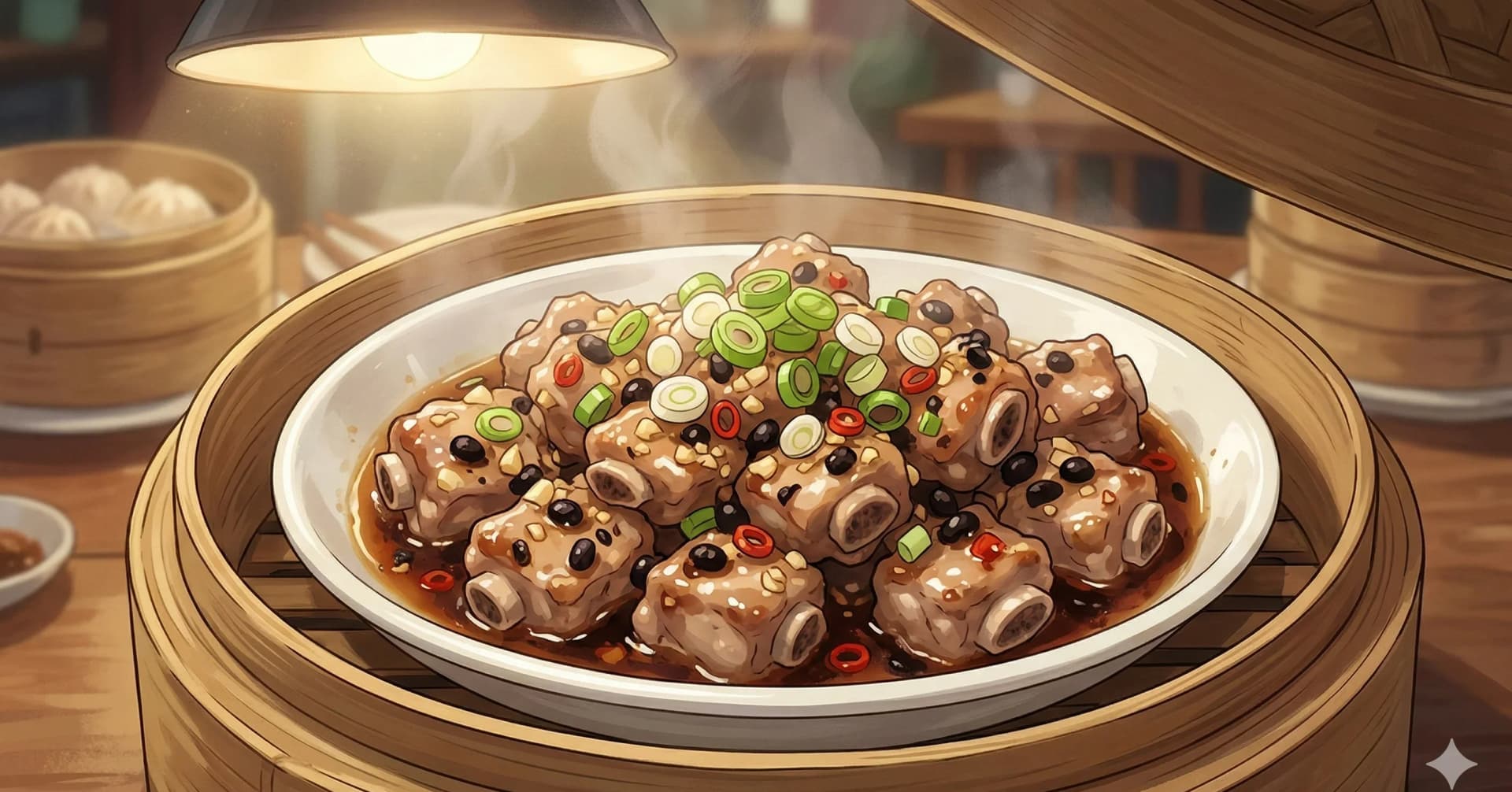
Spare ribs cut between the bones, rinsed clean, marinated with fermented black beans, garlic, ginger, and dried mandarin peel, then steamed
Steamed spare ribs with black bean sauce is one of the dishes that defines dim sum. It arrives in a small steamer basket, the ribs arranged in a single layer with bits of fermented black bean and flecks of chili pepper clinging to each piece. The meat is tender and succulent, the black bean salty and funky, and the dried mandarin peel adds a faint citrus perfume that lifts the whole thing.
The technique has a step that explains why dim sum ribs look different from anything you might make at home: the ribs are rinsed with cornstarch before marinating. You coat the cut ribs in cornstarch, then massage them under running water for a minute or two. The cornstarch acts as a gentle abrasive that scrubs away the myoglobin, the protein that gives raw meat its dark red color and raw-meat smell. The result is ribs that are lighter in color and cleaner in flavor, which allows the black bean marinade to come through more clearly.
The marinating is simple: fermented black beans rinsed briefly to reduce their saltiness, then combined with minced garlic, ginger, rehydrated dried mandarin peel, oyster sauce, soy sauce, and Shaoxing wine. The ribs sit in this for at least 30 minutes. Steaming takes about 20 minutes. The key is arranging the ribs in a single layer with no overlap, so every piece cooks evenly.
At a Glance
Yield
4 servings
Prep
20 minutes
Cook
20 minutes
Total
40 minutes
Difficulty
Easy
Ingredients
- 1 lbspare ribs, cut between bones into 1-1.5 inch pieces
- 1 tbspdried fermented black beans, rinsed
- 1 tspdried mandarin orange peel, soaked 5-10 min (optional)
- 1 tbspcornstarch, for rinsing ribs
- 1/2 tspsalt
- 1 tspsugar
- 1/2 tbsplight soy sauce
- 1 tbspoyster sauce
- 1/2 tbspShaoxing wine
- 1garlic clove, minced
- 1 tspfresh ginger, minced
- 1 tspsesame oil
- 2 tbspcornstarch, for marinade
- —red chili pepper slices, for garnish (optional)
- 2scallion stalks, sliced, for garnish
Method
- 1
Rinse black beans under water 15-20 sec while massaging. Drain. Soak mandarin peel in warm water 5-10 min.
- 2
Cut ribs between bones into 1-1.5 inch pieces.
- 3
Coat ribs with 1 tbsp cornstarch, massage, then rinse under running water 1-2 min while massaging. Drain, pat dry.
- 4
Mix marinade: salt, sugar, soy sauce, oyster sauce, Shaoxing wine. Add minced garlic, ginger, and mandarin peel. Add black beans. Combine with ribs and massage 45-60 sec. Add 2 tbsp cornstarch and sesame oil, mix.
- 5
Arrange ribs in a single layer on a plate with no overlap. Steam on high initially, then reduce to simmer for about 20 minutes (internal 145°F / 63°C).
- 6
Garnish with chili slices and scallions. Serve.
Key Ingredient Benefits
Pork spare ribs: Cut into bite-sized 1-inch pieces (a butcher will do this for you), the small pieces cook quickly and absorb the steaming sauce on all sides. Spare ribs have a good ratio of meat to bone and enough fat to stay tender during the relatively short steam time. The bones release collagen and gelatin into the sauce, giving the steamed liquid its characteristic glossy consistency.
Fermented black beans (douchi): The defining ingredient of the dish. These are soybeans that have been fermented with salt, Aspergillus mold cultures, and traditional aging. The fermentation produces intense, almost cheese-like umami compounds. The beans are crushed lightly before use to release their flavor into the sauce. Even a tablespoon transforms a dish.
Dried tangerine peel (chenpi): Aged dried citrus peel, a Cantonese specialty. The longer it ages, the more valuable it becomes — high-quality aged chenpi from Xinhui in Guangdong can sell for thousands of dollars per kilogram. The dried peel contributes a complex, slightly bitter citrus aroma that balances the richness of the pork and the salty intensity of the fermented beans.
Shaoxing wine: A traditional Chinese rice wine with a deep amber color and nutty, slightly funky flavor. Used to deglaze and add umami complexity. Shaoxing wine is essential to authentic Cantonese cooking.
Oyster sauce: A concentrated sauce made from oyster extract, providing additional umami depth and a glossy mouthfeel.
Why This Works
Soaking the fermented black beans briefly before crushing them allows them to release their flavor into the sauce more effectively. Crushing rather than chopping releases the salty-savory liquid trapped inside the beans, which becomes part of the dish's flavor base. This small step is what separates restaurant-quality steamed ribs from home versions where the beans remain too distinct.
The cornstarch coating on the ribs serves two purposes: it absorbs and holds the marinade against the meat, and it forms a silky, sauce-like coating around each rib during steaming. The result is ribs that taste like they have been braised in their own concentrated sauce, even though they were only steamed.
Steaming at high heat (boiling water with active steam) cooks the ribs quickly without rendering out the fat. The same dish made by braising or roasting would lose moisture and become dry; steaming keeps the meat tender and the fat content intact. The brevity of the cook also preserves the bright, slightly grassy quality of the chili and scallions added at the end.
The dried tangerine peel does something subtle but important: it adds a bitter-aromatic note that cuts through the richness of the pork. Without it, the dish can taste flat or one-dimensionally salty. The peel is a textbook example of how a single ingredient can transform the overall flavor profile of a dish.
Substitutions & Variations
Pork spare ribs: Pork riblets (smaller cuts from the riblet portion) work identically. Pork shoulder cut into 1-inch chunks can substitute, but the dish loses the bone-derived gelatin and the bony bite that defines authentic dim sum-style ribs.
Fermented black beans: No real substitute. Black bean garlic sauce (sold in jars) can substitute in a pinch, though the dish becomes saltier and less subtle. Some recipes use Japanese fermented black soybeans (hamanatto), which work but produce a different flavor.
Dried tangerine peel: Fresh orange or tangerine zest (about 1 teaspoon) is a reasonable substitute, though the flavor lacks the depth of aged peel. Lemongrass or kaffir lime leaf produces a different but interesting flavor profile.
Shaoxing wine: Dry sherry is the closest substitute. Dry sake works. Mirin is too sweet; avoid it.
Oyster sauce: Vegetarian oyster sauce (made from mushrooms) works for a pescatarian or vegetarian-friendly version. Hoisin sauce is too sweet; avoid it.
Cornstarch: Tapioca starch or potato starch both work identically.
Serving Suggestions
Steamed spare ribs with black bean sauce is a classic Cantonese dim sum dish, traditionally served in a small bamboo or metal steamer basket at brunch with tea. For a dim sum-style spread, pair with shrimp dumplings (har gao), siu mai, and char siu bao. The full dim sum experience includes Chinese tea (jasmine, pu-erh, or chrysanthemum) and is best as a midday meal shared with several people.
For a family-style dinner, serve the ribs over steamed jasmine rice with a stir-fried green vegetable like gai lan or bok choy. The sauce from the ribs flavors the rice beautifully.
The dish also works as part of a larger Chinese banquet menu. Serve alongside steamed fish, a soup, a vegetable, and rice.
Pair with hot Chinese tea (jasmine, pu-erh, or oolong) or chilled white wine (Riesling or Gewürztraminer work well with the salty-savory profile).
Storage & Reheating
Refrigerator: Store in an airtight container for up to 3 days. The flavor deepens overnight as the ribs absorb more of the steaming sauce.
Reheating: Re-steam for 5 to 7 minutes over boiling water to restore the original texture. Microwaving works in a pinch but the sauce can dry out; add a tablespoon of water before microwaving and cover loosely.
Make-ahead: The marinated ribs can be prepared up to 24 hours in advance and refrigerated until steaming. The dish itself can be cooked, cooled, and refrigerated, then re-steamed at serving time — this is actually a popular Cantonese restaurant technique for efficient service during dim sum brunch.
Freezing: Possible for up to 2 months but the texture suffers slightly on thawing. Best frozen as cooked ribs and re-steamed from frozen.
Cultural Notes
Steamed spare ribs with black bean sauce (xiāzhī zhēng páigǔ in Mandarin, si jap jing pai gwat in Cantonese) is one of the foundational dishes of Cantonese dim sum culture. Dim sum, which literally means "touch the heart," is the Cantonese tradition of serving small plates with tea, typically at brunch (called yum cha or "drinking tea"). The tradition originated in the teahouses along the Silk Road and was refined in the Cantonese-speaking regions of Guangdong and Hong Kong over centuries.
The combination of pork, fermented black beans, and dried tangerine peel is uniquely Cantonese. Fermented black beans have been a staple of southern Chinese cooking for at least 2,000 years, and the technique of steaming small pork pieces with the beans appears in some of the earliest Cantonese cookbooks. Dried tangerine peel, particularly the prized chenpi from Xinhui, has been part of Cantonese cooking and traditional Chinese medicine for centuries.
The technique of steaming over boiling water is one of the foundational Chinese cooking methods and is particularly associated with Cantonese cuisine, which prizes the preservation of natural flavor and texture. Steaming is gentler than braising or roasting and is believed in traditional Chinese culinary thinking to be the most virtuous cooking method, preserving the ben wei (本味, "original flavor") of ingredients.
Modern dim sum restaurants typically prepare the marinated ribs in advance and steam them to order in small bamboo baskets. The dish has spread globally with Cantonese diaspora and is now found in every Chinatown around the world, from San Francisco to London to Sydney.
Nutrition Facts
Calories: 245kcal (12%)|Total Carbohydrates: 8.7g (3%)|Protein: 22.5g (45%)|Total Fat: 12.6g (16%)|Saturated Fat: 2.5g (13%)|Cholesterol: 83mg (28%)|Sodium: 685mg (30%)|Dietary Fiber: 0.4g (1%)|Total Sugars: 1.6g
You Might Also Like
 Easy
EasyCross-Cultural · China
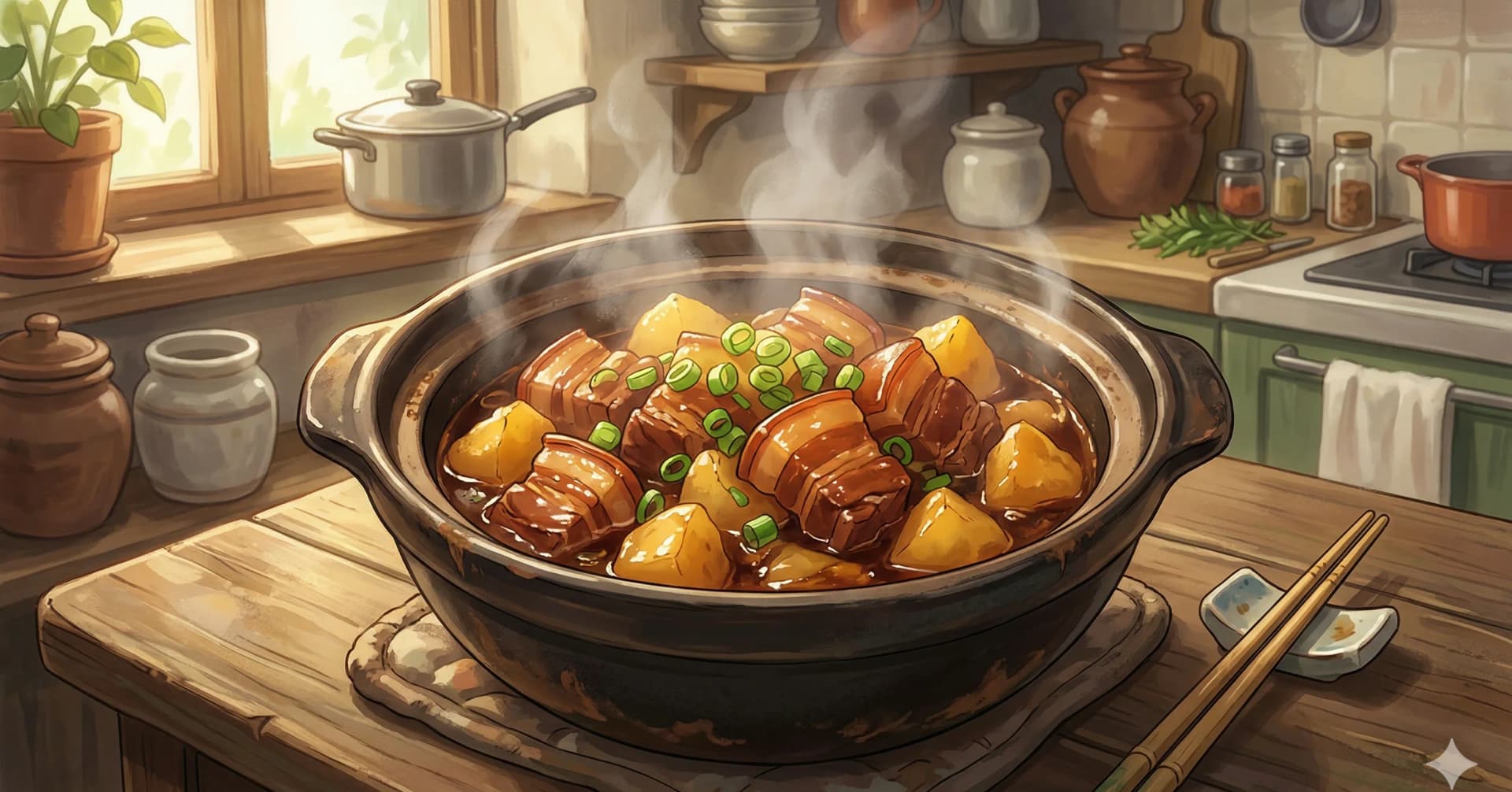
Braised Pork with Potatoes (薯仔炆豬肉)
40 minutes
 Easy
EasyCross-Cultural · China
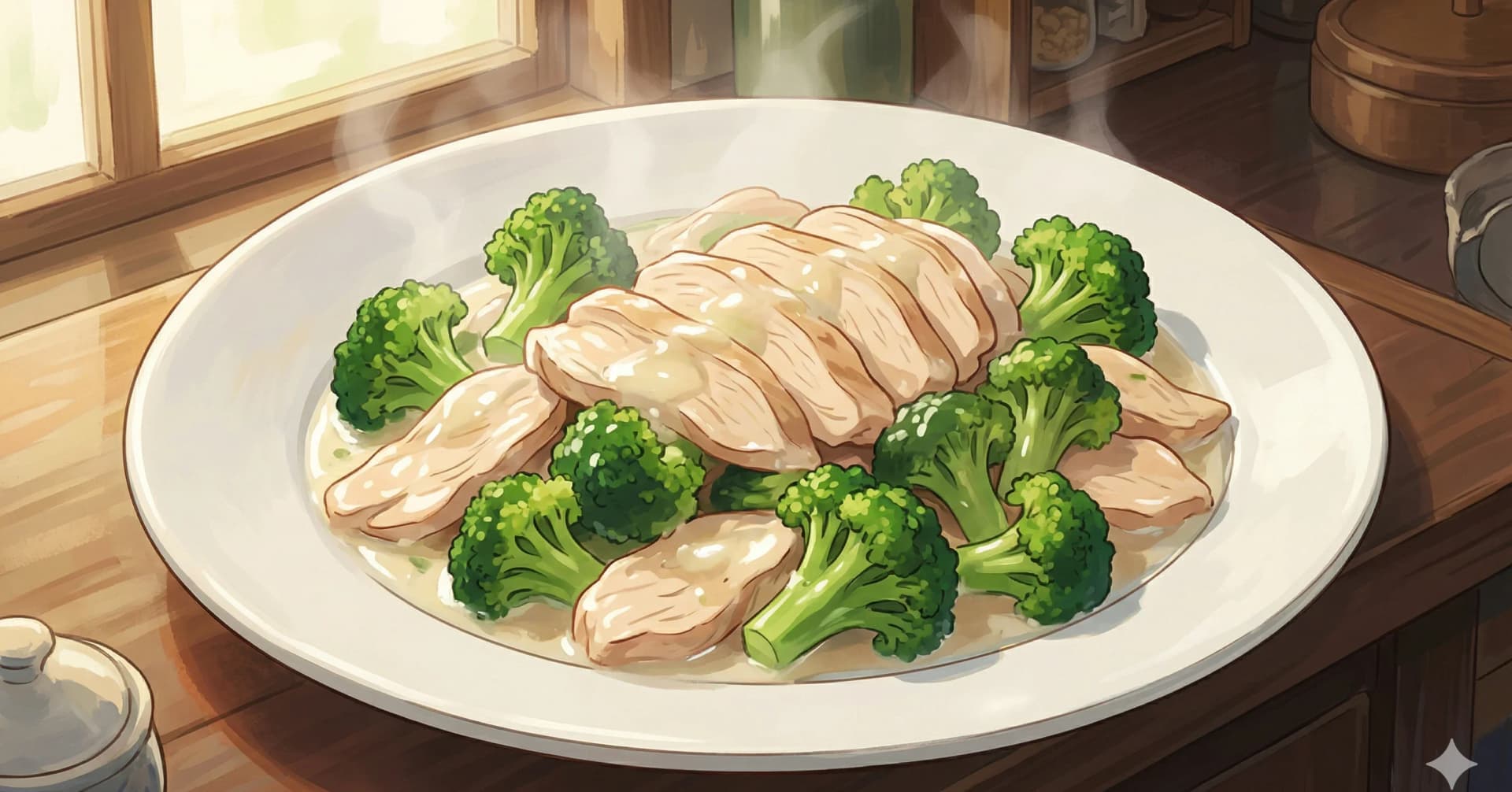
Chicken and Broccoli in White Sauce (白汁鸡花椰)
45 minutes
 Easy
EasyTraditional Chinese Medicine · China
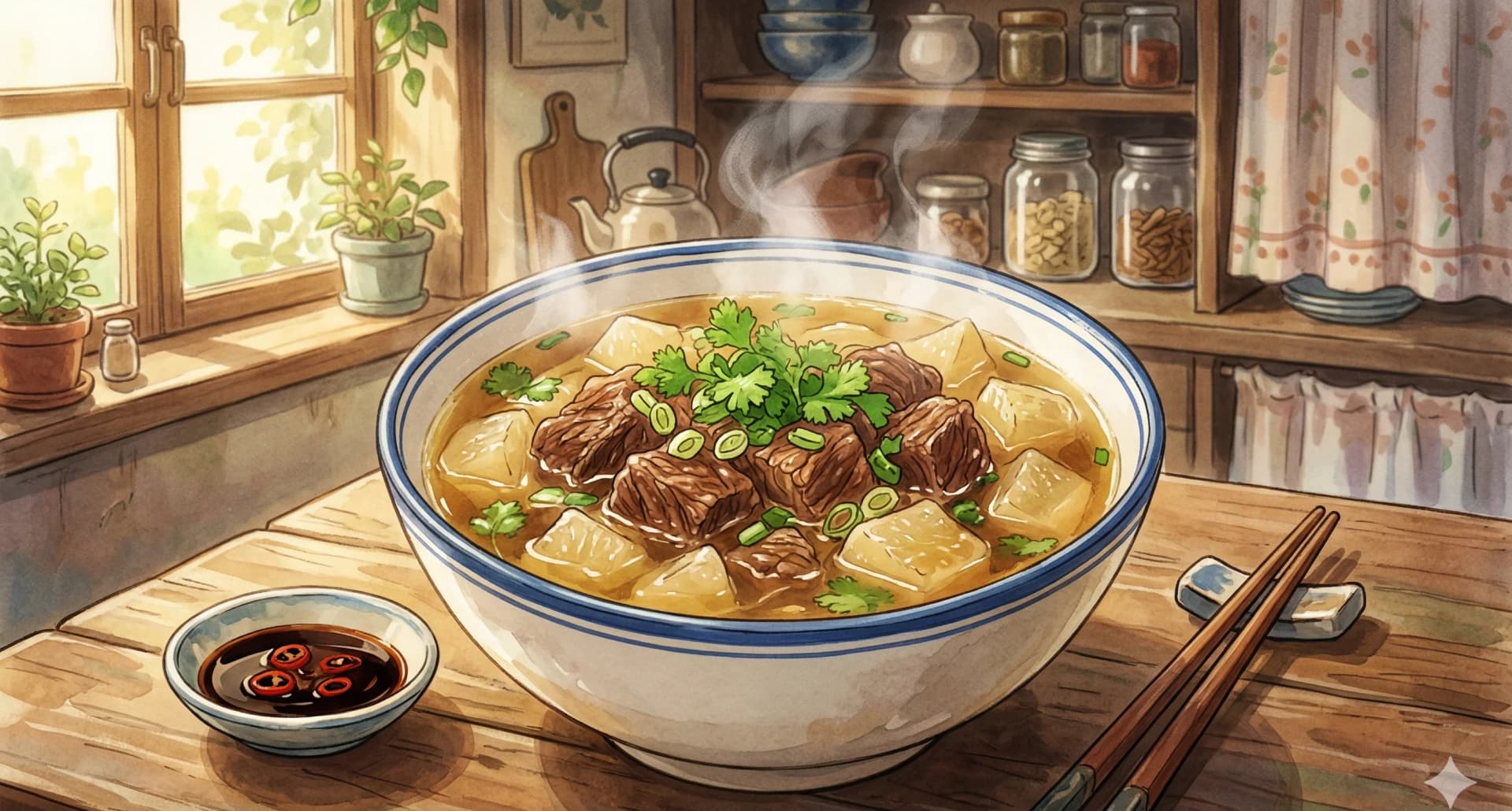
Beef Brisket Soup (清湯牛腩)
145 minutes
 Medium
Cross-Cultural · Korea
Napa Cabbage Kimchi (통배추김치)
8 hours plus 1-2 days fermentation
Ratings & Comments
Ratings & Comments
Ratings
Share your thoughts on this recipe.
Sign in to rate and comment