Chinese Cuisine
Wonton Soup (馄饨汤)
Silky pork and shrimp wontons swimming in a fragrant, ginger-laced broth
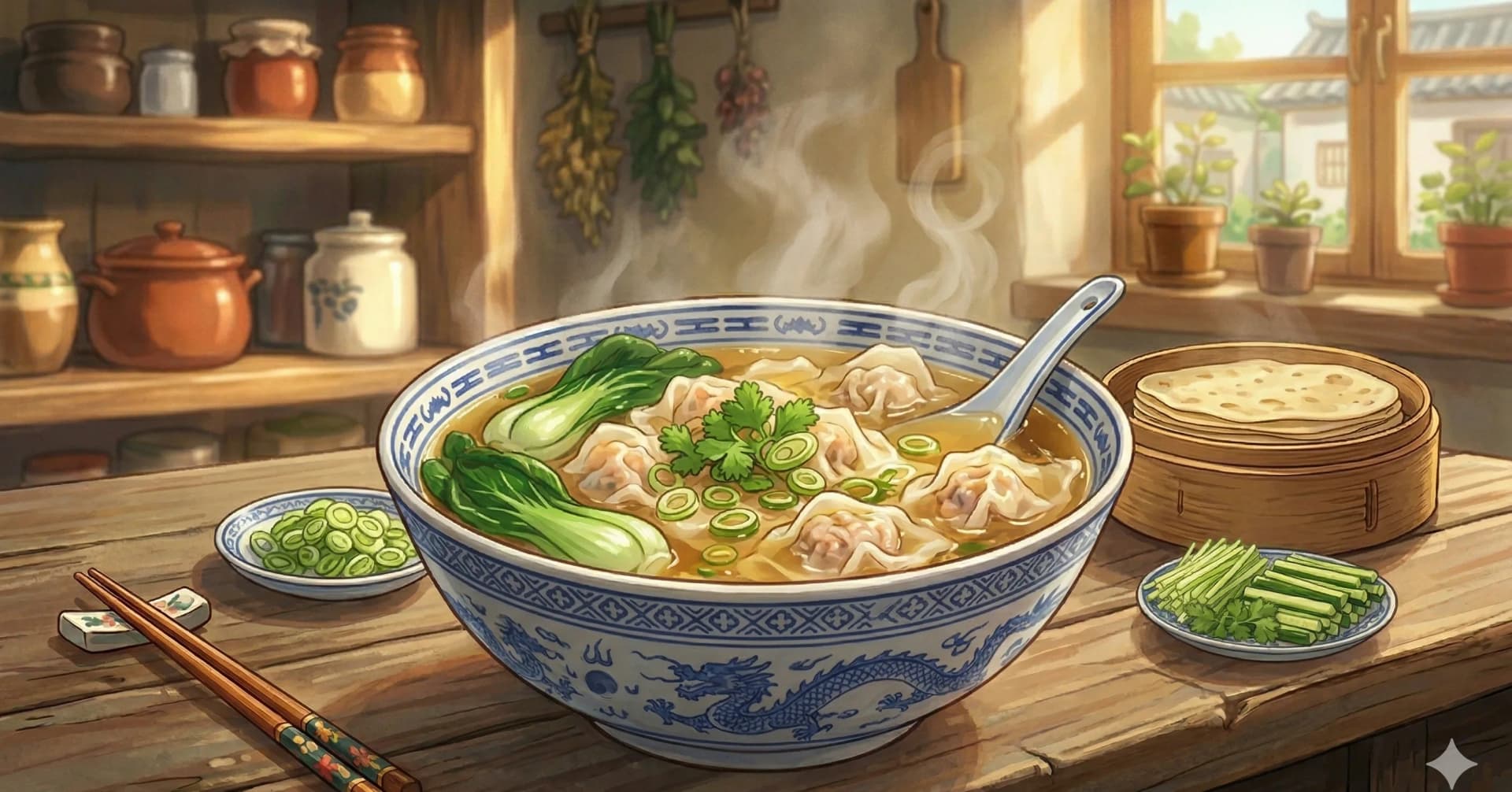
There is something deeply reassuring about a bowl of wonton soup. The broth is gentle and clear, barely disturbed by the soft dumplings floating at its surface. Each wonton is a small parcel of seasoned pork and shrimp, wrapped in a skin so thin it becomes nearly translucent when cooked. You can see the pink of the shrimp through the wrapper, a signal that the filling is right.
Wonton soup is Cantonese at its core, part of the same culinary tradition that produced Har Gow and Xiao Long Bao. Where those dumplings demand precision in dough thickness and pleating, wontons are forgiving. The wrappers are store-bought. The folding is simple. And the filling comes together in a single bowl with no special equipment. This is the dumpling recipe you make on a weeknight when you want something homemade but do not have hours to spare.
The key to the filling is the combination of pork and shrimp. The pork provides richness and binds the mixture, while the shrimp contributes sweetness, a bouncy texture, and a faint brininess that lifts the entire filling. Chopping the shrimp by hand rather than mincing it in a food processor is important. You want small, irregular pieces that give each bite a noticeable shrimp presence, not a smooth paste.
Ginger does double duty here. It appears minced in the filling and sliced in the broth, tying the two components together with its clean, sharp warmth. Sesame oil in the filling and a final drizzle on the broth reinforce that connection.
Wontons freeze beautifully. Make a full batch, cook what you need tonight, and freeze the rest on a parchment-lined tray. Within an hour they will be solid enough to tumble into a freezer bag. On a cold evening three weeks from now, you will be grateful.
At a Glance
Yield
8 servings (60 to 80 wontons)
Prep
1 hour
Cook
15 minutes
Total
1 hour 15 minutes
Difficulty
Medium
Ingredients
Filling Ingredients
- 8 ozground pork (not lean)
- 8 ozraw shrimp, peeled, deveined, and chopped into small pieces
- 2½ tbspfresh ginger, finely minced
- 2scallions, finely chopped
- 1 tbsplight soy sauce
- 2 tbspShaoxing wine
- ½ tspsalt
- 2 tbspsesame oil
Wrappers
- 1pack square wonton wrappers (approximately 80 wrappers)
Broth Ingredients
- 2 qtchicken stock
- 2¾ tbsplight soy sauce
- ⅓ cupfresh ginger, thinly sliced
- 1⅓ tbspsesame oil
- —Salt to taste
Method
- 1
Make the filling. In a large mixing bowl, combine the ground pork, chopped shrimp, minced ginger, scallions, soy sauce, Shaoxing wine, salt, and sesame oil. Mix vigorously in one direction with chopsticks or a fork until the mixture becomes sticky and cohesive, about 2 minutes. The one-direction mixing aligns the proteins and creates a bouncy texture. Cover and refrigerate while you set up your wrapping station.
- 2
Set up for wrapping. Place the wonton wrappers on your work surface, covered with a damp towel to prevent drying. Have a small bowl of water nearby. Line a large sheet pan with parchment paper.
- 3
Wrap the wontons. Hold one wrapper in your palm. Place about 1 teaspoon of filling slightly off-center. Fold the wrapper diagonally to form a triangle, pressing out any air pockets and sealing the edges firmly. Dab a small amount of water on one corner of the triangle's long edge, then bring the two bottom corners together and press to seal, forming the classic wonton shape that resembles a nurse's cap. Place on the parchment-lined tray. Repeat with the remaining wrappers and filling.
- 4
Prepare the broth. In a pot, combine the chicken stock, soy sauce, and sliced ginger. Bring to a simmer over medium heat and cook for 10 minutes to infuse the ginger flavor. Taste and adjust salt. Keep warm over low heat. Remove the ginger slices before serving.
- 5
Cook the wontons. Bring a large pot of water to a rolling boil. Drop the wontons in batches of 15 to 20 to avoid overcrowding. Stir gently once with a slotted spoon to prevent sticking. The wontons will sink, then float to the surface after about 2 minutes. Once floating, cook for 1 to 2 minutes more until the wrappers are fully translucent and the filling is cooked through. Remove with a slotted spoon.
- 6
Blanch the bok choy. In the same boiling water, blanch the bok choy halves for 30 to 45 seconds until bright green and just tender. Remove with a slotted spoon.
- 7
Assemble the bowls. Divide the wontons among serving bowls, about 8 to 10 per bowl. Add the blanched bok choy. Ladle the hot ginger broth over the wontons. Drizzle each bowl with 1/2 teaspoon sesame oil. Scatter sliced scallions and cilantro over the top. Serve chili oil on the side for those who want heat.
Key Ingredient Benefits
Shrimp: Rich in selenium, iodine, and omega-3 fatty acids. The pink color comes from astaxanthin, a carotenoid with studied antioxidant properties. Shrimp shells, if you have them, can be simmered into the broth for additional depth and a source of chitosan.
Ginger: Contains gingerols, which research has associated with anti-inflammatory effects and relief from nausea. Traditional Chinese medicine classifies fresh ginger as warm and dispersing, used to counteract the cooling nature of seafood. This is why ginger appears in nearly every Chinese shrimp and fish preparation.
Sesame oil: The toasted variety used here is made from roasted sesame seeds and is rich in lignans (sesamin and sesamolin). These compounds have been studied for antioxidant activity and potential cardiovascular benefits. It is used as a finishing oil, not a cooking oil, because high heat destroys its delicate flavor and aroma.
Wonton wrappers: Made from wheat flour, eggs, and water. The thinness of the wrapper is what distinguishes wontons from Jiaozi, which use a thicker, eggless dough.
Why This Works
Mixing the filling in one direction is a Chinese technique shared with Jiaozi and many other dumpling fillings. The unidirectional motion aligns the myosin proteins in the pork, creating a network that traps moisture and fat. The result is a filling that is bouncy and juicy rather than crumbly. Stirring randomly or using a food processor breaks these protein chains, producing a looser, less satisfying texture.
The hand-chopped shrimp is equally important. Small, irregular pieces of shrimp create pockets of distinct sweetness and snap within each wonton. When you bite through the wrapper, the shrimp pieces are identifiable against the softer pork. A food processor would turn the shrimp into a paste that blends invisibly into the pork, losing the textural contrast that makes this filling special.
Cooking the wontons in plain water rather than directly in the broth keeps the broth clear. Wonton wrappers release starch as they cook, and that starch would cloud the delicate chicken stock. Boiling them separately and then transferring them to the broth preserves the clarity and clean taste.
The sesame oil drizzle at the very end serves as an aromatic bridge. Its warm, nutty fragrance hits you first when you bring the bowl to your face, before you even taste the broth. That initial impression sets the tone for the entire bowl.
Substitutions & Variations
All-pork filling: Omit the shrimp and increase the ground pork to 1 lb. Add an extra tablespoon of sesame oil for moisture. The wontons will be richer but less complex.
All-shrimp filling: Replace the pork with an additional 1/2 lb shrimp. Add 2 tablespoons of pork fat (lard) or an extra tablespoon of oil to compensate for the missing fat. The filling will be lighter and more delicate.
Broth variation: For the Cantonese street vendor approach, skip the chicken stock broth entirely. Instead, place 1 tablespoon of dried shrimp, a small piece of dried seaweed, 1/2 teaspoon chicken bouillon powder, and a drizzle of sesame oil in each bowl. Ladle the hot wonton cooking water directly over these ingredients. The result is a lighter, more rustic soup.
Wonton wrappers: Round wrappers can substitute for square ones. The folding shape will differ, but the result is the same.
Fried wontons: Pan-fry or deep-fry cooked wontons for a crispy appetizer. Serve with sweet chili sauce or Chinkiang vinegar.
Serving Suggestions
Wonton soup is a meal on its own, traditionally served for breakfast or as a light lunch. In Cantonese tradition, it is part of the wonton noodle soup family. Add a nest of thin egg noodles to each bowl for a more substantial single-dish meal.
For a dim sum spread, serve alongside Har Gow, Lo Mai Gai, and Lo Bak Go. The contrast between the delicate wontons and the richer, heavier dim sum items mirrors the way a Cantonese teahouse meal unfolds.
Dan Dan Noodles and wonton soup make an excellent pairing for a casual dinner. The gentle broth cleanses the palate between bites of the intense Sichuan noodles.
Storage & Reheating
Freezing (uncooked): Arrange the wontons on a parchment-lined sheet pan, spaced so they do not touch. Freeze until solid (about 1 hour), then transfer to freezer bags. They keep for up to 2 months. Cook directly from frozen; add 1 to 2 minutes to the cooking time.
Refrigerating (uncooked): The filling can be refrigerated for up to 1 day before wrapping. Wrapped wontons should be cooked within 2 to 3 hours, as the wrappers will absorb moisture from the filling and become sticky.
Broth: Keeps in the refrigerator for up to 4 days or frozen for up to 3 months.
Reheating (cooked): Leftover cooked wontons can be reheated gently in simmering broth for 1 to 2 minutes. Avoid boiling vigorously, which can tear the delicate wrappers. Microwaving makes the wrappers rubbery and is not recommended.
Cultural Notes
Wonton soup (馄饨, hundun in Mandarin; 雲吞 wantan in Cantonese) is the Chinese filled-dumpling soup that exists in distinct regional traditions across the country, each with its own wrapper thickness, filling profile, broth style, and serving convention. The English-language "wonton soup" most commonly refers to the Cantonese version (Hong Kong and Guangdong), which is the version that traveled most widely with Cantonese diaspora cooks to North America, Southeast Asia, and Europe. But the dish has been documented in Chinese cooking texts for at least a thousand years, with references in Tang dynasty writings, and the form varies dramatically depending on where in China the cook learned the recipe.
The Cantonese version, served in Hong Kong as wantan min (wonton noodles) and in Guangdong as yuntun (clouds-swallowed, for the way the wontons float in the broth), uses thin wheat wrappers around a filling of ground pork and whole shrimp, sometimes with a hint of dried flounder powder or sesame oil. The broth is a clear pork-and-shrimp-shell stock, sometimes enriched with dried flounder and Jinhua ham for additional depth. The dish is typically served with thin springy jeng meen egg noodles, a few stalks of choy sum, and the wontons floating on top. The most famous wonton noodle shops in Hong Kong, including Mak's Noodle and Tsim Chai Kee, have operated for decades and remain reference points for the form.
Other regional versions of hundun differ in fundamental ways. Sichuan chao shou uses thicker square wrappers, larger pork-only fillings, and is often served not in soup but tossed in a chili-oil dressing called hong you chao shou (red oil chao shou). Shanghai versions are larger and meatier, sometimes with greens worked into the filling, and are typically served in a clearer broth without noodles. Northern Chinese versions blur into the related categories of jiaozi (boiled dumplings) and bao (steamed buns), with the line between hundun and jiaozi being primarily about the wrapper shape and thickness rather than the contents.
Nutrition Facts
Calories: 186kcal (9%)|Total Carbohydrates: 3.7g (1%)|Protein: 13.8g (28%)|Total Fat: 12.4g (16%)|Saturated Fat: 3.1g (16%)|Cholesterol: 68mg (23%)|Sodium: 1375mg (60%)|Dietary Fiber: 0.7g (3%)|Total Sugars: 0.9g
You Might Also Like
 Easy
EasyTraditional Chinese Medicine · China
Beef Brisket Soup (清湯牛腩)
145 minutes
 Medium
Chinese Cuisine
Char Siu (Chinese BBQ Pork)
9 hours (including marinating)
 Medium
Chinese Cuisine
Niu Rou Yang Cong Jiaozi (Beef and Onion Dumplings)
60 minutes
 Medium
Chinese Cuisine
Bai Qie Ji (White Cut Chicken)
4 hours 30 minutes
Ratings & Comments
Ratings & Comments
Ratings
Share your thoughts on this recipe.
Sign in to rate and comment