Anti-Inflammatory Foods for Skin: What to Eat for Clearer, Calmer Skin
Anti-Inflammatory Foods for Skin: What to Eat for Clearer, Calmer Skin
I spent most of my twenties treating my skin from the outside. Serums, acids, retinoids, prescription creams. Some helped temporarily. Most just moved the problem around. The acne on my chin would clear up, and a patch of eczema would appear on my wrists. The eczema would fade, and my cheeks would flush red for weeks.
It wasn't until a dermatologist, the fourth one I'd seen, asked me what I ate for breakfast that anything changed. "Cereal with milk, usually. Or toast with jam." She nodded like she'd heard this answer a thousand times. "Your skin is inflamed from the inside," she said. "No cream can fix what's happening in your gut."
That conversation sent me down a path that eventually led to a kitchen overhaul. The connection between food and skin isn't alternative medicine or wellness speculation. It's dermatology. And the anti-inflammatory foods that calm skin inflammation are the same ones that traditional beauty practices in India, Japan, Korea, and the Middle East have used for centuries.
The Gut-Skin Axis: Why Food Shows Up on Your Face
Your skin and your gut are in constant communication through what researchers call the gut-skin axis. The mechanistic case is laid out in detail in Salem and colleagues 2018, Frontiers in Microbiology, "The Gut Microbiome as a Major Regulator of the Gut-Skin Axis" and earlier in Bowe & Logan 2011 in Gut Pathogens, which traces the gut-brain-skin axis through probiotics, inflammation, and acne. This isn't metaphor. It's immunology.
When your gut is inflamed (from processed food, sugar, alcohol, or stress), intestinal permeability increases. Bacterial endotoxins enter the bloodstream. The immune system responds with systemic inflammation. And your skin, the body's largest organ, reflects that internal state.
Reviews have documented the mechanisms clearly: gut dysbiosis (microbial imbalance) is associated with acne, rosacea, eczema, and psoriasis through shared inflammatory pathways involving IL-6, TNF-alpha, and Th17 immune cells. Studies have found that patients with acne had significantly lower microbial diversity than controls, and that improving microbial diversity correlated with skin improvement.
This means that anti-inflammatory foods for skin work primarily through the gut. Fix the gut, calm the immune system, clear the skin. The topical approach treats symptoms. The dietary approach treats the source.
For a deeper look at how to address gut inflammation directly, see our guide on anti-inflammatory foods for gut health.
Turmeric: The Golden Ingredient for Skin
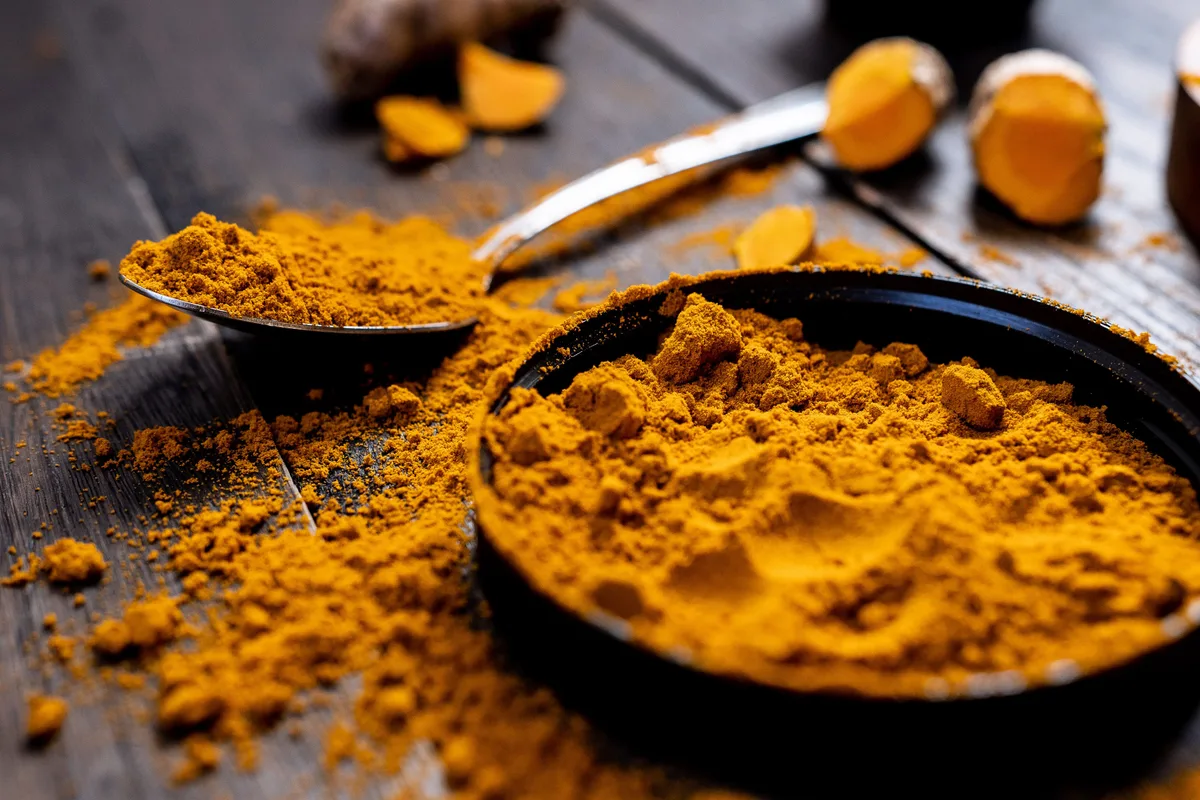
In South Asian bridal traditions, a turmeric paste ceremony (haldi) is performed the day before the wedding. The bride's face and body are coated in a mixture of turmeric, yogurt, and sometimes saffron. It's ceremonial, but it's also pharmacological. Turmeric has been used topically and internally for skin health across South Asia for millennia.
The internal route is where the research is most compelling for chronic skin inflammation.
Curcumin modulates several inflammatory pathways involved in skin conditions:
- It inhibits NF-kB, which controls the expression of genes responsible for inflammatory cytokines that drive acne, eczema, and psoriasis
- It reduces mast cell degranulation, the process that causes histamine-driven redness and itching
- It modulates the Th1/Th2 immune balance, which is disrupted in eczema and atopic dermatitis
Systematic reviews have analyzed 18 clinical studies and found that curcumin supplementation improved outcomes in psoriasis, acne, and skin aging, with the most consistent results in conditions driven by NF-kB pathway activation.
How to eat it for skin: Golden milk nightly is the simplest delivery method. The combination of turmeric, black pepper (for absorption), and fat (dairy or coconut milk) ensures curcumin reaches therapeutic levels. Many people notice reduced facial redness and fewer inflammatory breakouts within 3 to 4 weeks of daily consumption.
A note on turmeric staining: drinking golden milk won't turn your skin yellow. The haldi ceremony uses concentrated topical paste. Internal consumption at culinary doses doesn't affect skin pigmentation.
Omega-3 Fats: Calming the Inflammatory Baseline
The single most impactful dietary change for inflamed skin may be adjusting your omega-6 to omega-3 ratio.
Omega-6 fatty acids (abundant in soybean oil, corn oil, sunflower oil, and processed foods) are converted to arachidonic acid, which the body uses to produce pro-inflammatory prostaglandins and leukotrienes. These molecules directly increase sebum production, pore inflammation, and the redness associated with acne and rosacea.
Omega-3 fatty acids (EPA and DHA from fish; ALA from flaxseed and walnuts) produce anti-inflammatory resolvins that counteract this process. The balance between these two fat families determines your skin's inflammatory baseline.
Studies have found that omega-3 supplementation (2g EPA/DHA daily) reduced inflammatory acne lesions by 42% over 10 weeks. Clinical trials have found similar benefits for eczema severity.
Practical changes:
- Replace seed oils with ghee, olive oil, or coconut oil for cooking
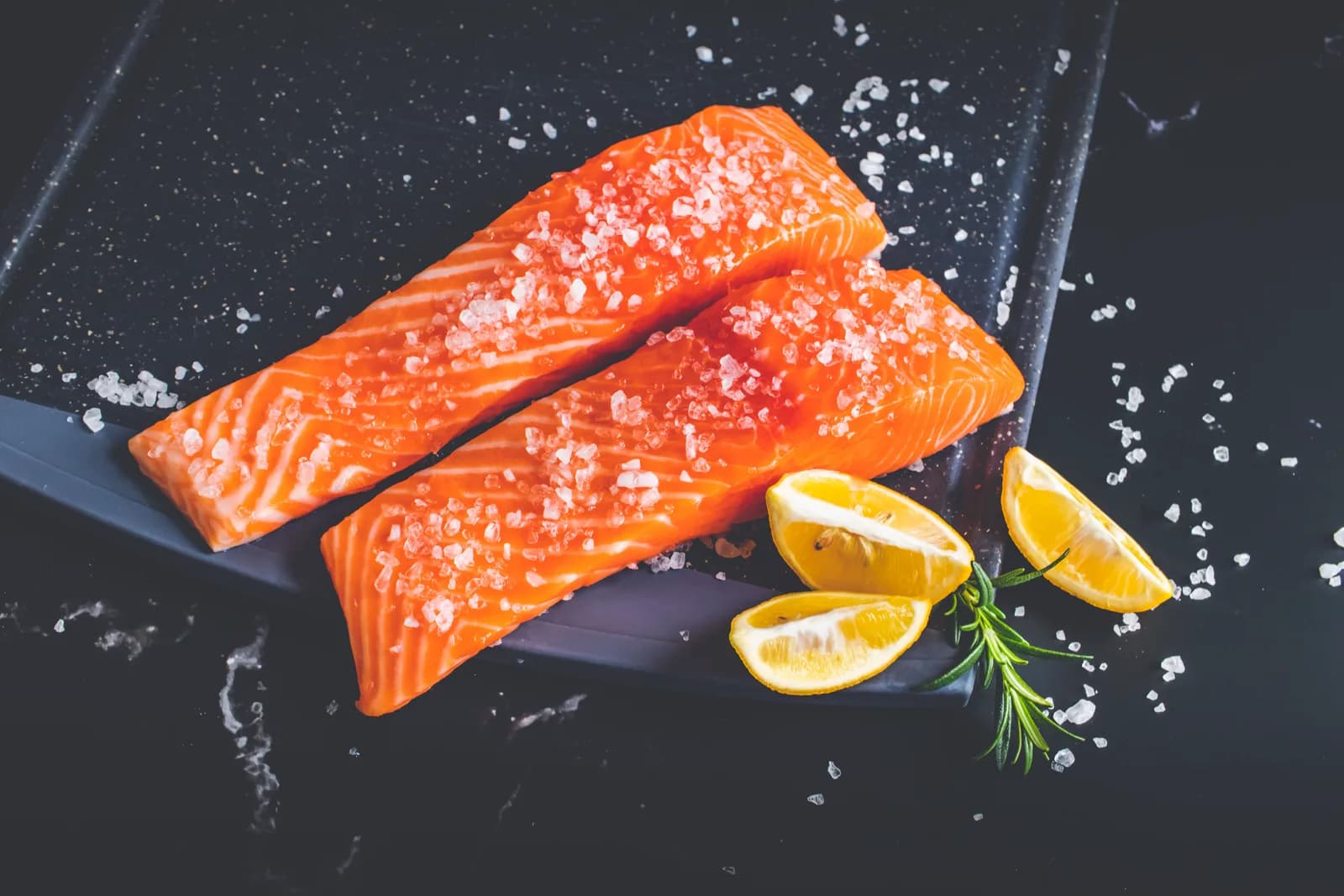
- Eat fatty fish (salmon, mackerel, sardines) 2 to 3 times per week
- Add ground flaxseed to morning oats or smoothies
- Snack on walnuts rather than chips cooked in seed oil
The omega-6 to omega-3 ratio in traditional Japanese diets (roughly 4:1) and traditional Indian diets (roughly 5:1) is dramatically lower than the modern Western diet (15:1 to 20:1). Both cultures have historically lower rates of inflammatory skin conditions, a correlation that dietary research is now explaining mechanistically.
Fermented Foods: Repopulating for Better Skin
The gut-skin axis runs on bacteria. The bacterial composition of your gut determines which inflammatory signals reach your skin, and fermented foods are the most effective way to reshape that composition.
Miso delivers Lactobacillus species that research has specifically linked to skin health. Studies have found that oral Lactobacillus supplementation reduced transepidermal water loss (a measure of skin barrier function) by 15%. Japanese women who consume miso soup daily have been found to have better skin hydration and elasticity in population studies, though causation is difficult to isolate from the broader Japanese dietary pattern.
Miso shiru is the simplest way to get a daily dose. Dissolve a tablespoon of miso paste in warm (not boiling) broth. The heat kills bacteria above 60°C, so add the miso after removing the pot from the heat.
Kimchi provides Lactobacillus plantarum, a strain that a 2019 randomized trial in Journal of Dermatological Science found to significantly reduce acne severity when taken orally for 12 weeks. The lactic acid bacteria in kimchi also produce conjugated linoleic acid (CLA), which has demonstrated anti-inflammatory effects on skin tissue. For those with sensitive stomachs, kimchi jjigae (the stew form) is gentler while retaining prebiotic fiber.
Yogurt (plain, unsweetened, with live cultures) provides Streptococcus thermophilus, which research has shown increases ceramide production in the skin. Ceramides are the lipids that hold your skin barrier together. Low ceramide levels are a hallmark of eczema and chronically dry, irritated skin.
The dairy paradox: Some people find that dairy worsens acne. This is typically an issue with milk (which contains IGF-1 and hormones that stimulate sebum production) rather than fermented dairy. Yogurt's fermentation process breaks down much of the problematic casein and lactose. If dairy causes breakouts, try miso and kimchi as your primary fermented foods.
Saffron and Rose: The Ancient Beauty Foods
Some of the most effective anti-inflammatory foods for skin aren't vegetables or fish. They're luxury spices that traditional beauty systems have valued for exactly this purpose.
Saffron contains crocin and crocetin, carotenoids with potent anti-inflammatory and photoprotective properties. Studies have found that saffron supplementation reduced UV-induced skin damage markers and improved skin hydration scores. In Ayurvedic and Persian beauty traditions, saffron-infused milk (kesar doodh) is consumed specifically for skin luminosity. The preparation is simple: steep 4 to 5 saffron threads in warm milk for 10 minutes. The golden color tells you the active compounds have dissolved.
In Ayurveda, saffron is classified as varnya (complexion-enhancing), one of a specific category of herbs believed to improve skin radiance from the inside. Unlike many Ayurvedic claims that remain untested, saffron's dermatological benefits have been confirmed in multiple clinical studies.
Rose (Rosa damascena) contains quercetin and kaempferol, flavonoids with anti-inflammatory activity comparable to some prescription topicals. Rose water consumed internally has been used in Middle Eastern and South Asian traditions for skin health for centuries. In Unani medicine (the Greco-Arabic tradition practiced across the Middle East and South Asia), rose is considered cooling and specifically indicated for Pitta-type skin conditions: redness, heat, irritation.
Studies have found that rose extract supplementation reduced inflammatory markers in skin tissue and improved wound healing by 30% compared to control. Add food-grade rose water to lassi, rice pudding, or warm milk with saffron.
Vitamin C and Antioxidant-Rich Foods
Vitamin C is required for collagen synthesis. Without adequate vitamin C, your skin literally cannot repair itself. But beyond its structural role, vitamin C is a potent anti-inflammatory that scavenges the free radicals produced by UV exposure, pollution, and internal inflammatory processes.
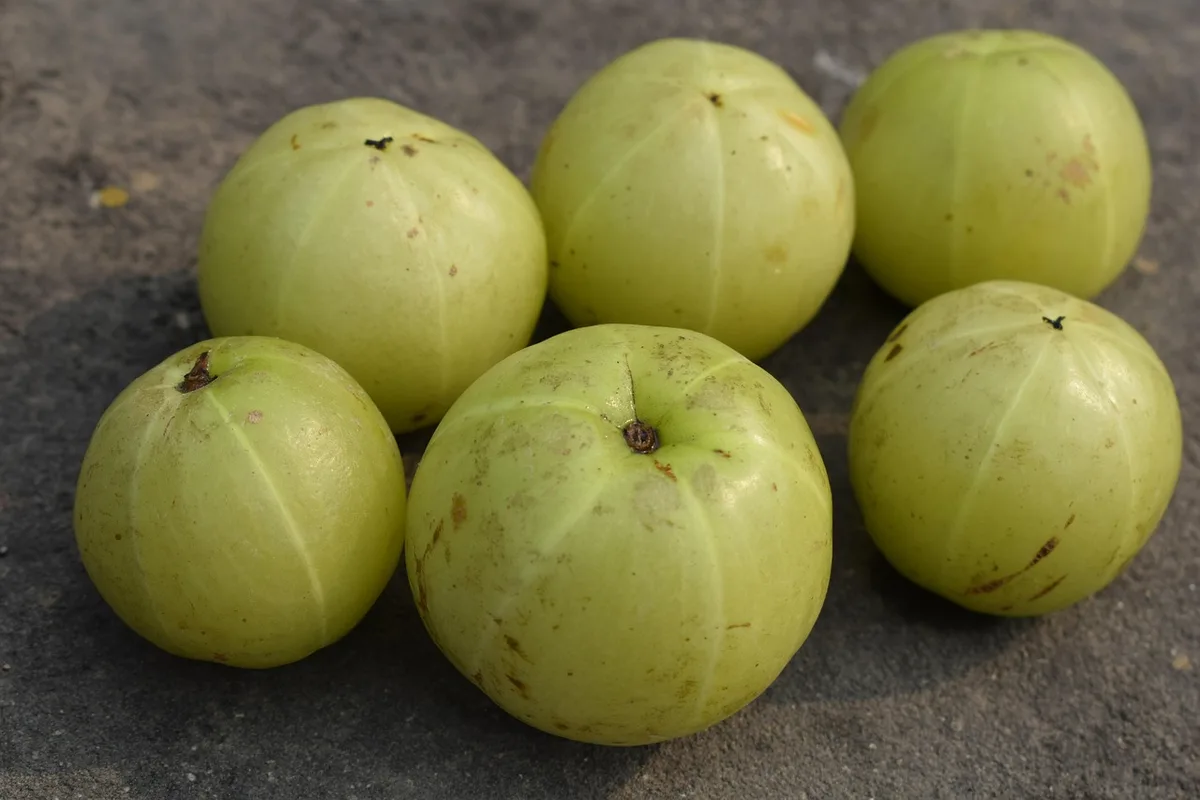
Amla (Indian gooseberry) contains one of the highest concentrations of vitamin C of any food: roughly 600-700mg per 100 grams. That's 8 to 10 times the vitamin C in an orange. In Ayurveda, amla is the primary ingredient in Chyawanprash, a traditional rasayana (rejuvenative) paste taken daily for overall vitality and skin health. Amla also contains gallic acid and ellagic acid, polyphenols that research has linked to melanin regulation and photoprotection.
Moringa leaves provide vitamin C alongside zeatin, a plant hormone that promotes cell growth and delays cellular aging. Studies have found that moringa extract improved skin firmness and reduced wrinkle depth. In South Asian and East African traditions, moringa is eaten as a vegetable (in dal, sambar, and stews) and applied as a skin paste. Try adding moringa powder to smoothies or stirring it into dal.
Holy basil (tulsi) addresses skin inflammation through the stress pathway. Chronic stress elevates cortisol, which increases sebum production, impairs skin barrier function, and triggers inflammatory acne. Tulsi reduces cortisol levels (documented in Journal of Ayurveda and Integrative Medicine) while providing ursolic acid, an anti-inflammatory compound. Tulsi tea consumed daily is a gentle, sustained intervention for stress-driven skin inflammation.
The Skin Inflammation Triggers to Reduce
What you remove from your diet often matters as much as what you add.
Refined sugar: Studies have found a clear dose-response relationship between sugar intake and acne severity. Sugar spikes insulin and IGF-1, both of which increase sebum production and inflammatory signaling in the skin. The effect is rapid: a single high-sugar meal can increase facial sebum production for 24 to 48 hours.
Dairy milk (not fermented dairy): Multiple large studies, including large studies covering $2,000 participants, found a significant association between milk consumption and acne. The mechanism involves bovine IGF-1 and hormones that survive pasteurization. Fermented dairy (yogurt, kefir) shows a weaker or nonexistent association.
Alcohol: Depletes glutathione (your body's master antioxidant), increases intestinal permeability, and causes vasodilation that worsens rosacea. Even moderate alcohol consumption has been associated with increased rosacea risk in clinical research.
Seed oils in processed foods: High omega-6 content shifts your body's inflammatory baseline. Cooking at home with ghee, olive oil, or coconut oil is one of the most effective ways to reduce your omega-6 exposure.
An Ayurvedic Skin-Type Approach
Ayurveda doesn't treat "skin problems." It treats the specific imbalance causing them. The dietary approach differs dramatically by constitution:
Pitta skin (reactive, redness-prone, acne-prone): This is the most inflammation-driven skin type. Emphasize cooling foods: coconut, coriander, fennel, saffron, rose, amla. Avoid hot spices, alcohol, and fermented foods during active flares (reintroduce fermented foods gradually). Khichdi with cooling spices (coriander, fennel, turmeric) is the ideal Pitta-calming meal. Saffron milk before bed.
Vata skin (dry, thin, prone to eczema and flaking): The issue is dryness and barrier dysfunction more than active inflammation. Emphasize warm, oily foods: ghee (generously), sesame oil, warm soups, cooked root vegetables. Avial (a Kerala vegetable stew with coconut) provides both healthy fats and fiber. Avoid cold, raw, and dry foods. A teaspoon of ghee in warm water each morning nourishes skin from the inside.
Kapha skin (oily, thick, prone to cystic acne and congestion): The issue is accumulation and sluggishness. Emphasize light, warm, spiced foods. Ginger, black pepper, cinnamon, and garlic to increase circulation and reduce congestion. Reduce dairy, sugar, and heavy oils. Bitter greens and astringent foods (pomegranate, turmeric) help clear excess Kapha.
A Week of Skin-Clearing Eating
Daily non-negotiables:
- Morning warm water with lemon (vitamin C + hydration)
- One cup of golden milk or saffron milk (anti-inflammatory)
- One serving of fermented food (miso shiru, yogurt, or kimchi)
- Cook with ghee or olive oil (never seed oils)
Rotate through the week:
- Fatty fish 2 to 3 times (salmon, mackerel, sardines)
- Khichdi or dal with turmeric and ginger at least twice
- A large serving of deeply colored vegetables daily (sweet potato, carrots, leafy greens, beets)
- Tulsi tea on stressful days
- Saffron threads steeped in warm milk before bed on 3 to 4 nights
What you'll likely notice: Reduced facial redness within 1 to 2 weeks. Fewer new breakouts within 3 to 4 weeks. Improved skin texture and hydration within 6 to 8 weeks. These timelines are consistent with clinical study endpoints for dietary intervention in inflammatory skin conditions.
Frequently Asked Questions
How long before dietary changes improve skin?
Skin cells turn over every 28 days, so a full cycle of improvement typically takes 4 to 6 weeks. Redness and acute inflammation can improve faster (1 to 2 weeks) because you're calming the immune response, not waiting for new cells. Deep cystic acne and eczema take longer (8 to 12 weeks) because they involve deeper tissue repair and microbiome remodeling.
Can food really help eczema?
Research supports this. Systematic reviews have found that anti-inflammatory dietary patterns were associated with reduced eczema severity. The gut-skin axis is particularly relevant for eczema, which is fundamentally an immune dysregulation condition. Improving gut barrier function through fermented foods, bone broth, and ghee reduces the systemic immune activation that drives eczema flares.
Does dairy cause acne?
The evidence is strongest for skim milk (which contains higher concentrations of whey protein and hormones per serving than whole milk). Fermented dairy (yogurt, kefir) has a weaker association and may actually improve acne through its probiotic content. If you suspect dairy, eliminate all dairy for 4 weeks, then reintroduce yogurt first, then cheese, then milk, noting your skin's response to each.
Is there a connection between sugar and skin aging?
Yes. Sugar reacts with collagen through a process called glycation, forming advanced glycation end products (AGEs) that cross-link collagen fibers and make them stiff and brittle. Studies have found that higher blood sugar levels were associated with older-appearing skin independent of sun exposure. Reducing refined sugar intake slows this process.
What Your Skin Is Trying to Tell You
Skin inflammation is never just about skin. It's a signal from your immune system, routed through your gut, made visible on your face and body. Treating it only from the outside is like putting tape over a check-engine light.
The foods in this guide address the source. Turmeric and saffron calm the inflammatory pathways. Fermented foods rebuild the gut ecology that regulates your immune system. Omega-3 fats reset the inflammatory baseline. And the luxury ingredients that Ayurvedic and Persian beauty traditions prized (amla, rose, holy basil) turn out to have clinical evidence behind them.
Start tonight. Steep a few threads of saffron in warm milk with a pinch of turmeric. Cook with ghee instead of vegetable oil. Add a daily bowl of miso shiru. For a complete framework, see our guide on how to start an anti-inflammatory diet.
Comments
Share your thoughts on this post.
Sign in to comment0 Comments