Korean Cuisine
Gyeran Jjim (Steamed Egg)
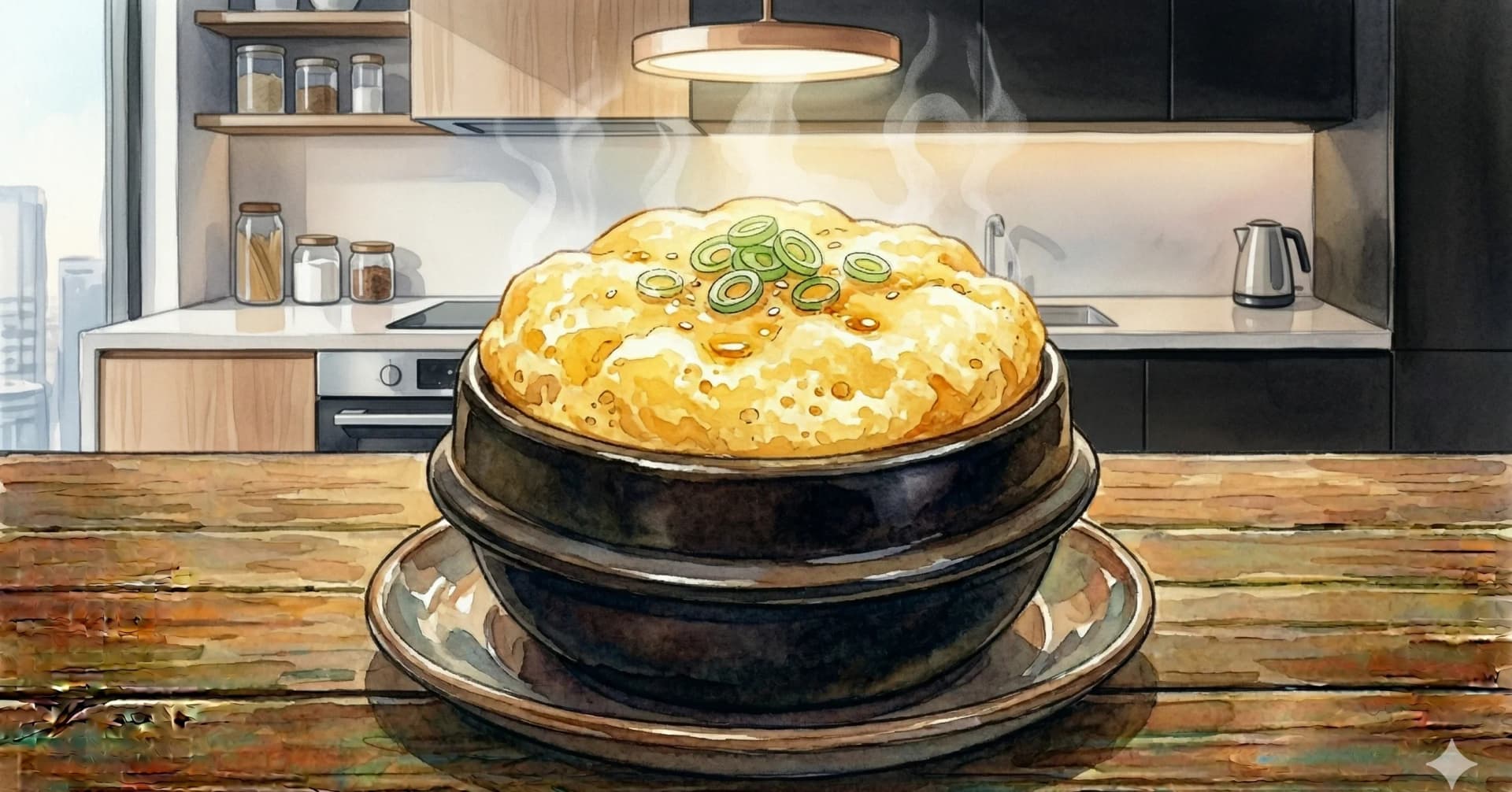
Fluffy, custard-soft steamed eggs seasoned with salted shrimp and green onion
Gyeran jjim is one of those simple dishes that punches far above its weight. Three eggs, some water, a spoonful of salted shrimp sauce, chopped green onion, and a few minutes of gentle heat produce something that looks and tastes far more refined than the effort involved. The finished dish puffs up dramatically above the rim of the bowl, golden and trembling, with a texture somewhere between a soft custard and a savory souffle. Scoop into it with a spoon and watch the steam escape.
Every Korean household has a version of this recipe. Maangchi remembers her grandmother making gyeran jjim in the lid of the cast iron rice pot (gamasot). When the rice was nearly done, the grandmother would nestle a bowl of beaten egg mixture into the pot, close the heavy lid, and let the residual heat do the cooking. A few minutes later, both the rice and the steamed egg were ready. That kind of efficiency, cooking two things at once using one source of heat, is the hallmark of practical Korean home cooking.
The modern shortcut is the microwave. Five minutes is all it takes for the eggs to puff up and set. If you prefer the traditional method, steaming in a covered pot for about 15 minutes gives you slightly more control and a creamier texture. Either way, the key is the ratio of water to egg. Too much water and the result is loose and watery. Too little and the texture becomes dense and rubbery. The balance here, roughly half a cup of water to three eggs, produces the ideal softness.
Salted shrimp sauce (saeujeot) is the traditional seasoning and contributes a savory depth that plain salt cannot match. If you do not have it, fish sauce works well as a substitute. Serve the gyeran jjim alongside rice and a bowl of doenjang-jjigae or kimchi-jjigae, and it quietly becomes the dish everyone reaches for most.
At a Glance
Yield
2 servings
Prep
5 minutes
Cook
15 minutes
Total
20 minutes
Difficulty
Easy
Ingredients
- 3large eggs
- ½ cupwater
- 1 tbspsalted shrimp sauce (saeujeot)
- 2green onions, finely chopped
Method
- 1
Mix the egg. Crack the eggs into a microwave-safe bowl. Add the water, salted shrimp sauce, and chopped green onion. Beat well with a fork until evenly combined. The mixture should be uniformly yellow with no streaks of white.
- 2
Microwave. Place the bowl in the microwave and cook on high for 5 minutes. The egg will puff up dramatically during cooking. Watch through the door to ensure it does not overflow. If it rises too quickly, pause and let it settle before continuing.
- 3
Serve immediately. The puffed egg will deflate slightly as it cools, so serve right away while it is still dramatic and steamy. ### Stovetop steaming method (traditional)
- 1
Mix the egg. Combine the eggs, water, salted shrimp sauce, and green onion in a heatproof bowl (earthenware or ceramic is ideal). Beat well with a fork.
- 2
Set up the steamer. Pour about 3 to 4 cups of water into a large pot. Place the bowl of egg mixture in the center of the pot. The water should come about halfway up the sides of the bowl.
- 3
Steam. Cover the pot with a lid and bring the water to a boil over medium-high heat. Once boiling, reduce the heat to medium and steam for about 15 minutes. The egg is done when it has puffed up and the surface is set but still slightly jiggly in the center.
- 4
Serve. Carefully remove the bowl from the pot. Serve immediately with steamed rice.
Key Ingredient Benefits
Eggs: One of the most complete protein sources available, containing all nine essential amino acids in a highly bioavailable form. A single egg provides about 6 grams of protein, along with choline (essential for brain function and liver health), vitamin D, B12, and selenium. The cholesterol in eggs was once considered a dietary concern, but current research indicates that dietary cholesterol has less impact on blood cholesterol than previously believed for most people.
Salted shrimp sauce (saeujeot): A fermented condiment made from tiny shrimp and salt, aged for weeks or months. The fermentation process breaks proteins down into amino acids, particularly glutamate, which creates the umami flavor. In Korean cooking tradition, saeujeot is a foundational seasoning in many kimchi recipes and is considered a digestive aid.
Why This Works
The ratio of water to egg is critical. The water creates steam within the egg mixture as it heats, which is what makes the gyeran jjim puff up. Too little water and the eggs cook into a dense, firm mass. The half-cup of water for three eggs produces enough internal steam for a light, airy texture while still setting the proteins firmly enough to hold their shape.
Salted shrimp sauce contributes more than just salt. The fermented shrimp provide glutamate and other amino acids that create a complex savory flavor, similar to how Parmesan cheese deepens the flavor of a Western egg dish.
Gentle, even heat is important. Whether from a microwave or a steamer, the heat should be moderate enough to set the eggs gradually. Overly high heat creates bubbles and a pockmarked texture rather than the smooth, custard-like finish you want.
Substitutions & Variations
Salted shrimp sauce: If unavailable, use 3 teaspoons of fish sauce. As a last resort, use 1/2 teaspoon of salt, though the flavor will be less complex.
Spicy version: Maangchi's cousin from southern Korea makes a spicy variation: replace the salted shrimp sauce with 1 1/2 tablespoons soy sauce and add 2 teaspoons gochugaru and 1/2 tablespoon toasted sesame seed powder. Finish with a drizzle of sesame oil.
Add-ins: Chopped vegetables (carrot, zucchini), diced ham, or small shrimp can be folded into the egg mixture before cooking. Keep additions small so the egg still puffs properly.
Ttukbaegi gyeran jjim (restaurant style): Beat 4 to 5 eggs with 1 cup of anchovy broth and seasonings in an earthenware pot (ttukbaegi). Cook over medium heat, stirring occasionally at first, then covering. The result is creamier and richer than the individual bowl version.
Serving Suggestions
Gyeran jjim is a banchan (side dish) served alongside rice and other dishes. It pairs naturally with hearty stews like kimchi-jjigae or sundubu-jjigae, where the gentle egg provides a soothing contrast to the spicy broth. It also works beautifully alongside grilled meats like bulgogi or braised dishes like dakdoritang.
Storage & Reheating
Best fresh: Gyeran jjim is best eaten immediately. The fluffy texture deflates and becomes denser as it cools.
Refrigerator: Leftovers can be stored in a sealed container for 1 day, but the texture will change. The puffiness will not return upon reheating.
Reheating: Warm gently in the microwave for 30 to 45 seconds. Cover with a damp paper towel to prevent the surface from drying out. Alternatively, re-steam in a covered pot for 3 to 4 minutes.
Cultural Notes
Gyeran jjim (계란찜) means "steamed eggs," and it is one of the most ubiquitous side dishes in Korean cooking. It belongs to the broader jjim (찜) family of steamed Korean preparations, which also includes the more elaborate galbi jjim and various seafood jjim. Most jjim dishes are full-meal centerpieces. Gyeran jjim plays a supporting role instead. It is almost always served as a free side dish, never as the main attraction.
The dish has two distinct service traditions. The home and banchan-stall version is steamed in a small clay or porcelain bowl set inside a larger pot of boiling water, producing a flat, dense, custard-like finish that holds its shape when scooped. The Korean-BBQ-restaurant version, served alongside galbi, bulgogi, or samgyeopsal, is cooked directly over a flame in a tall earthenware ttukbaegi (뚝배기) pot until the eggs puff dramatically above the rim of the bowl. The tableside puff is partly culinary theater. The eggs collapse the moment the spoon breaks the surface. It is also a way to absorb the heat and meat-juice runoff at a Korean BBQ table.
What distinguishes Korean gyeran jjim from Chinese steamed eggs (zhēngdàn, 蒸蛋) or Japanese chawanmushi (茶碗蒸し) is the use of saeujeot (새우젓, salted shrimp) as the primary seasoning. The shrimp adds a deeper marine umami that anchors the dish in the Korean fermented-condiments tradition.
In Korean homes, gyeran jjim is one of the first dishes children learn to enjoy. Gentle, slightly salty, with the same custardy comfort as egg-drop soup but more substantial. A lot of Korean adults still associate the dish with childhood lunches at their grandmother's table.
Nutrition Facts
Calories: 113kcal (6%)|Total Carbohydrates: 1.9g (1%)|Protein: 9.6g (19%)|Total Fat: 7.1g (9%)|Saturated Fat: 2.3g (12%)|Cholesterol: 279mg (93%)|Sodium: 3014mg (131%)|Dietary Fiber: 0.3g (1%)|Total Sugars: 0.9g
You Might Also Like


Ratings & Comments
Ratings & Comments
Ratings
Share your thoughts on this recipe.
Sign in to rate and comment