Cross-Cultural · Korea
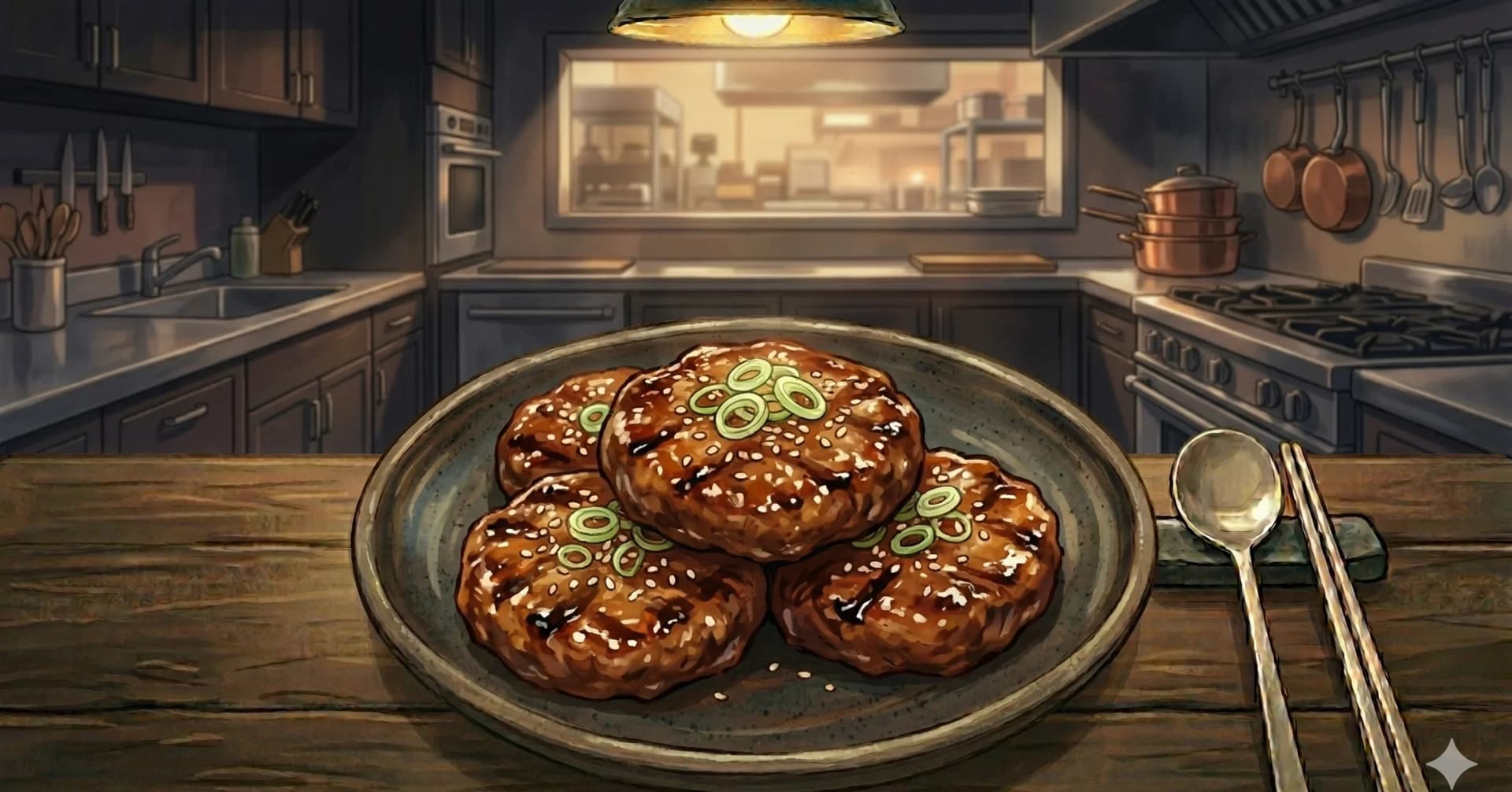
Grilled Short Rib Patties (Tteokgalbi / 떡갈비)
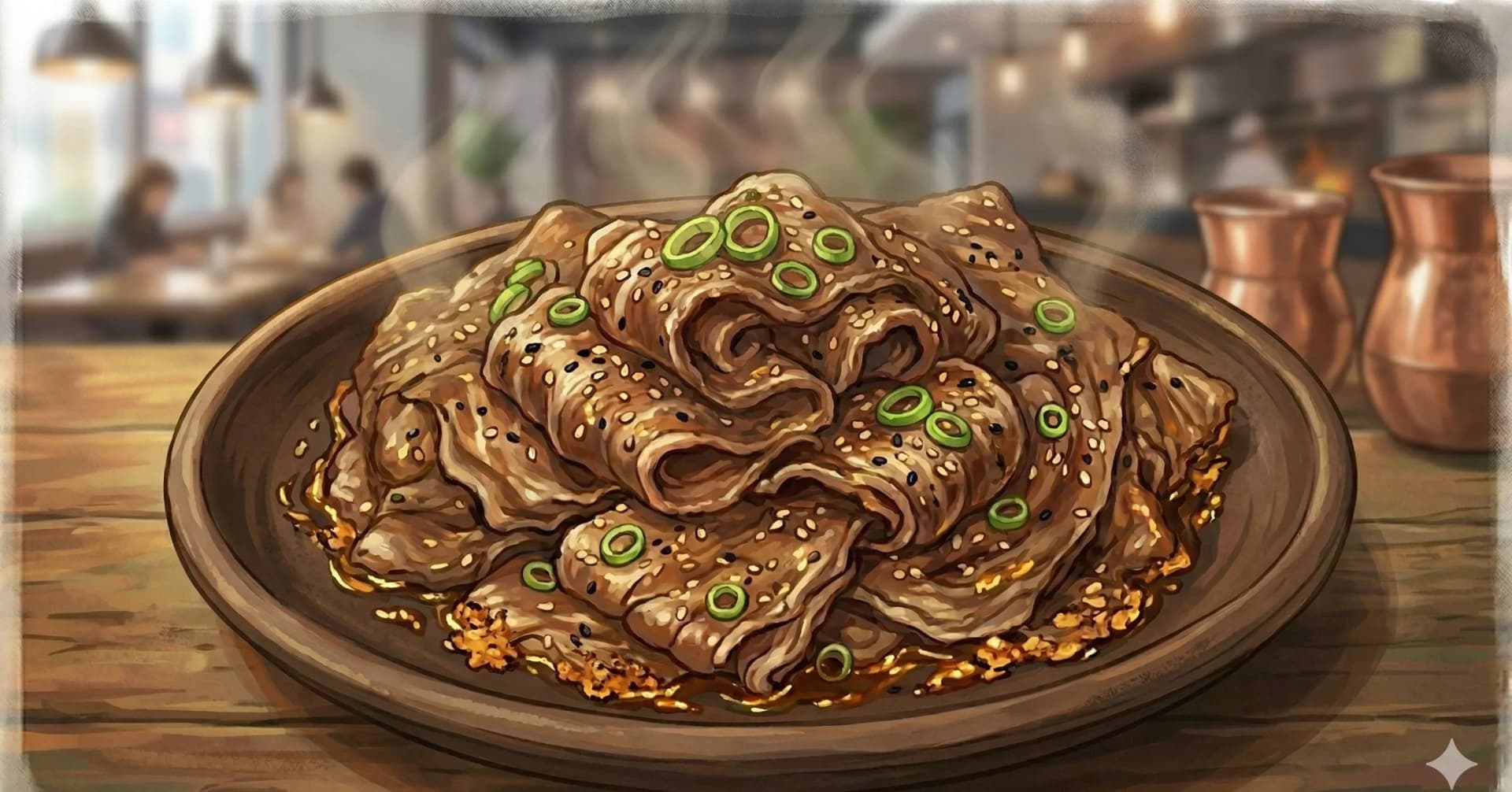
Minced short rib meat seasoned with soy, garlic, and honey, shaped into patties and grilled, originally a Korean royal court dish
Tteokgalbi was invented for a king who could not eat with his hands. The royal chefs of the Joseon dynasty solved the problem by removing the meat from beef short ribs, mincing it, seasoning it, and shaping it back onto the bones. The king could eat with chopsticks, and the dish became a court delicacy. The name "tteok" refers to the smooth, pounded texture of the meat, which resembles the surface of a rice cake.
The technique starts with soaking the short ribs in cold water to remove excess blood, then freezing them briefly so the meat firms up enough to separate cleanly from the bones. The meat is minced or ground, then mixed by hand with soy sauce, garlic, onion, green onion, rice syrup, honey, sesame oil, and black pepper. The mixture becomes paste-like and sticky, which is what allows it to be shaped into patties or molded back onto the reserved bones.
The patties grill for about fifteen minutes on medium-low heat, which is enough for the sugars in the rice syrup and honey to caramelize into a dark, glossy crust without burning. An optional glaze of sesame oil, soy sauce, and honey brushed on near the end intensifies the caramelization. The city of Damyang in Jeollanam-do province is especially famous for tteokgalbi, where restaurants have served it for generations.
At a Glance
Yield
4 servings
Prep
30 minutes
Cook
15 minutes
Total
2 hours
Difficulty
Medium
Ingredients
- 1 lbground beef or beef short ribs, about 4 meaty ribs
- 2 tbspsoy sauce
- 1 tbspmirim or water
- 5garlic cloves, minced
- 1/4 cuponion, minced
- 1scallion, chopped
- 1 tbsprice syrup or corn syrup
- 1 tbsphoney
- 2 tspsesame oil
- 1/2 tspground black pepper
Method
- 1
Soak ribs in cold water 20-30 min to remove blood. Drain.
- 2
Freeze about 1 hour until firm enough to handle easily.
- 3
Separate meat from bones. Reserve bones for presentation if desired. Mince or grind the meat.
- 4
Combine all seasoning in a bowl. Add ground meat, mix thoroughly by hand until paste-like.
- 5
Shape into patties (or mold back onto bones).
- 6
Grill, broil, or pan-fry on medium-low heat for about 15 minutes, flipping halfway. Optionally brush with sesame oil, soy sauce, and honey glaze near the end.
- 7
Garnish with sesame seeds and scallion. Serve with rice.
Key Ingredient Benefits
Beef short ribs (deboned and minced): The cut is essential to the dish — short rib has the right ratio of fat, connective tissue, and lean meat to produce a juicy, flavorful patty that holds together without binders. The intramuscular fat melts during grilling, basting the patty from within. Hand-mincing the meat (rather than using ground beef) preserves the texture and the distinctive bite that defines tteokgalbi.
Soy sauce and mirin: The marinade base. Soy sauce provides savoriness and salt; mirin adds gentle sweetness, umami from rice fermentation, and helps the surface of the patty caramelize during grilling. Together they form the foundation of the classic Korean galbi-style marinade.
Rice syrup and honey: A dual-sweetener strategy. Rice syrup contributes glossy caramelization without crystallizing; honey adds floral depth and additional surface browning. Korean barbecue marinades almost always combine multiple sweeteners for layered complexity.
Garlic, onion, and scallions: The aromatic backbone. Pureed onion adds moisture and natural enzymes that tenderize the meat. Minced garlic provides pungency. Scallions add fresh allium fragrance and visual appeal.
Sesame oil: Added off the heat at the end, sesame oil adds nutty fragrance and a final layer of richness. The oil is used sparingly because its flavor is potent.
Why This Works
Hand-mincing the short rib meat is the technique that distinguishes tteokgalbi from ordinary ground beef patties. The hand-cut texture has irregular pieces and retains some fat layers, which means the patty holds its bite and stays juicy. Pre-ground beef is too uniform and tends to compress into a dense, dry patty.
The shaping technique matters. The marinated mince is shaped back around the original short rib bones in the most traditional version, or formed into oval patties for a simpler home version. Either way, the patty is shaped without being compressed — pressing too hard squeezes out fat and air, producing a tougher result.
The marinade does triple duty: it seasons the meat, provides the sugars needed for the lacquered, caramelized surface, and contains enzymes from the pureed onion that tenderize the meat further. Marinating for at least 2 hours, ideally overnight, allows the flavors and enzymes to penetrate.
Grilling over high direct heat is essential. The sugars in the marinade need high heat to caramelize and form the dish's signature glossy, slightly charred exterior. Lower heat produces a steamed, pale result that misses the entire point of the dish. A hot cast iron pan, a charcoal grill, or a gas grill on high all work; the oven is acceptable only if finished briefly under a broiler.
Substitutions & Variations
Beef short ribs: Boneless short rib is the easiest source; bone-in short rib produces more flavor but requires deboning. In a pinch, well-marbled chuck steak (80% lean ground if pre-ground, or hand-chopped if working from a whole steak) can substitute. Avoid lean ground beef, which produces a dry, crumbly patty.
Mirin: Dry sake plus a teaspoon of sugar, or Chinese Shaoxing wine, both work. Avoid sweet aji-mirin cooking liquid which is artificially sweetened.
Rice syrup: Honey works for both flavor and glaze. Light corn syrup is acceptable. Brown sugar dissolved in equal water is a passable substitute.
Pureed onion: Grated onion is the easiest substitute and gives nearly identical results. Drain off some of the liquid before adding to the marinade.
Pine nuts: A traditional Korean garnish for ceremonial dishes. Substitute toasted slivered almonds or simply skip — the dish works without them.
Serving Suggestions
Tteokgalbi is a celebration dish in Korea, served at weddings, Lunar New Year, Chuseok (harvest festival), and ceremonial family meals. Plate it on a wide platter with garnishes of toasted pine nuts, sliced scallions, and a sprinkle of toasted sesame seeds. The traditional accompaniment is a side of mustard-vinegar sauce (gyeoja-jang) for dipping.
Serve as part of a Korean feast with steamed short-grain rice, multiple banchan, and a clear soup. Recommended banchan: japchae (glass noodles with vegetables), sigeumchi namul (seasoned spinach), kongnamul muchim (seasoned soybean sprouts), and oi muchim (spicy cucumber salad). A bowl of miyeok guk (seaweed soup) is the traditional soup pairing, especially for birthday meals.
For a more casual presentation, serve as part of a Korean barbecue spread with lettuce leaves, perilla, sliced garlic, and ssamjang for ssam-style wraps. The grilled patties also work well alongside bulgogi and galbi for a mixed Korean barbecue feast.
Pair with chilled soju, makgeolli, or a crisp lager. For non-alcoholic, hot barley tea (boricha) is the traditional choice.
Storage & Reheating
Refrigerator: Cooked patties keep for up to 4 days in an airtight container. The flavor deepens overnight as the marinade continues to season the meat.
Reheating: A hot cast iron pan for 1 to 2 minutes per side is the best method. Microwave will work but loses the caramelized exterior. To restore the glossy surface, brush with a little honey or rice syrup before reheating in a hot pan.
Make-ahead: The minced marinated meat can be prepared and shaped into patties up to 24 hours in advance. Layer the raw patties between sheets of parchment paper in a covered container to prevent sticking. The patties also freeze beautifully — freeze on a sheet pan until firm, then transfer to a zip-top bag for up to 2 months. Thaw overnight in the fridge before grilling.
Freezing cooked: Cooked tteokgalbi freezes for up to 1 month with minimal quality loss. Reheat in a hot pan from frozen, or thaw overnight in the fridge first.
Cultural Notes
Tteokgalbi (떡갈비) literally means "rice cake short rib" — the name refers to the patty's shape, which resembles a Korean rice cake (tteok). The dish was reportedly invented during the Joseon dynasty for King Yeongjo (1694-1776), who was said to have lost teeth in old age and could no longer eat short ribs off the bone. Royal chefs solved the problem by deboning the ribs, mincing the meat, marinating and shaping it back onto the bones, and grilling. The king could then enjoy the flavor of short ribs without the difficulty.
The dish remained part of gungjung-eumsik (royal court cuisine) for centuries and is associated with the city of Damyang in South Jeolla Province, where a particularly refined version is the local specialty. Damyang-style tteokgalbi uses minced beef shaped onto thin bamboo skewers rather than around bones, producing a finer, more delicate result.
Tteokgalbi is one of three closely related Korean short rib dishes that share the same core ingredient but radically different techniques: galbi (grilled bone-in short ribs), galbi-jjim (braised short ribs), and tteokgalbi (minced and reshaped grilled patties). Each is associated with different occasions and presents the meat in a different way. The three together form a kind of Korean culinary trinity for short ribs.
In modern Korea, tteokgalbi has moved beyond ceremonial occasions and is a popular item at high-end Korean restaurants, Korean fusion menus, and home dinners. Premade frozen tteokgalbi patties are widely available in Korean grocery stores and are a popular weeknight meal.
Nutrition Facts
Calories: 345kcal (17%)|Total Carbohydrates: 11.3g (4%)|Protein: 20.7g (41%)|Total Fat: 24.2g (31%)|Saturated Fat: 9.6g (48%)|Cholesterol: 76mg (25%)|Sodium: 480mg (21%)|Dietary Fiber: 0.7g (3%)|Total Sugars: 6.5g
You Might Also Like
Ratings & Comments
Ratings & Comments
Ratings
Share your thoughts on this recipe.
Sign in to rate and comment