Korean Cuisine
Kongguksu (Cold Soy Milk Noodle Soup)
Thin wheat noodles submerged in a silky, chilled soybean broth with a nutty sweetness
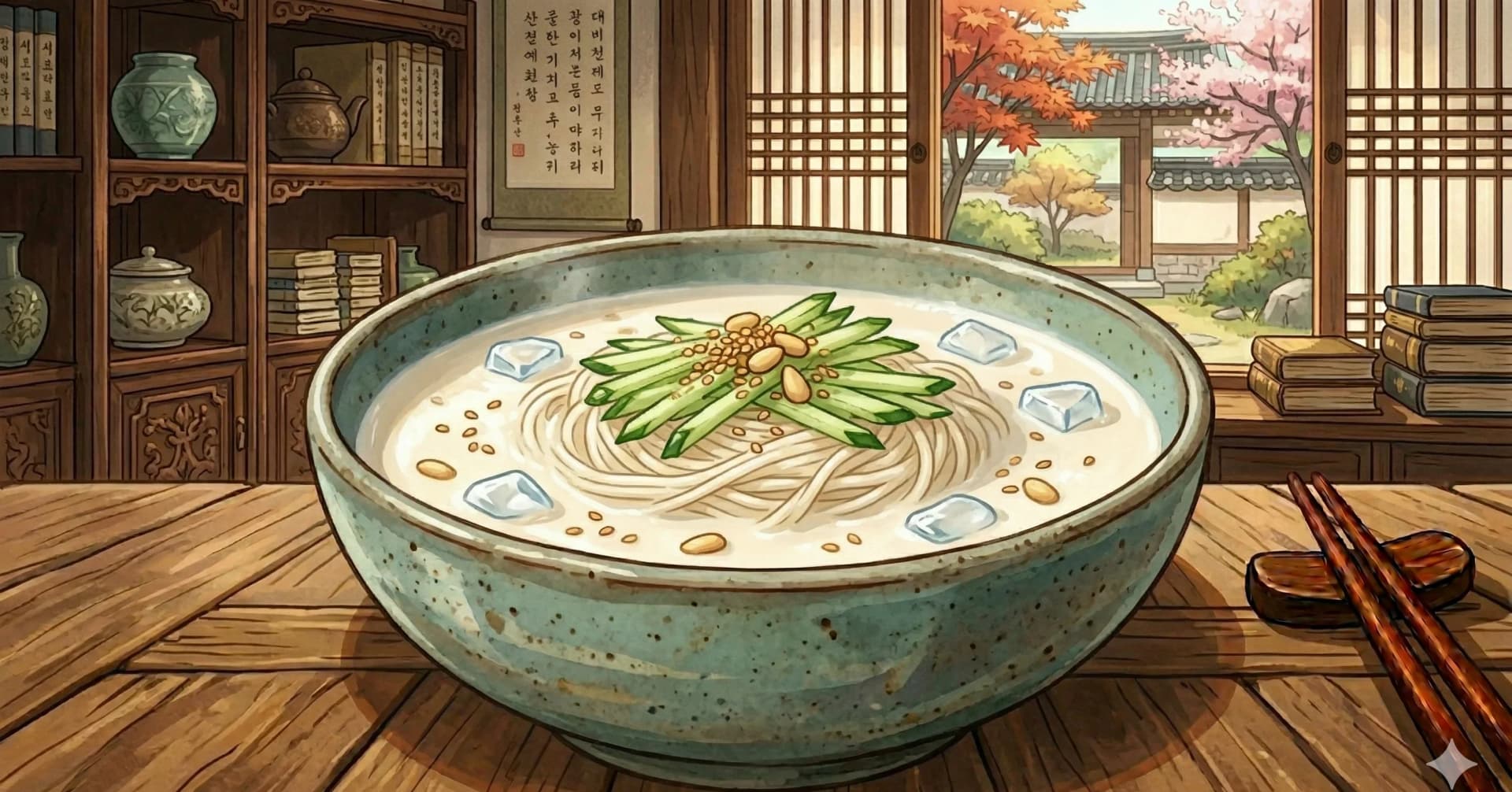
The first spoonful is a surprise if you have never tried it before: cool, creamy, and gently nutty, with a richness that feels like it should come from dairy but comes entirely from soybeans. The thin wheat noodles slip through the silky broth, and the cold cucumber on top provides a crisp, clean counterpoint. It is one of Korea's most elegant summer dishes, deceptively simple and deeply satisfying.
Kongguksu is a seasonal dish, appearing on restaurant menus and in home kitchens when summer heat makes hot soups unthinkable. The word kong means soybean, and guksu means noodles. The broth is essentially freshly made soy milk, thick and unsweetened, with a richness and sweetness that commercially processed soy milk cannot approach. Making it from scratch, starting with dried soybeans soaked overnight, is a meditative process and one that rewards patience with a broth of incomparable freshness.
What kongguksu delivers is nourishment without heaviness. The soybean broth is rich in protein yet feels light when served cold. It is naturally vegan (when made with wheat noodles), making it one of Korean cuisine's great plant-based main courses. The flavor is gentle and nuanced, with a natural sweetness from the soybeans that some enhance with a pinch of salt and others leave unadorned.
The practical insight is that the soybeans must be soaked overnight and then boiled and skinned before blending. Skipping the skinning step produces a broth with a slightly gritty texture and a stronger beany flavor. Taking the time to rub the skins off results in the smooth, silky, refined broth that defines a good kongguksu.
At a Glance
Yield
4 servings
Prep
20 minutes (plus overnight soaking)
Cook
20 minutes
Total
40 minutes (plus overnight)
Difficulty
Medium
Ingredients
Broth Ingredients
- ¾ lbdried soybeans
- 1¼ qtcold water (for blending)
- 3¼ tbsptoasted sesame seeds (or white sesame seeds)
- ¾ ozpine nuts (optional, for richness)
- ⅞ tspfine salt, or to taste
- —Ice cubes
Noodle Ingredients
- 1 lbsomyeon (thin wheat noodles) or kalguksu noodles
To Serve
- 1small cucumber, julienned
- —Toasted sesame seeds
- —Pine nuts
- —Cherry tomatoes, halved (optional)
Method
- 1
Soak the dried soybeans in plenty of cold water overnight, at least 8 hours. They will roughly double in size as they absorb water. Drain and rinse.
- 2
Place the soaked soybeans in a large pot and cover with fresh water. Bring to a boil over high heat and cook for 15 to 20 minutes until the beans are completely soft and can be easily crushed between your fingers.
- 3
Drain the cooked soybeans and transfer them to a large bowl of cold water. Rub the beans between your palms to loosen and remove the skins. The thin, translucent skins will float to the surface. Skim them off and discard. Repeat until most of the skins are removed. This step takes patience but produces a significantly smoother broth.
- 4
Place the skinned soybeans in a blender with 1.2 liters of cold water, the toasted sesame seeds, and the pine nuts (if using). Blend on high speed for 2 to 3 minutes until the mixture is very smooth and creamy, with no visible bean fragments. It should look like thick, rich soy milk.
- 5
Strain the blended mixture through a fine mesh strainer or cheesecloth for the smoothest result, pressing out as much liquid as possible. This step is optional if you prefer a slightly more rustic, thicker broth. Discard the pulp or save it for other uses.
- 6
Season the soy broth with salt. Start with 5 g and adjust. The broth should taste of pure soybean with a gentle sweetness, enhanced but not obscured by the salt. Some prefer to keep it unsalted and let each diner add salt at the table.
- 7
Chill the soy broth thoroughly in the refrigerator until very cold, at least 2 hours. The colder the broth, the more refreshing the finished dish. Adding a few ice cubes just before serving helps.
- 8
Bring a large pot of water to a rolling boil. Cook the somyeon noodles according to package directions, usually 2 to 3 minutes. Stir frequently to prevent clumping, as thin noodles stick easily.
- 9
Drain the noodles and rinse thoroughly under cold running water, rubbing them between your hands to remove all surface starch. They should feel cold, slippery, and clean. Drain well.
- 10
Divide the cold noodles among deep bowls. Twirl them into neat nests using chopsticks or a fork if you want a tidy presentation.
- 11
Pour the chilled soy broth over the noodles. It should be generously portioned, nearly covering the noodles. Add a few ice cubes to each bowl.
- 12
Top with julienned cucumber, a sprinkle of toasted sesame seeds, and a few pine nuts. Serve immediately, encouraging each diner to mix the noodles through the broth before eating.
Key Ingredient Benefits
Soybeans: One of the most nutrient-dense legumes, providing complete protein (all essential amino acids), dietary fiber, iron, calcium, and isoflavones. Research suggests that soy isoflavones, particularly genistein and daidzein, may support bone density and cardiovascular health. Soybeans have been a dietary staple in Korean cuisine for millennia.
Sesame seeds: Rich in calcium, magnesium, and lignans (sesamin and sesamolin). Research suggests these compounds may have antioxidant and cholesterol-lowering properties.
Pine nuts: Provide pinolenic acid, a fatty acid that preliminary research suggests may support appetite regulation. They are also a source of vitamin E, manganese, and zinc.
Why This Works
Removing the soybean skins before blending is the most important step for achieving a smooth broth. The skins contain insoluble fiber that, when blended, creates a slightly gritty texture. Without them, the broth is silky and refined.
Toasting the sesame seeds before blending amplifies their nutty flavor, which integrates beautifully with the soybeans and adds depth that prevents the broth from tasting one-dimensional. Pine nuts contribute additional richness and a subtle, buttery sweetness.
Using cold water for blending rather than warm water keeps the broth from developing a cooked, starchy flavor. The goal is freshness and brightness, not the heavy, cooked taste of commercially processed soy milk.
The somyeon noodles are thin enough to be enveloped by the broth, and their neutral wheat flavor does not compete with the soybean. Their slight chewiness provides textural contrast against the smooth, creamy liquid.
Substitutions & Variations
Noodles: Kalguksu (knife-cut noodles) can replace somyeon for a thicker, chewier noodle. Some versions use naengmyeon noodles.
Black soybean version: Black soybeans (heukdu) can replace or be mixed with yellow soybeans for a slightly different flavor and a pale grey broth.
Enriched broth: Some recipes add a handful of blanched, skinned peanuts or cashews to the blender for additional creaminess.
Sweetened version: A small amount of sugar (10 g) can be added for those who prefer a sweeter broth, though traditionally the dish leans savory.
Without straining: For a thicker, more rustic version, skip the straining step. The broth will be creamier and heartier.
Serving Suggestions
Kongguksu is typically served as a standalone summer meal. It needs little accompaniment, but a small plate of kimchijeon or hobak jeon alongside provides a savory, crispy contrast. Oi-muchim (spicy cucumber salad) or a simple fresh kimchi pairs naturally. The dish is traditionally eaten as a midday meal during Korea's hottest months.
Storage & Reheating
Soy broth: Store in an airtight container in the refrigerator for up to 2 days. The broth may separate slightly, which is natural. Stir or blend briefly before serving. It does not reheat well and is intended to be served cold.
Noodles: Cook fresh for each serving. Leftover somyeon clumps and becomes sticky.
Assembled dish: Cannot be stored. The noodles absorb the broth quickly.
Freezing: The unseasoned soy broth can be frozen for up to 1 month. Thaw in the refrigerator and stir well before serving. Season after thawing.
Cultural Notes
Kongguksu (콩국수) is the great Korean summer noodle dish that almost nobody outside Korea has heard of. Unlike mul naengmyeon or bibim naengmyeon, both of which have crossed over into Korean-American restaurant menus, kongguksu has stayed mostly inside Korean home kitchens and a small number of specialty Seoul restaurants. The reason is partly practical. The soy milk broth has to be made fresh from whole soybeans soaked overnight, blanched, hand-peeled, and pulverized. Most non-Korean restaurants find that process too labor-intensive to commit to.
The dish's history is older than most modern Korean noodle preparations. References to chilled-soy-milk-and-noodle dishes appear in 19th-century Korean cookbooks, and the dish is firmly tied to the rural agricultural calendar. Korean farmers traditionally ate kongguksu during the hottest weeks of summer, when the broth's cool nuttiness and high protein content gave them sustained energy for outdoor field work. The plant-protein density of a single bowl, about 20 grams of complete protein from the whole soybeans, made it a critical dish during periods when meat was scarce.
In modern Korea, kongguksu remains a strongly seasonal dish, served only during the hottest months of the year (roughly June through August). The most prestigious Seoul kongguksu restaurants, including the decades-old Jinhwang near Euljiro and Jincheol Kongguksu in Mapo, develop their own proprietary techniques for grinding and straining the soy milk to reach the silkiest possible texture.
The dish has also picked up new recognition within Korean Buddhist temple cuisine (sachal eumsik, 사찰음식) as a model preparation of plant-based summer nutrition. Contemporary Korean nutritionists frequently cite it as a near-perfect summer dish for hot, humid climates.
Nutrition Facts
Calories: 668kcal (33%)|Total Carbohydrates: 102.9g (37%)|Protein: 33.4g (67%)|Total Fat: 15.4g (20%)|Saturated Fat: 2.1g (11%)|Cholesterol: 0mg (0%)|Sodium: 413mg (18%)|Dietary Fiber: 8.1g (29%)|Total Sugars: 3.5g
You Might Also Like
Ratings & Comments
Ratings & Comments
Ratings
Share your thoughts on this recipe.
Sign in to rate and comment