Korean Cuisine
Kongnamul Muchim (Seasoned Soybean Sprouts)
Crisp soybean sprouts tossed with sesame oil, garlic, scallion, and a touch of gochugaru
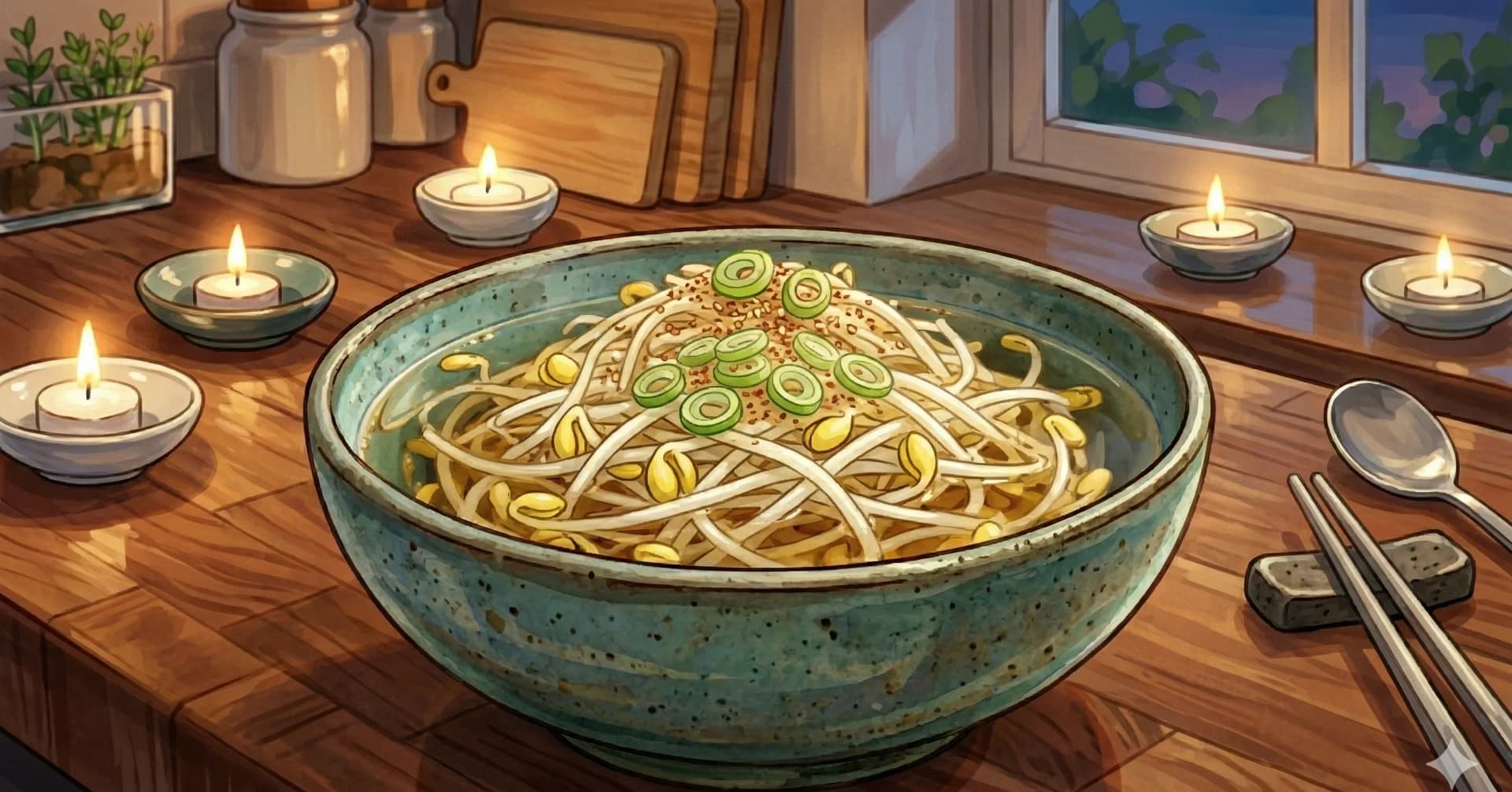
The sprouts arrive at the table with an appealing crunch, each one snapping cleanly between the teeth before releasing a nutty, faintly sweet flavor that is entirely its own. The sesame oil makes them glossy, the garlic gives them bite, and the gochugaru adds a warm, gentle heat that appears as scattered red flecks among the pale yellow and white sprouts. It is one of the most ubiquitous banchan in Korea, present on nearly every table at nearly every meal.
Kongnamul (soybean sprouts) should not be confused with sukju namul (mung bean sprouts), though both appear frequently in Korean cooking. Soybean sprouts are larger, with a plump yellow bean still attached to the sprout, and have a distinctive nutty flavor and firmer texture. They are one of the most consumed vegetables in Korea, and kongnamul muchim (seasoned sprouts) and kongnamul-guk (sprout soup) are two of the most fundamental preparations.
What this dish delivers is clean, bright, crunchy banchan that refreshes the palate between bites of richer foods. It is a supporting player that makes everything else at the table taste better, the way a good salad does in Western dining.
The critical practical insight is to cook the sprouts with the lid on and never remove it during cooking. Soybean sprouts contain an enzyme that, when exposed to air during cooking, can produce a strong, unpleasant beany odor. Keeping the lid sealed throughout the cooking process prevents this. It sounds like an old wives' tale, but it is consistently effective and widely practiced. Set a timer, keep the lid on, and trust the process.
At a Glance
Yield
4 servings (as banchan)
Prep
5 minutes
Cook
10 minutes
Total
15 minutes
Difficulty
Easy
Ingredients
- ¾ lbsoybean sprouts (kongnamul)
- 1 cupwater
- ½ tspfine salt (for cooking)
- 2 tsptoasted sesame oil
- 2½ tspminced garlic
- 1½ tspgochugaru (Korean red pepper flakes)
- ½ tspfine salt, or to taste
- 1scallion, thinly sliced
- 1⅔ tsptoasted sesame seeds
Method
- 1
Rinse the soybean sprouts in cold water. Pick through them and remove any brown or wilted bits, loose bean skins floating on the surface, or sprouts that feel slimy.
- 2
Place the cleaned sprouts in a medium pot. Add 250 ml of water and 3 g of salt.
- 3
Cover the pot with a tight-fitting lid. This is critical. Do not lift the lid at any point during cooking. Exposure to air during cooking can cause the sprouts to develop an unpleasant smell.
- 4
Bring to a boil over high heat, then reduce to medium and cook for 6 to 8 minutes. You will hear the water boiling and the sprouts shifting in the pot. Resist the urge to check. Trust the timing.
- 5
After 6 to 8 minutes, remove the pot from the heat. Now you can remove the lid. The sprouts should be cooked through but still crisp, with the bean heads tender and the tails retaining a pleasant snap. If you prefer softer sprouts, cook for an additional 1 to 2 minutes.
- 6
Drain the sprouts in a colander. Save the cooking liquid if you wish to use it for soup, as it has a delicate, clean flavor. Let the sprouts cool slightly, just enough to handle comfortably.
- 7
Transfer the drained sprouts to a mixing bowl. Add the sesame oil, garlic, gochugaru, salt, scallion, and sesame seeds.
- 8
Toss everything together gently using chopsticks or your hands. Each sprout should be lightly coated in the seasoning, with the red gochugaru flecks distributed evenly.
- 9
Taste and adjust. The sprouts should taste clean and nutty, with the sesame oil prominent and the gochugaru providing warmth rather than intense heat. The salt should enhance the natural sweetness of the sprouts without making them salty.
- 10
Transfer to a small serving dish and sprinkle a few more sesame seeds on top.
- 11
Serve at room temperature or slightly chilled. Like most namul, this dish does not need to be warm.
- 12
The flavors develop further after 15 to 20 minutes of resting, as the seasoning absorbs into the sprouts.
Key Ingredient Benefits
Soybean sprouts (kongnamul): The sprouting process converts the soybean's stored starch into vitamin C, which is not present in dried soybeans. Sprouts also contain more easily digestible protein and higher levels of folate compared to the dried bean. They are rich in isoflavones, which research suggests may support bone density and have antioxidant properties. Traditionally valued in Korean folk medicine as a hangover remedy when prepared as a soup.
Gochugaru: Korean red pepper flakes provide capsaicin and carotenoid pigments. The sun-drying process used in traditional production preserves vitamin A content.
Sesame seeds: Contain calcium (especially unhulled seeds), iron, and the lignans sesamin and sesamol. Research suggests these compounds may contribute to cholesterol management and antioxidant activity.
Why This Works
Cooking with the lid sealed prevents the enzymatic reaction that produces the strong beany odor associated with poorly cooked soybean sprouts. The enzyme responsible (lipoxygenase) is activated by exposure to air and heat simultaneously. Keeping the lid on means the sprouts cook in steam without air contact, producing a clean, fresh result.
The brief cooking time preserves the crunch of the sprout tails while ensuring the bean heads are tender. Overcooking turns the sprouts limp and watery, losing the textural contrast that makes this dish satisfying.
Gochugaru adds color and a gentle, fruity warmth without overwhelming the delicate, nutty flavor of the sprouts. The flakes also provide a textural contrast, their slight chewiness playing against the crispness of the sprouts.
Raw garlic is used intentionally. Its sharp bite cuts through the nuttiness of the sesame oil and provides a bright, pungent note that keeps the dish from tasting flat.
Substitutions & Variations
Mung bean sprout version: Sukju namul (mung bean sprouts) can be prepared with the same seasoning. They cook faster (3 to 4 minutes) and have a more delicate, less nutty flavor.
Without gochugaru: For a non-spicy version, omit the gochugaru entirely. The seasoning of sesame oil, garlic, salt, and sesame seeds alone is a classic, milder preparation.
With soy sauce: Some versions replace the salt with 5 to 10 ml of soy sauce for a slightly deeper, more complex flavor.
Scallion-heavy version: Increase the scallion to 3 or 4 stalks for a more aromatic variation.
Cold soup variation: The cooking liquid from boiling the sprouts, seasoned with salt and topped with sliced scallion, becomes kongnamul-guk, one of Korea's simplest and most refreshing soups.
Serving Suggestions
Kongnamul muchim is a foundational banchan that appears at virtually every Korean meal. It is one of the essential toppings for bibimbap, a standard accompaniment to kimchi-jjigae and doenjang-jjigae, and a constant presence in Korean lunchboxes. For a simple, complete banchan spread, serve alongside sigeumchi namul, kimchi, and gamja jorim.
Storage & Reheating
Leftover kongnamul muchim: Stores well in an airtight container in the refrigerator for up to 3 to 4 days. The sprouts may release a small amount of liquid over time, which is normal. Drain before serving.
Serving temperature: Best at room temperature or cold. No reheating needed.
Freezing: Not recommended, as the sprouts lose their crunch when frozen and thawed.
Batch cooking: This is one of the best banchan for meal prep. Prepare a large batch and portion it out for the week.
Cultural Notes
Kongnamul muchim (콩나물무침) is one of the most fundamental banchan in Korean cuisine. It is a side dish so reliably present at Korean tables that its absence is more notable than its presence. The dish belongs to the broad muchim (무침) family of seasoned-and-tossed Korean preparations, which also includes oi muchim (cucumber), sigeumchi namul (spinach), ojingeochae muchim (dried squid), and dozens of other vegetables and seafoods seasoned with sesame oil, garlic, and an array of light condiments.
The pairing of kongnamul muchim with sesame oil is mandatory and old. Korean cooks have understood for centuries that the soybean sprout's clean, slightly mineral flavor opens up dramatically when finished with toasted sesame oil. The nutty depth of the oil acts as a seasoning amplifier that pulls the sprout's nutty notes to the front. The technique of brief blanching followed by immediate seasoning, never overcooking, never reheating, preserves the sprouts' signature crunch. It is one of the small disciplines that separates careful Korean home cooking from rushed or careless cooking.
Beyond its everyday banchan role, kongnamul muchim is a critical component of the bibimbap topping array, where its color, texture, and clean flavor provide essential contrast to the more assertive seasoned spinach, carrots, mushrooms, and beef. The dish is also central to Korean Buddhist temple cuisine (sachal eumsik, 사찰음식), where its plant-protein density makes it a foundational source of nourishment.
Many Korean families make a large bowl of kongnamul muchim once or twice a week and draw from it across multiple meals, refrigerated, as part of their rotating banchan repertoire.
Nutrition Facts
Calories: 73kcal (4%)|Total Carbohydrates: 5.6g (2%)|Protein: 5g (10%)|Total Fat: 4.6g (6%)|Saturated Fat: 0.6g (3%)|Cholesterol: 0mg (0%)|Sodium: 607mg (26%)|Dietary Fiber: 1.2g (4%)|Total Sugars: 0.2g
You Might Also Like



Ratings & Comments
Ratings & Comments
Ratings
Share your thoughts on this recipe.
Sign in to rate and comment