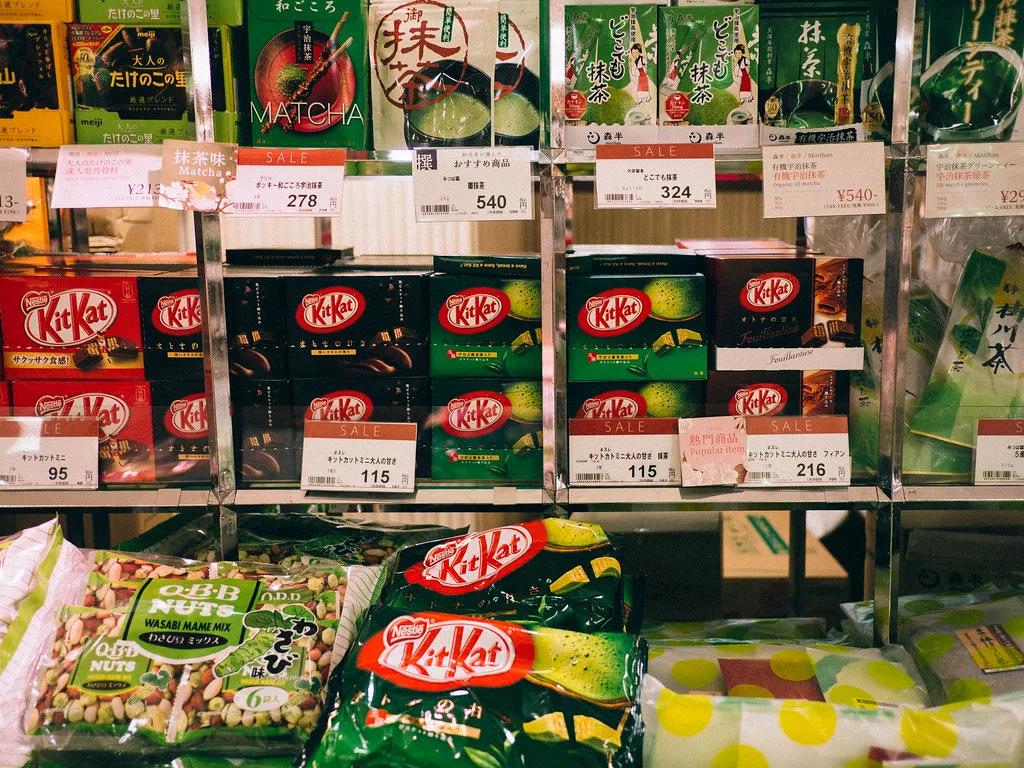
Why Japan Has So Many Kit Kat Flavors, From Luck to Omiyage
Japan has had more than 300 Kit Kat flavors since 2000, from matcha to wasabi, and the whole thing started with a pun. Every January about half a million students sit Japan's national university entrance exam, and plenty of them have a Kit Kat in their bag. Not as a snack. As a charm.
The exact count depends on who is counting. Nestlé Japan passed 350 flavors in 2018, and some tallies now go past 400, including sake, Shinshu apple and momiji manju, a maple-leaf-shaped cake from Hiroshima. No other country comes close. The pun explains why Japan buys so many Kit Kats. The flavors come from somewhere else: a gift-giving habit that is centuries older than chocolate in Japan, and the odd economics of the Japanese convenience store.
Why are Kit Kats so popular in Japan?
Kit Kat arrived in Japan in 1973, when the British maker Rowntree's struck a deal with the confectioner Fujiya. Nestlé bought Rowntree's in 1988, and Nestlé Japan runs the brand today.
For years it was just a chocolate wafer. Then people noticed the name. Said with a Japanese accent, "Kit Kat" comes out close to kitto katsu, roughly "you'll surely win." Students began handing the bars to each other before exams, and parents started tucking them into bags on test day.
Nestlé leaned in. Its exam-season "lucky charm" campaign won an Asian marketing award in 2005. In 2009 the company went further and teamed up with Japan Post to sell Kit Kat boxes you could mail like a postcard, message and all, from around 20,000 post offices. The boxes sold out within a month, and the campaign won the Media Grand Prix at Cannes Lions the next year, according to Wikipedia's account of the press coverage.
January is still Kit Kat season. The next Common Test, the first-round exam shared by Japan's universities, falls on January 16 and 17, 2027. A Kit Kat is a charm, though, not a study plan. For food that helps on the day itself, see what to eat before an exam.
Omiyage: why regional Kit Kats exist
Luck explains the volume. It doesn't explain why Japan needs a strawberry cheesecake Kit Kat from Yokohama and a purple sweet potato one from Okinawa. For that you need omiyage.
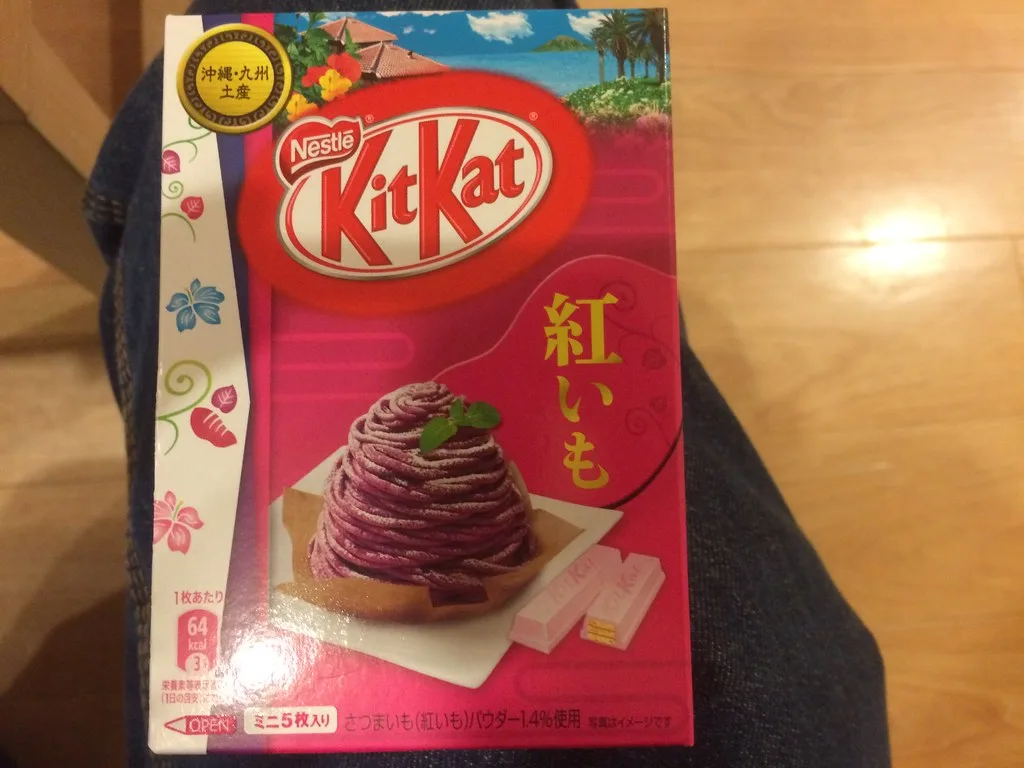
Photo: Nelo Hotsuma / CC BY 2.0
Omiyage are the gifts you bring back from a trip, and in Japan they are close to compulsory. Go away for a weekend and you are expected to return with a box of something for the office, ideally something you can only buy where you went, individually wrapped so it can be handed down the row of desks. Train stations and airports have whole floors of it. Every region has its specialty: momiji manju cakes in Hiroshima, yatsuhashi in Kyoto, melons from Yubari.
A regional Kit Kat fits that system almost too well. It's cheap and recognizable, it comes individually wrapped, and the flavor is a small story about where you've been. Nestlé has said so itself, crediting the omiyage tradition for the success of its regional line. Many flavors borrow a local name to make the link obvious: Amaou strawberries from Fukuoka, Uji matcha from the Kyoto tea merchant Ito Kyuemon, wasabi from the Shizuoka wasabi house Tamaruya, sake from the Masuizumi brewery in Toyama.
Why Nestlé Japan keeps launching new flavors
The third reason is less romantic. Japanese convenience stores turn their shelves over constantly. The same shop that sells onigiri all year and steamed nikuman buns all winter gets new snacks every week, and whatever stops selling vanishes. A brand that stands still gets lost.
So Nestlé stopped standing still. Instead of a few permanent flavors, it puts out a steady run of short editions designed to sell out. A Nestlé Japan spokesman told FoodNavigator in 2018 that the company launched 20 to 30 new flavors a year, with some years reaching 40 or 50, because Japanese shoppers love "new" products.
Scarcity does the selling. A flavor that will be gone in six weeks is a reason to buy it today and post a photo. Seasonal editions follow the same calendar as the rest of Japanese food, with cherry blossom in spring and good-luck packs in January.
The Kit Kat Chocolatory and its pastry chef
By the mid-2000s Nestlé had brought in Yasumasa Takagi, a pastry chef who runs his own patisserie, to develop flavors. In 2014 it opened the first Kit Kat Chocolatory, a boutique selling his versions in gift boxes, and a year later there were seven branches. Flavors from that line have included plum, passion fruit, chili, ginger and kinako, the roasted soybean flour dusted over Japanese sweets.
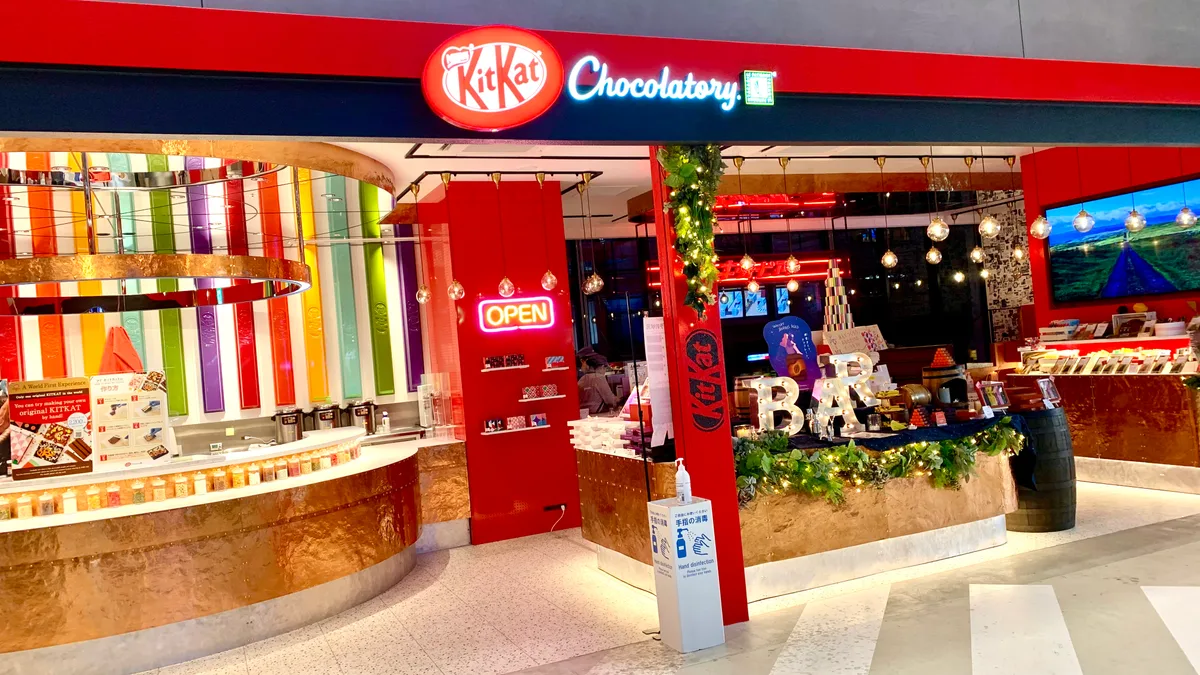
Photo: Antonio Tajuelo from Tokio, Japón / CC BY 2.0
In 2017 the pricier bars got their own production line in Himeji. A year before that, Nestlé mixed powdered Masuizumi sake into white chocolate and sold it as a Kit Kat.
Japanese Kit Kat flavors come from the Japanese pantry
Read down the list of Japanese Kit Kat flavors and you're reading a Japanese pantry. Matcha, hojicha, sake, soy sauce, wasabi, azuki beans, kinako, yuzu, ume. A wagashi shop works with the same flavors, and so does a Japanese home kitchen. The Kit Kat versions just press them into a wafer.
One range gives the game away. Nestlé Japan sells a line called Otona no Amasa, "adult sweetness," which is darker and less sugary than the standard bar, and its dark matcha version sits in the top three of a Japanese fan poll. It's the instinct behind the East Asian compliment not too sweet, applied to a supermarket chocolate bar.
If the flavors send you looking for the originals, our guide to Japanese pantry essentials covers sake, soy sauce and mirin. For the matcha-and-cream end of things, matcha tiramisu gets you there without a trip to Kyoto.
As for which of those hundreds of flavors Japanese people like best, it isn't the same list as the ones that go viral abroad. That's the subject of the best Japanese Kit Kat flavors, according to Japan.
Top photo: marcocarag / CC BY 2.0
Comments
Share your thoughts on this post.
Sign in to comment0 Comments