Chinese Cuisine
Dao Xiao Mian (Knife-Cut Noodles, 刀削面)
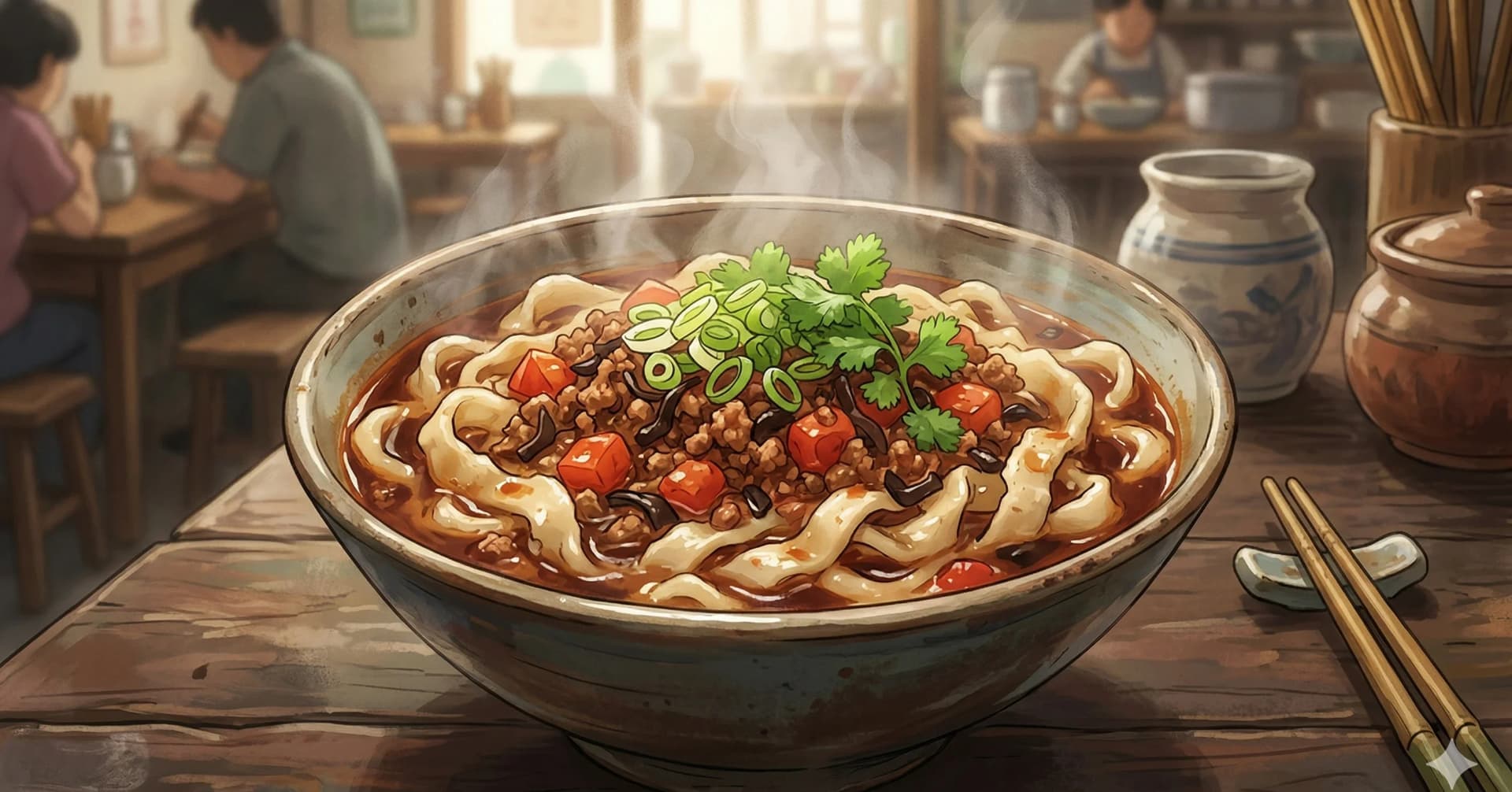
Thick, chewy hand-shaved noodles from Shanxi province served in a hearty meat sauce
In Datong and Taiyuan, the noodle maker holds a block of dough against one forearm and shaves strips directly into a pot of boiling water using a curved blade. The noodles arc through the air in a blur, landing in the water with a series of soft splashes. Each piece is thick at the center and thin at the edges, giving every strand a different texture when you bite into it. The thick parts are dense and chewy. The thin edges are soft and silky. No machine noodle and no hand-pulled noodle can replicate this.
Dao xiao mian is Shanxi's greatest contribution to Chinese noodle culture. The province sits on the loess plateau, a wheat-growing region where noodles, not rice, have been the daily starch for centuries. Shanxi cooks have developed dozens of noodle shapes and styles, but knife-cut noodles are the most famous, appearing in noodle shops across China and beyond.
The dough is simple: flour, water, and a small amount of salt. What makes it different from other noodle doughs is its firmness. The dough is mixed stiff and allowed to rest until it becomes smooth and pliable enough to shave but firm enough to hold its shape in boiling water. If the dough is too soft, the noodles will be flat and floppy. If too dry, the blade will skip and tear.
For the home cook, the traditional forearm-and-curved-blade technique takes practice. A simpler approach is to flatten the dough on a cutting board and use a bench scraper or thin-bladed knife to shave strips at a shallow angle. The noodles will not be as dramatically arched as a noodle master's, but they will have the same satisfying chew and irregular thickness that make dao xiao mian so appealing. Pair them with a rich pork and tomato sauce, and you have one of China's most satisfying bowls.
At a Glance
Yield
4 servings
Prep
45 minutes (plus 30 minutes resting)
Cook
30 minutes
Total
1 hour 45 minutes
Difficulty
Medium
Ingredients
Dough Ingredients
- 2½ cupall-purpose flour
- 1egg
- ½ tspsalt
- ½ cupwater (approximately, adjust as needed)
Sauce Ingredients
- 2 tbspneutral oil
- 8 ozground pork
- 3 clovesgarlic, minced
- 2½ tbspfresh ginger, minced
- 2scallions, finely chopped (white and green parts separated)
- ½ ozdoubanjiang (chili bean paste)
- ¾ lbtomatoes (about 2½ tomatoes), diced
- ¼ ozdried wood ear mushrooms, soaked, rinsed, and chopped
- 2 tbspShaoxing wine
- 1 tbspdark soy sauce
- 1 tbsplight soy sauce
- 1 tspsugar
- 1star anise
- ½ cupwater or stock
- 3 tspcornstarch mixed with 30 ml water (optional, for thickening)
Method
- 1
Make the noodle dough. Place the flour in a large mixing bowl. Make a well in the center and add the egg, salt, and about half of the water. Stir with chopsticks or a fork, gradually adding more water until the dough comes together in rough, shaggy pieces. You may not need all the water. Turn the dough out onto a clean surface and knead for 8 to 10 minutes until it becomes smooth and firm. The dough should be noticeably stiffer than bread dough. Wrap tightly in plastic or cover with a damp cloth and rest for at least 30 minutes.
- 2
Prepare the sauce aromatics. While the dough rests, soak the dried wood ear mushrooms in hot water for 20 minutes until pliable. Drain, rinse, trim any hard stems, and chop into small pieces. Prepare the garlic, ginger, scallions, and tomatoes.
- 3
Cook the meat sauce. Heat the oil in a wok over high heat. Add the ground pork and cook, breaking it into small crumbles, until well browned, about 4 minutes. Push the pork to the side and add the garlic, ginger, and scallion whites. Stir-fry for 30 seconds until fragrant. Add the doubanjiang and stir for another 30 seconds until the oil turns red.
- 4
Build the sauce. Add the diced tomatoes, chopped wood ear mushrooms, Shaoxing wine, dark soy sauce, light soy sauce, sugar, and star anise. Stir to combine. Add the water or stock and bring to a simmer. Cook over medium heat for 8 to 10 minutes until the tomatoes have broken down into the sauce and the liquid has reduced slightly. If you want a thicker sauce, stir in the cornstarch slurry and cook for 1 minute more. Remove the star anise. Taste and adjust seasoning.
- 5
Shape and cook the noodles. Bring a large pot of water to a rolling boil. Lightly flour your work surface. Flatten the rested dough into an oblong shape about 1 inch thick. Hold a bench scraper or thin knife at a shallow angle (roughly 15 to 20 degrees) against the edge of the dough. Shave thin, irregular strips about 2 to 3 inches long and flick them directly into the boiling water. Work quickly. The noodles will sink, then float after about 2 minutes. Once floating, cook for 1 to 2 minutes more until they are cooked through but still pleasantly chewy. Test by biting one. Drain.
- 6
Assemble the bowls. Divide the noodles among 4 bowls. Spoon the meat sauce generously over the top. Drizzle with chili oil and a splash of Chinkiang vinegar. Scatter the scallion greens and cilantro over the surface.
Key Ingredient Benefits
Wood ear mushrooms: Also called black fungus (mu er), these have a mild flavor and a distinctive crunchy-gelatinous texture. Research has investigated their polysaccharide content for potential anticoagulant and cholesterol-lowering effects. In traditional Chinese medicine, they are associated with nourishing the blood and improving circulation. Always soak dried wood ears thoroughly and rinse well, as they can harbor grit.
Doubanjiang: The same fermented chili bean paste used in Taiwanese Beef Noodle Soup and Mapo Tofu. Here it is used sparingly, providing background heat and umami rather than dominating the sauce.
Tomatoes: Cooking tomatoes increases the bioavailability of lycopene by breaking down cell walls. The natural pectin in tomatoes also helps thicken the sauce as it simmers, reducing the need for cornstarch.
Why This Works
The stiff dough is the foundation of everything. Knife-cut noodles need enough structure to hold their irregular shape without dissolving in boiling water. The egg adds richness and helps bind the gluten network, while the low hydration (relative to other noodle doughs) keeps the texture dense and chewy. Resting the dough relaxes the gluten just enough to allow smooth shaving without making it too extensible.
The shaving technique creates noodles with uneven thickness, and this is a feature, not a flaw. The thin edges cook faster and become silky, while the thick centers remain dense and springy. Each bite offers a different texture, which is what distinguishes dao xiao mian from uniformly cut noodles. This textural variation also helps the sauce cling in different ways along each strand.
The meat sauce uses the same foundational approach as many northern Chinese noodle toppings: browning meat first, then blooming aromatics and fermented paste in the rendered fat, then adding liquid and simmering to meld flavors. The tomato provides natural acidity and sweetness that balance the salty depth of the soy sauces and doubanjiang. Wood ear mushrooms contribute a crunchy, slightly gelatinous texture that contrasts with the soft pork and tender tomato.
Substitutions & Variations
Noodle dough: If the shaving technique proves too difficult, roll the dough out to about 1/8 inch thick and cut it into thick, irregular strips with a knife. The result will be closer to hand-cut noodles (shou gan mian) but will still have a good chew.
Store-bought noodles: Thick, fresh wheat noodles from an Asian market are the closest substitute. They will lack the irregular texture but will carry the sauce well.
Sauce variations: Lamb is traditional in Shanxi and can replace the pork for a richer, gamier sauce. See Cumin Lamb for a related Shanxi-influenced lamb preparation. Vegetarian versions using crumbled firm tofu or diced eggplant are common.
Soup version: In many noodle shops, dao xiao mian are served in broth rather than with a dry sauce. Cook the noodles and place them in a bowl of hot Lanzhou Beef Noodle Soup broth or a simple chicken stock for a lighter meal.
Flour: Bread flour can be used for an even chewier noodle due to its higher gluten content. Reduce the water slightly if substituting.
Serving Suggestions
Dao xiao mian with meat sauce is a complete meal. For a larger spread, pair with a light vegetable dish like Bitter Melon with Egg or a simple cucumber salad dressed with vinegar and garlic. Hot and Sour Soup works as a starter when the noodles are the main course.
For a noodle-focused dinner showcasing different Chinese noodle traditions, serve smaller portions alongside Dan Dan Noodles and a bowl of Wonton Soup. The three dishes represent Shanxi, Sichuan, and Cantonese noodle culture respectively.
Storage & Reheating
Noodle dough: The uncooked dough can be wrapped tightly and refrigerated for up to 24 hours. Bring to room temperature for 20 minutes before shaving, as cold dough will be brittle and difficult to cut cleanly.
Meat sauce: Keeps in an airtight container in the refrigerator for up to 4 days and freezes well for up to 2 months. Reheat in a wok or saucepan over medium heat, adding a splash of water if the sauce has thickened.
Cooked noodles: Best eaten immediately. Leftover cooked noodles can be stir-fried the next day with vegetables and sauce, but they will lose their characteristic chew.
Cultural Notes
Dao xiao mian (刀削麵, "knife-shaved noodles") is the wheat noodle preparation in which a long rectangular block of stiff dough is held against the cook's body or a board, and a curved single-edged knife is used to shave thin ribbons of dough directly into a pot of boiling water or broth. The dish belongs to Shanxi province in north-central China, which has the deepest wheat noodle tradition in the country and which produces dozens of distinct noodle forms (the saying Shanxi mian shi yi bai zhong, "Shanxi has a hundred kinds of noodles," is roughly accurate). Within that tradition, dao xiao mian is the most visually theatrical and the most strongly identified with the Shanxi capital city of Taiyuan.
The technique demands serious skill. The dough is made from high-protein wheat flour and very little water, kneaded for an extended period until it becomes dense, smooth, and elastic enough to hold a rectangular shape when handled. The block of dough rests for an hour or more, then the cook holds it on the open palm of one hand or balances it on top of the head, and with the other hand uses the curved knife to shave ribbons off the surface in rapid succession. Each ribbon flies into the boiling pot in front of the cook, and the resulting noodles have a distinctive triangular cross-section: thick in the middle where the knife was deepest, thin at the edges where the blade glanced off. The thick center stays chewy while the edges cook through to a softer texture, producing a contrast that no machine-cut noodle can replicate.
The noodles are typically served in beef or lamb broth (Shanxi has a deep tradition of mutton cookery), topped with sliced braised beef or lamb, pickled vegetables, and a generous spoonful of Shanxi mature vinegar (shanxi lao chen cu), which is the regional specialty and the seasoning that pairs most naturally with the noodles. Shanxi diners typically add several tablespoons of the vinegar to a single bowl of noodles, which is more vinegar than diners from other Chinese regions usually find palatable but which is fundamental to the Shanxi flavor profile. The dish appears at noodle shops across Shanxi and at Shanxi specialty restaurants in Beijing, Shanghai, and the global Chinese diaspora, where the knife-shaving performance is often presented as a draw to attract diners.
Nutrition Facts
Calories: 544kcal (27%)|Total Carbohydrates: 69.4g (25%)|Protein: 21g (42%)|Total Fat: 19g (24%)|Saturated Fat: 5.2g (26%)|Cholesterol: 92mg (31%)|Sodium: 957mg (42%)|Dietary Fiber: 4.6g (16%)|Total Sugars: 4.1g
You Might Also Like
 Medium
Thai Cuisine
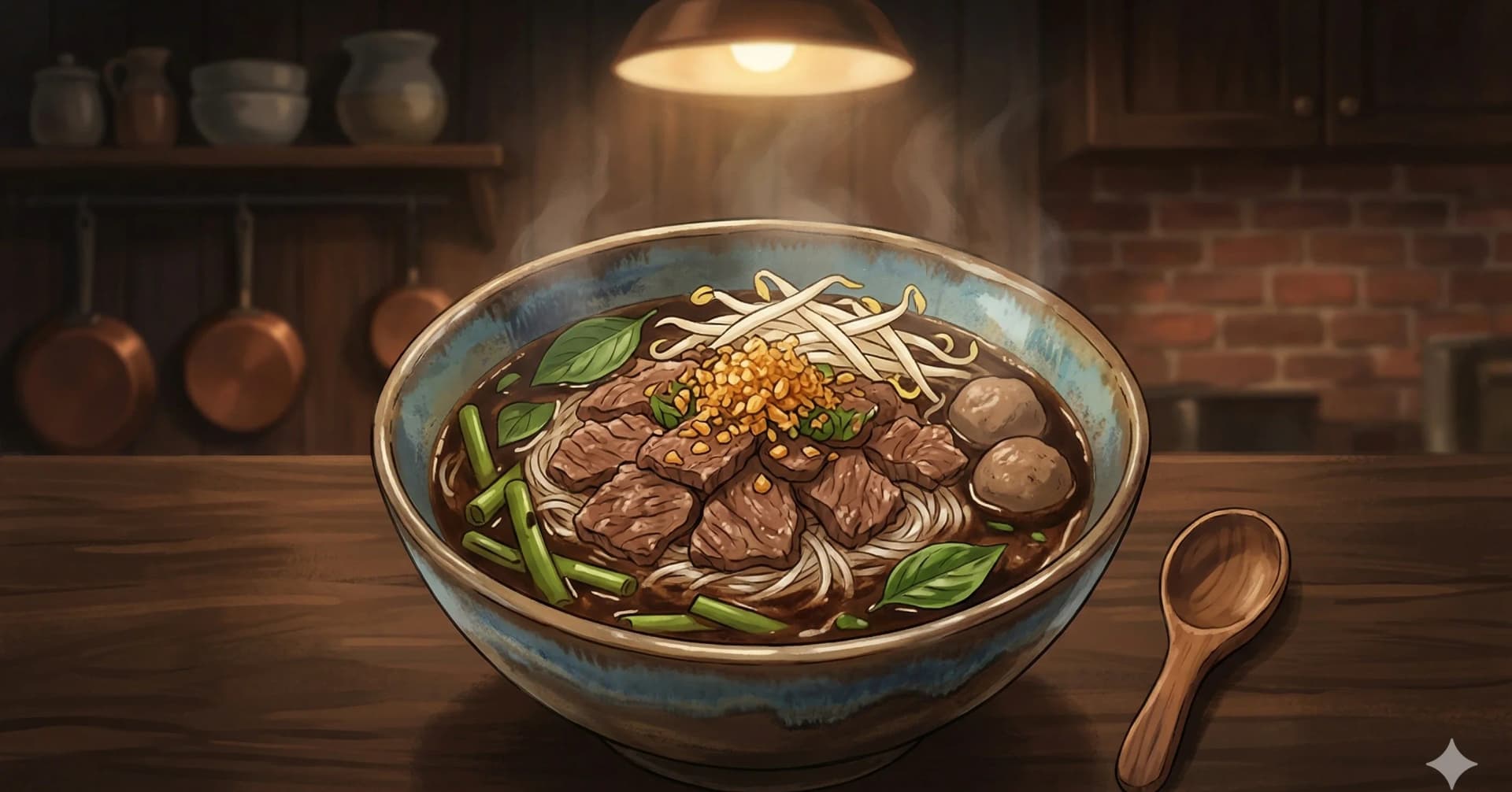
Boat Noodles (ก๋วยเตี๋ยวเรือ)
3 hours 15 minutes
 Medium
Vietnamese Cuisine
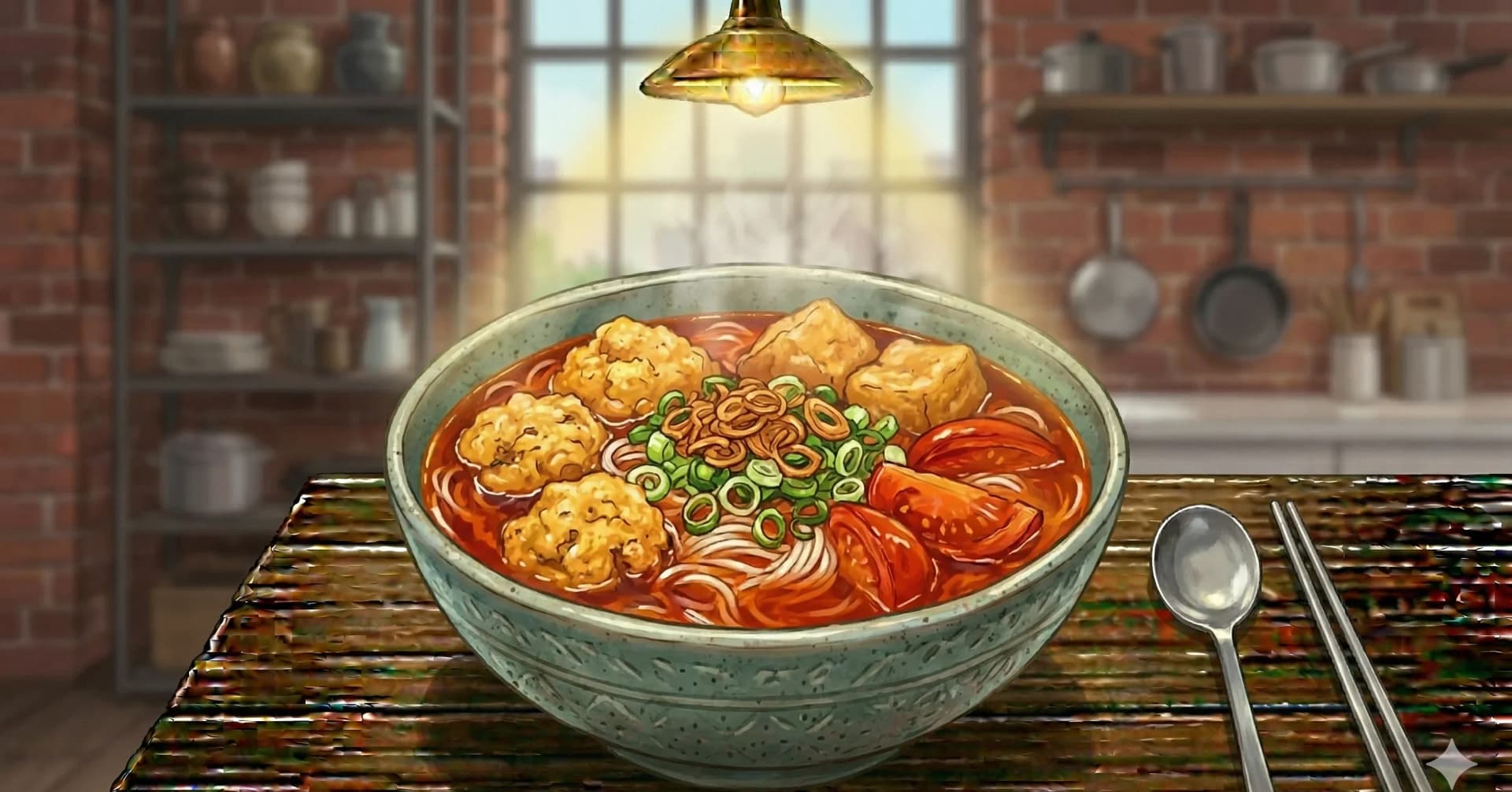
Bun Rieu (Vietnamese Crab and Tomato Noodle Soup)
2 hours
 Medium
Vietnamese Cuisine
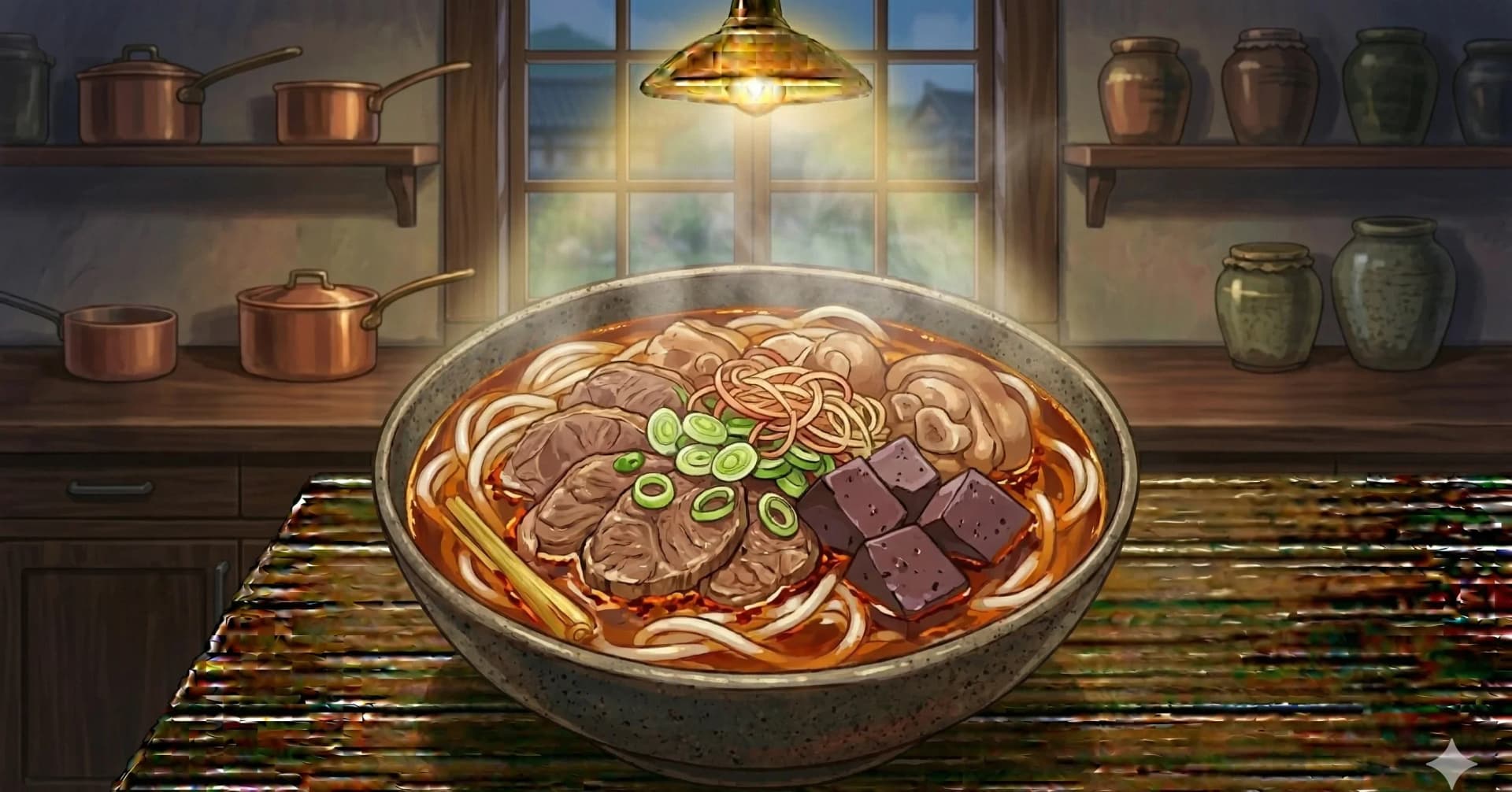
Spicy Beef Noodle Soup (Bún Bò Huế)
3 hours 45 minutes
 Medium
Chinese Cuisine
Char Siu (Chinese BBQ Pork)
9 hours (including marinating)
Ratings & Comments
Ratings & Comments
Ratings
Share your thoughts on this recipe.
Sign in to rate and comment