The Noodle Aisle, Decoded
The noodle aisle of an Asian supermarket is a wall of plastic packets with a dozen languages on them and very little in the way of explanation. Somewhere in there is the right one for what you are cooking, and the gap between it and the packet next to it is the difference between a dish that works and a pan of broken starch.
There are only four materials in play. Once you can sort a packet by what it is made of, the rest follows.
Wheat
The largest family and the most forgiving.
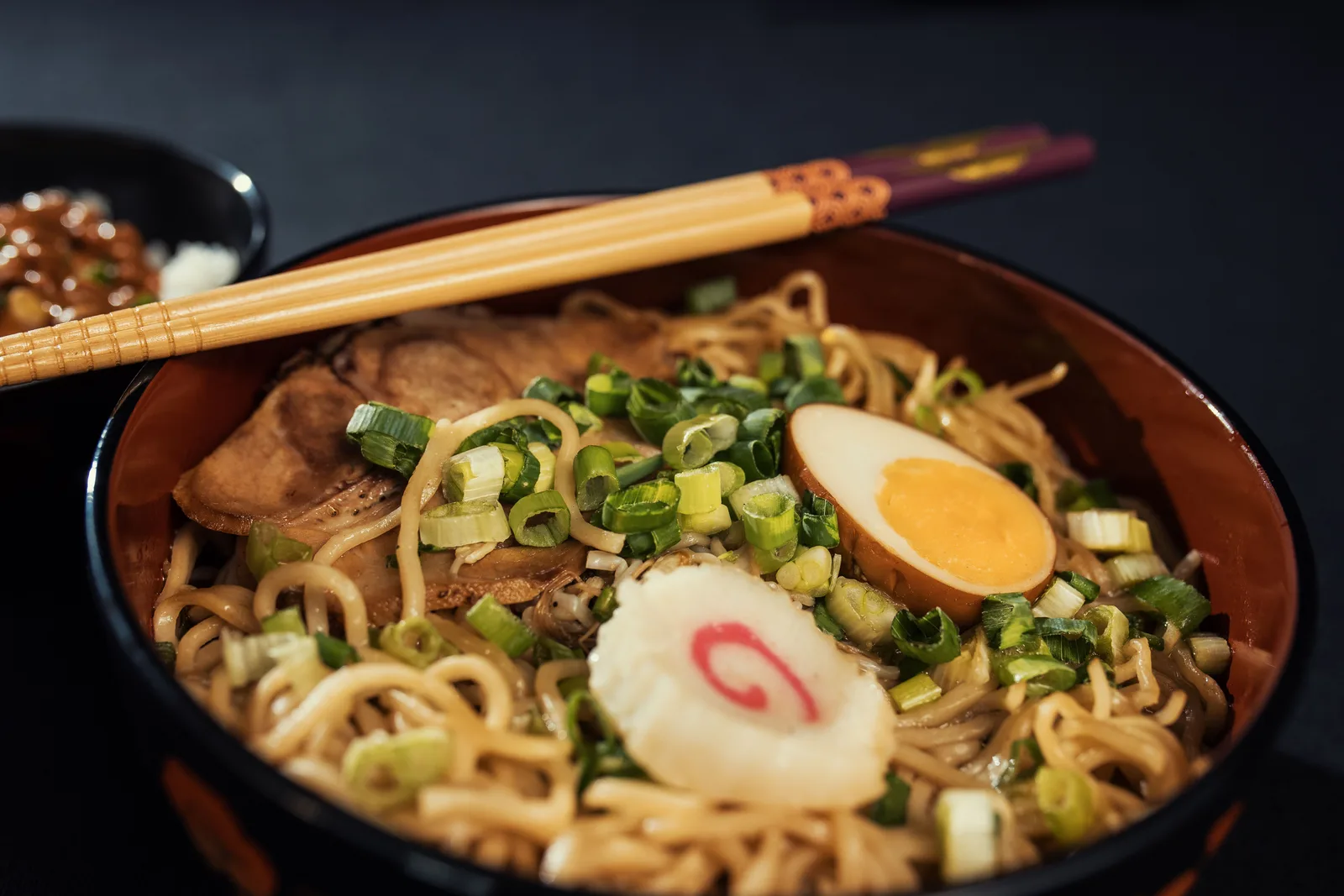
Chinese wheat noodles come fresh or dried, thin or thick, sometimes with added alkaline salts called kansui. That alkalinity is what gives ramen its yellow colour, its springy bite and its slightly sulphurous smell, and it is why ramen noodles do not behave like Italian pasta even though both are wheat and water. Shoyu ramen and tonkotsu ramen both need that alkaline noodle; spaghetti in a ramen broth is a sad thing.
Lo mein uses a soft fresh egg noodle, boiled and tossed. Chow mein uses the same noodle par-cooked and then crisped, and the whole distinction between the two dishes is the treatment, not the noodle. Confusion on that point is the most common Chinese takeaway misunderstanding there is.
Udon is thick, white, soft and chewy with no egg and no alkalinity, and it is the one Japanese noodle that tolerates being overcooked. Hand cut noodles like dao xiao mian are shaved off a block of dough straight into boiling water, which produces irregular thickness on purpose so that each piece has a thin edge and a chewy spine.
Buckwheat
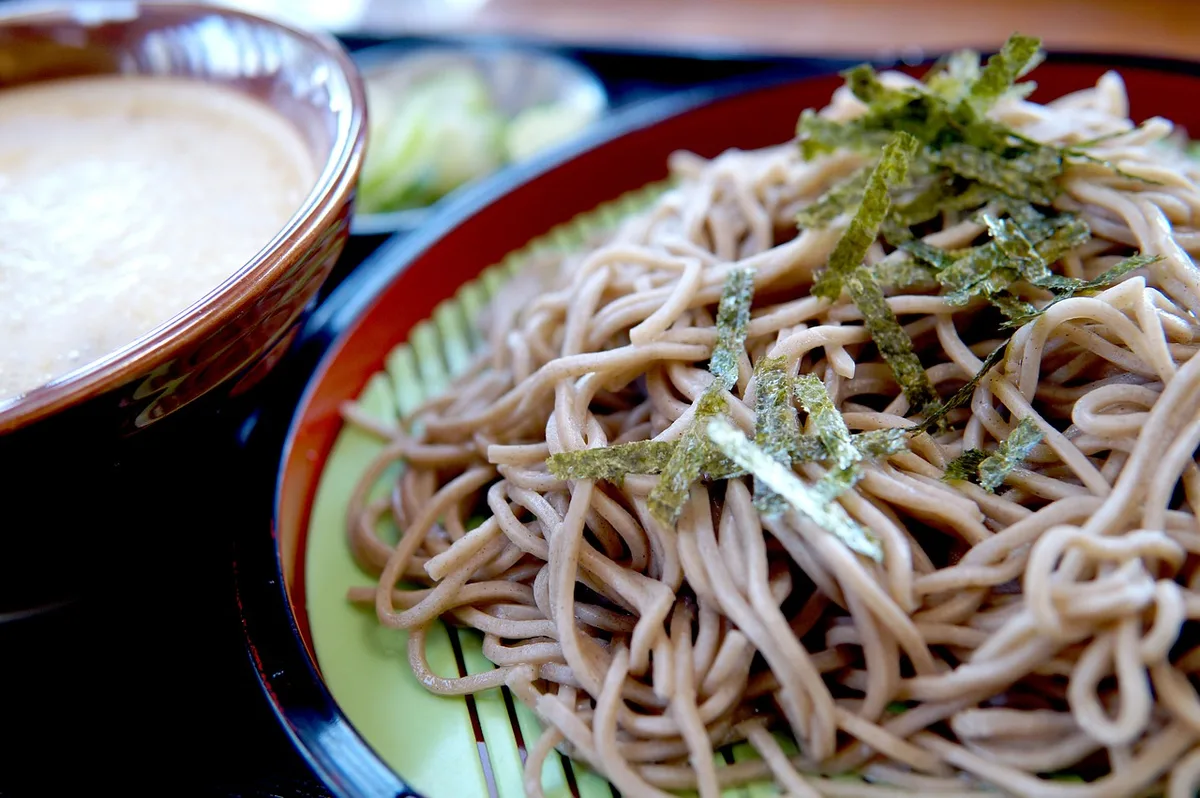
Zaru soba is the dish and soba is the noodle: buckwheat flour, sometimes cut with wheat, brown-grey and nutty with a fragile texture.
The grading matters. Juwari soba is pure buckwheat and falls apart easily. Most commercial soba is around eighty percent buckwheat and twenty percent wheat, which holds together. Some cheap supermarket soba is mostly wheat with a little buckwheat for colour, and it tastes of nothing.
Soba is cooked briefly, rinsed hard under cold water to remove surface starch, and served cold more often than hot. The rinse is not optional.
Korean naengmyeon noodles are a buckwheat relative, mixed with potato or sweet potato starch, which is what makes them grey, translucent and so elastic that restaurants hand you scissors.
Rice
Rice noodles are the Southeast Asian default and the one people most often ruin, because they are treated like pasta.
Dried flat rice sticks, the kind for pad thai and pho, should be soaked in warm water until pliable but still firm, never boiled. They finish cooking in the wok or in the hot broth. Boil them first and they turn to paste the moment they hit heat again.
Fresh wide rice noodles, ho fun or sen yai, come in a folded slab and are the backbone of beef chow fun and pad see ew. They break if they are cold, so leave them at room temperature and separate them gently by hand. Never refrigerate them if you can avoid it.
Thin rice vermicelli, bun or sen mee, needs only a soak in hot water off the heat, and it is what goes under Vietnamese grilled meat in bun thit nuong.
Starch
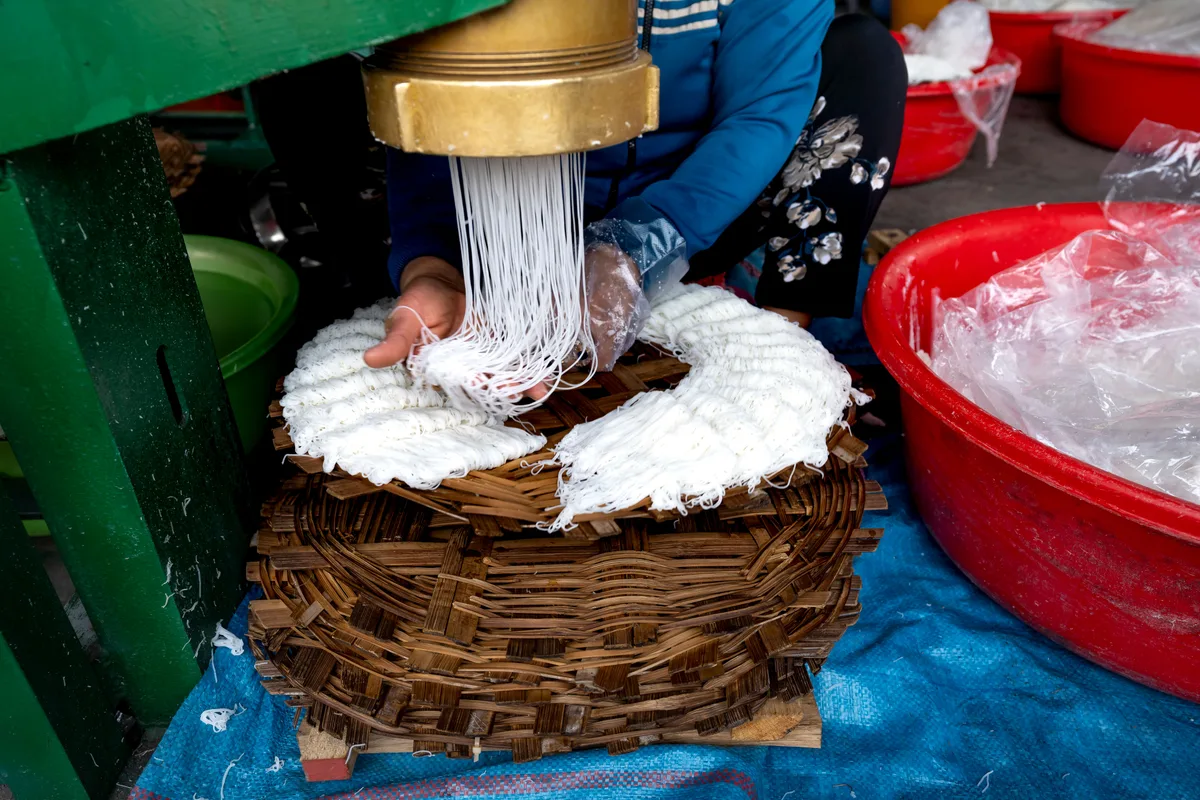
The fourth category, and the one that behaves least like a noodle.
Glass noodles made from mung bean starch turn completely transparent when cooked, stay slippery, and absorb liquid aggressively. They go into yum woon sen and into soups and spring roll fillings.
Korean sweet potato noodles, dangmyeon, are the thicker, chewier cousin and the whole point of japchae. They are boiled properly, unlike the mung bean ones, and they stay bouncy rather than going soft.
Both are naturally gluten free, which is a useful thing to know.
The rules that apply across all of them
Undercook anything that will meet heat again. A noodle going into a stir fry or a hot soup should come out of the water firmer than you want to eat it.
Rinse anything served cold, and anything that will be tossed rather than served in its own broth. Surface starch is what makes noodles clump.
Salt the water only for wheat noodles. Rice and starch noodles do not take up salt meaningfully, and alkaline ramen noodles come salted enough already.
Cook noodles last, always. A finished noodle waiting for a sauce is a noodle going wrong.
Frequently asked questions
Can I substitute spaghetti for ramen noodles?
There is an old trick of simmering spaghetti with baking soda to approximate the alkalinity, and it does get you closer in texture and colour. It is a reasonable emergency measure and not a match.
Why do my rice noodles always stick together?
Usually they were boiled instead of soaked, or they sat after draining. Toss soaked noodles with a little oil if they have to wait, and get them into the pan while still slightly underdone.
Which noodles are gluten free?
Rice noodles, mung bean glass noodles and Korean sweet potato noodles. Pure buckwheat soba is too, but most soba contains wheat, so it is not a safe assumption without reading the packet.
Fresh or dried?
Fresh for wheat noodles and wide rice noodles, where texture is the point. Dried is fine and often better for thin rice sticks, soba and glass noodles, which are designed for it.
What to cook
Pad thai teaches the soak-don't-boil rule the hard way if you get it wrong. Japchae shows what sweet potato starch does that wheat cannot. Dan dan noodles is a fast lesson in why a wheat noodle wants a clinging sauce rather than a soupy one. And for the pantry that surrounds all of this, see the Chinese and Thai shelves.
Comments
Share your thoughts on this post.
Sign in to comment0 Comments